


 English
 Español
 عربى
عربى
Content
- 1 What Makes a Bamboo Sheet Set Different from Regular Bed Sheets?
- 2 Types of Bamboo Fabric Used in Sheet Sets
- 3 Thread Count in Bamboo Sheet Sets: What the Numbers Actually Mean
- 4 Weave Types and How They Affect the Feel of Bamboo Bed Sheets
- 5 Are Bamboo Sheet Sets Actually Good for Hot Sleepers?
- 6 Bamboo Sheet Set vs. Cotton Sheet Set: A Side-by-Side Comparison
- 7 What to Look for in a Quality Bamboo Sheet Set
- 8 How to Wash and Care for Bamboo Sheets to Make Them Last
- 9 What's Usually Included in a Bamboo Sheet Set and What to Check
- 10 Common Complaints About Bamboo Sheet Sets and How to Avoid Them
What Makes a Bamboo Sheet Set Different from Regular Bed Sheets?
A bamboo sheet set is a collection of bed linens — typically including a fitted sheet, a flat sheet, and one or two pillowcases — made from fibers derived from the bamboo plant. What sets bamboo bedding apart from conventional cotton or polyester sheets is the unique combination of properties that the processed bamboo fiber delivers: a naturally silky-smooth hand feel, exceptional breathability, moisture-wicking capability, and a temperature-regulating quality that keeps you comfortable whether you tend to sleep warm or cool. For people who wake up sweaty, toss and turn from overheating, or simply want a more luxurious feel against their skin, bamboo bed sheets have become one of the most talked-about upgrades in the sleep category.
However, not all bamboo sheet sets are the same — not even close. The term "bamboo sheets" covers several very different fabric types, manufacturing processes, and quality levels, and the differences between them significantly affect how the sheets feel, how they perform over time, and how environmentally responsible they actually are. Before spending anywhere from $30 to $300 on a set, it pays to understand exactly what you're buying.
Types of Bamboo Fabric Used in Sheet Sets
The word "bamboo" on a label can refer to fundamentally different materials depending on how the plant fiber was processed into a usable textile. There are three main types you'll encounter when shopping for a bamboo sheet set, and each has distinct characteristics worth understanding.
Bamboo Viscose (Rayon from Bamboo)
Bamboo viscose — also labeled as rayon from bamboo — is by far the most common type used in bamboo sheet sets. It's produced through a chemical process in which bamboo pulp is dissolved in a caustic soda solution, pushed through spinnerets to create fibers, and then reconstituted. The result is an incredibly soft, silky fabric that drapes beautifully and has a slight sheen. Bamboo viscose sheets are the ones most often described as feeling like a cross between silk and cashmere. The trade-off is that the manufacturing process uses harsh chemicals and is not particularly eco-friendly despite bamboo's reputation as a sustainable plant. The FTC (Federal Trade Commission) in the US requires that bamboo viscose products be labeled as "rayon" or "viscose" to avoid misleading environmental claims.
Bamboo Lyocell (Bamboo Tencel)
Bamboo lyocell is produced through a closed-loop manufacturing process in which the solvents used to dissolve the bamboo pulp are captured and recycled rather than discharged. This makes it significantly more environmentally responsible than viscose production. The resulting fabric is slightly less silky than viscose but still very soft, moisture-wicking, and breathable, with better durability and shape retention over repeated washings. Bamboo lyocell sheets are the choice for buyers who prioritize both comfort and genuine sustainability credentials. They are less commonly available and typically priced higher than viscose sets.
Bamboo Linen and Mechanically Processed Bamboo
True mechanically processed bamboo — where the plant stalks are crushed and natural enzymes break down the fibers without chemicals — produces a fabric closer in texture to linen. It is genuinely eco-friendly, retaining more of bamboo's natural antimicrobial properties, but the resulting fabric is coarser, stiffer, and less commonly used in premium sheet sets. Some brands blend bamboo linen with cotton to improve softness. This is the rarest category and accounts for a very small percentage of bamboo sheets currently on the market.
Thread Count in Bamboo Sheet Sets: What the Numbers Actually Mean
Thread count — the number of threads woven horizontally and vertically per square inch of fabric — is a familiar metric for cotton sheets, but it works differently with bamboo bedding and is frequently misrepresented by manufacturers. Bamboo fibers are naturally finer than cotton fibers, which means that a bamboo sheet set with a thread count of 300–400 can feel softer and more luxurious than a cotton sheet at 600 thread count. The finer the individual bamboo fiber, the more threads fit per inch without the fabric becoming stiff or heavy.
Many budget bamboo sheet sets inflate their thread count by counting multi-ply threads as individual threads — a practice that artificially doubles or triples the stated number without any corresponding improvement in quality or softness. The Federal Trade Commission and textile industry standards bodies have flagged this as a deceptive practice, but it remains widespread. As a practical guide, the ideal thread count range for quality bamboo viscose or lyocell sheets is 250–400. Sets claiming 1000+ thread count should be scrutinized carefully, as this is almost certainly a result of multi-ply counting rather than genuine fiber density.
Weave Types and How They Affect the Feel of Bamboo Bed Sheets
Beyond fabric type and thread count, the way the bamboo fibers are woven into fabric has a significant impact on the texture, weight, durability, and breathability of the finished sheet set. The three weave types you'll most commonly encounter in bamboo bedding are:
- Sateen weave: The most popular choice for bamboo sheet sets. In a sateen weave, four threads pass over one thread under, creating a smooth, lustrous surface with a subtle sheen. Bamboo sateen sheets feel silky and luxurious against the skin and drape elegantly, making them a favorite for people who prioritize a premium hotel-like aesthetic. They are slightly less breathable than percale weaves and more prone to pilling over time, but their softness straight out of the packaging is unmatched.
- Percale weave: A one-over, one-under plain weave that produces a crisp, matte fabric with a cool, fresh feel. Bamboo percale sheets are lighter and more breathable than sateen, making them particularly well-suited to hot sleepers and warm climates. They are also more durable and resistant to pilling than sateen weaves. The trade-off is that they feel slightly less immediately soft — though they tend to soften noticeably with each wash.
- Twill weave: Less common in bamboo sheet sets, twill weaves create a diagonal rib pattern in the fabric surface. Bamboo twill sheets are heavier, more durable, and have a texture similar to high-quality cotton twill. They are a good choice for people who prefer a slightly structured, substantial feel rather than the flowing drape of sateen.
Are Bamboo Sheet Sets Actually Good for Hot Sleepers?
Temperature regulation is one of the most frequently cited reasons people seek out bamboo bed sheets, and the claims are largely backed by the fabric's physical properties — though with important nuances. Bamboo viscose and lyocell fibers have a micro-gap structure that allows air to circulate through the fabric more freely than most cotton weaves, and they absorb moisture vapor from the skin and release it to the surrounding air more efficiently than polyester or synthetic blends. This combination of breathability and moisture management is what creates the cooling sensation that hot sleepers report.
Independent lab testing and user surveys consistently show that bamboo percale sheets outperform both cotton percale and bamboo sateen in cooling performance for active hot sleepers. Bamboo sateen, while softer, retains more heat due to its tighter weave structure and the way the surface threads lie flat against the skin, reducing airflow. If cooling is your primary concern, choose bamboo percale over sateen and look for a lighter fabric weight (measured in grams per square meter, or GSM) — sheets in the 90–120 GSM range will feel significantly cooler than heavier 130–160 GSM options.
It's also worth noting that bamboo sheets won't feel dramatically cooler than a high-quality cotton percale in a well air-conditioned room. Their advantage is most pronounced in warm environments, in warm months, or for people whose body temperature naturally runs high during sleep. For extreme temperature regulation needs, phase-change material (PCM) infused sheet sets offer more active cooling, but for everyday natural fiber performance, bamboo is consistently among the top choices.
Bamboo Sheet Set vs. Cotton Sheet Set: A Side-by-Side Comparison
Bamboo and cotton are the two most popular natural fiber options for bed sheets, and each has genuine strengths depending on your priorities. The table below compares them directly across the factors that most buyers care about:
| Feature | Bamboo Sheet Set | Cotton Sheet Set |
| Initial softness | Very soft out of the box | Softens with washing over time |
| Breathability | Excellent (especially percale) | Good to excellent (percale) |
| Moisture wicking | Superior | Good (less efficient) |
| Durability | Moderate (prone to pilling) | Very durable with proper care |
| Hypoallergenic | Yes (naturally) | Varies (organic cotton is better) |
| Eco-friendliness | Mixed (lyocell best; viscose less so) | Mixed (organic cotton best) |
| Price range | $40–$300 per set | $25–$400+ per set |
| Care ease | Gentle cycle recommended | Generally more wash-forgiving |
| Best for | Hot sleepers, sensitive skin | All sleepers, heavy daily use |
The honest takeaway is that bamboo wins on initial feel and moisture management, while long-staple cotton (such as Egyptian or Pima cotton) tends to outlast bamboo sheets with heavy use. If you change your sheets frequently and hand-treat them gently, bamboo is hard to beat. If you need sheets that can endure years of high-temperature washing and heavy-duty use, a quality cotton percale or cotton sateen may serve you better in the long run.
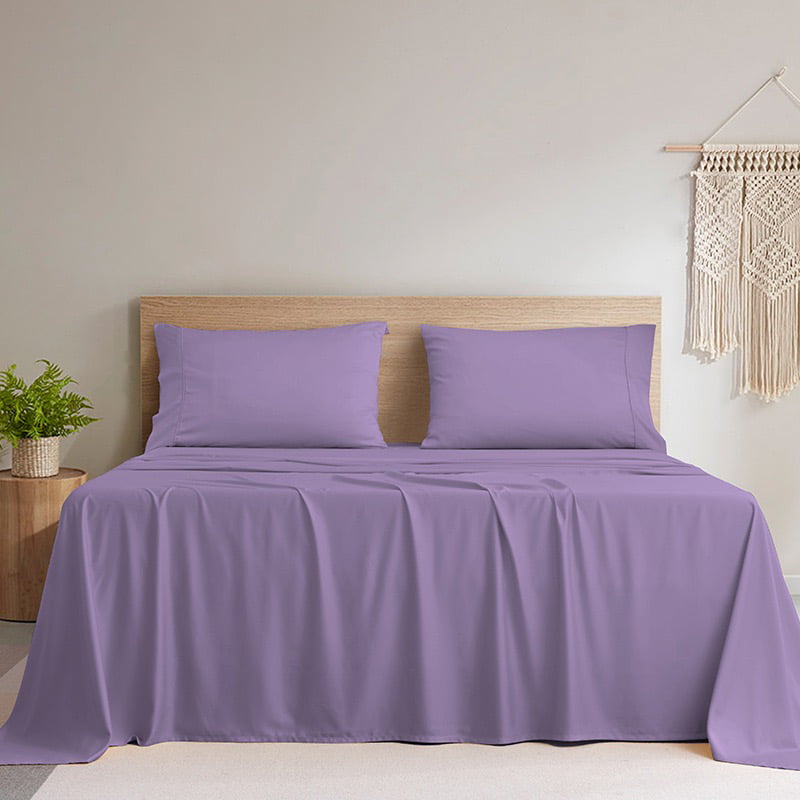
What to Look for in a Quality Bamboo Sheet Set
With hundreds of bamboo sheet sets on the market ranging from budget to luxury, filtering out the poor-quality options requires knowing which specific details to look for — and which claims to ignore.
Certifications That Actually Matter
Third-party certifications are the most reliable way to verify quality and safety claims on bamboo bedding. The most meaningful ones to look for are OEKO-TEX Standard 100, which certifies that every component of the finished product has been tested for harmful substances and is safe for skin contact; GOTS (Global Organic Textile Standard), which certifies organic fiber content and responsible processing throughout the supply chain; and the STANDARD 100 by OEKO-TEX for lyocell specifically produced by Lenzing (the company behind TENCEL™ lyocell). Avoid sheets that only cite vague terms like "natural" or "eco-friendly" without a verifiable certification to back them up.
What the Label Should Actually Say
A transparent, trustworthy bamboo sheet set manufacturer will clearly state the fabric type (viscose from bamboo, bamboo lyocell, or bamboo linen), the fabric weight in GSM, the weave style, the thread count (and how it is counted), and the country of manufacture. Vague labels that simply say "100% bamboo" without specifying the processing method are a warning sign. According to FTC guidelines, bamboo-derived rayon must be labeled as rayon or viscose — any product labeled purely as "bamboo fabric" without these qualifiers is not in compliance and should be approached with skepticism.
Fitted Sheet Pocket Depth and Elastic Quality
One of the most common complaints about bamboo sheet sets — particularly budget options — is that the fitted sheet doesn't stay on the mattress. Check the pocket depth specification before purchasing: most modern mattresses with toppers require a pocket depth of at least 14–16 inches, and some thicker setups need 18 inches or more. Also look for all-around elastic rather than corner-only elastic — all-around elastic distributes the tension evenly and keeps the sheet anchored through the night regardless of how much you move.
How to Wash and Care for Bamboo Sheets to Make Them Last
Bamboo bed sheets require a bit more care than standard cotton to maintain their softness and prevent premature wear, but the routine is simple once you know the rules. Following these guidelines consistently will keep your bamboo sheet set feeling like new for years:
- Wash in cold or warm water only. Hot water weakens bamboo fibers, causes shrinkage, and accelerates pilling. Keep the temperature at or below 86°F (30°C) for the first few washes, and never exceed 104°F (40°C) for ongoing care.
- Use a gentle cycle with mild detergent. Harsh detergents, bleach, and fabric softeners all damage bamboo fibers. Fabric softeners in particular coat the fibers and reduce their natural breathability and moisture-wicking properties over time. A small amount of gentle, pH-neutral liquid detergent is all you need.
- Tumble dry on low heat or air dry. High dryer heat is one of the fastest ways to degrade bamboo fabric. Use the lowest heat setting available, or better yet, remove the sheets while slightly damp and lay them flat or hang them to finish drying. This also dramatically reduces wrinkles.
- Wash separately from items with zippers, hooks, or rough textures. Bamboo viscose and lyocell fabrics are prone to snags and surface abrasion. Washing sheets with items that have exposed hardware or rough surfaces causes pilling that's impossible to reverse.
- Do not iron directly on high heat. If you prefer crisp, wrinkle-free sheets, use a steamer or iron on the lowest steam setting while the fabric is still slightly damp. Bamboo fabric wrinkles easily but also releases wrinkles quickly with gentle heat and moisture.
- Wash before first use. New bamboo sheets may contain finishing agents from the manufacturing process. A gentle first wash before putting them on your bed removes these residues and often makes the sheets feel noticeably softer right from the start.
What's Usually Included in a Bamboo Sheet Set and What to Check
A standard bamboo sheet set sold for a queen or king bed typically includes one fitted sheet, one flat sheet, and two pillowcases. Twin and full sets usually include one pillowcase. Some premium sets marketed as "complete" add an extra pillowcase, a duvet cover, or a mattress protector — always check the product listing carefully so you know exactly what's included before comparing prices across brands.
When evaluating a set, confirm the following specifics that are often listed in fine print but make a real difference to daily usability: the fitted sheet pocket depth (discussed above), whether the pillowcases have an envelope closure or a zip closure (envelope is the industry standard for a clean look), the GSM or fabric weight of the finished textile (this tells you how substantial the sheets will feel), and whether the set is available in your mattress size with confirmed measurements — "queen" can vary by a few inches between brands, and an ill-fitting fitted sheet will defeat even the best quality fabric.
Common Complaints About Bamboo Sheet Sets and How to Avoid Them
Despite the generally positive reputation of bamboo bedding, there are recurring complaints that show up consistently in buyer reviews across all price points. Knowing these in advance helps you either avoid the issue or set appropriate expectations:
- Pilling after a few washes: The most common complaint. This usually results from washing at too high a temperature, using the wrong detergent, or mixing the sheets with rough fabrics. Switching to a mesh laundry bag and cold-water gentle cycles eliminates this problem for most buyers.
- Fitted sheet slipping off the mattress: Almost always a pocket depth or elastic quality issue rather than a fabric issue. Measure your mattress height before purchasing and verify that the fitted sheet's pocket depth exceeds it by at least 2 inches.
- Sheets feel less soft after washing: Bamboo viscose sheets can stiffen slightly if over-dried or washed with fabric softener. Air drying or tumble drying on low heat, and skipping the fabric softener entirely, preserves the natural drape and softness.
- Color fading: Deep-dyed bamboo sheets are more prone to color fading than white or natural-toned options, especially with warm water washing. Wash dark-colored bamboo sheets inside-out in cold water and avoid prolonged exposure to direct sunlight when drying.
- "Not as cooling as expected": This is usually a result of choosing sateen weave rather than percale, or choosing a heavier GSM fabric. Buyers expecting extreme cooling should choose percale weave in a lightweight (90–110 GSM) bamboo sheet set rather than a thick, silky sateen.

 +86-159 5050 0822
 peter@rainbowhomefashion.com
 No.199 Yimin Road, Dateng DIstrIct, Yancheng City. Jiangsu Province, China