


 English
 Español
 عربى
عربى
Content
- 1 Why Your Winter Comforter Makes or Breaks Your Sleep
- 2 Fill Material: The Biggest Decision in Any Winter Comforter
- 3 Understanding Warmth Ratings for Winter Comforters
- 4 Shell Fabric and Construction — What's Holding the Fill In
- 5 Sizing a Winter Comforter Correctly
- 6 Choosing a Winter Comforter Based on How You Sleep
- 7 How to Care for a Winter Comforter to Make It Last
- 8 What to Expect at Different Winter Comforter Price Points
- 9 Signs It's Time to Replace Your Winter Comforter
Why Your Winter Comforter Makes or Breaks Your Sleep
A winter comforter is not just an aesthetic choice — it is one of the most direct influences on sleep quality during cold months. Your body needs to reach a core temperature drop of roughly 1 to 2 degrees Fahrenheit to fall into deep, restorative sleep, and the bedding you sleep under plays a central role in whether that happens comfortably or not. Too warm a comforter causes night sweats and restless sleep; too light a one leaves you waking in the early hours reaching for an extra blanket. Getting the warmth level right for your body type, your sleep environment, and the time of year is the foundational decision in choosing a winter bed comforter, and it comes before any question of brand or price.
The heavy winter comforter market has expanded considerably in recent years, with options ranging from traditional goose down to advanced synthetic fills engineered to mimic down's loft and insulation properties without the cost or allergen concerns. Shell fabrics, construction methods, fill power ratings, and thread counts have all become meaningful variables that affect how a winter comforter actually performs night after night. This guide works through each of these factors in practical terms so you can make a buying decision based on what actually matters for your sleep situation — not just what looks appealing on a product page.
Fill Material: The Biggest Decision in Any Winter Comforter
The fill inside a winter comforter determines its warmth-to-weight ratio, breathability, how it handles moisture, how long it lasts, and how it needs to be cared for. Each fill type has genuine strengths and real trade-offs, and the right choice depends on your priorities.
Down Fill — The Gold Standard for Warmth-to-Weight Ratio
Down is the soft, plume-like undercoating found beneath the outer feathers of ducks and geese. It traps air within its three-dimensional structure to create an insulating layer that is extraordinarily light relative to the warmth it provides. A high-quality down winter comforter — particularly one filled with goose down rather than duck down — offers unmatched loft, excellent breathability, and can last 10 to 20 years with proper care. The two most important specifications for a down winter comforter are fill power and fill weight. Fill power measures the loft quality of the down — how many cubic inches one ounce of down occupies when fully expanded. Fill weight refers to the total amount of fill inside the comforter. For winter use, look for a fill power of 600 or higher and sufficient fill weight to provide meaningful warmth — typically 30 to 50 ounces for a queen-size heavy winter comforter depending on desired warmth level.
The primary concerns with down fill are allergen sensitivity, ethical sourcing, and behavior when wet. Poorly sourced down from live-plucked birds is an industry problem that responsible buyers address by looking for Responsible Down Standard (RDS) or Downmark certification on the product. Down also loses most of its insulating ability when wet and takes a long time to dry — a significant limitation in humid environments or for people who sweat heavily during sleep.
Down Alternative (Synthetic) Fill
Down alternative winter comforters use polyester fibers — either standard hollow-fiber fill or premium microfiber clusters engineered to mimic the loft of natural down — as the insulating fill. The advantages are significant for the right buyer: synthetic fills are hypoallergenic, machine washable at home in most cases, retain some insulating ability even when damp, and cost considerably less than comparable down products. Modern premium synthetic fills — such as Primaloft, MicroFiber clusters, or 3D Hollow Fiber — have narrowed the performance gap with down considerably, though they still tend to be heavier for equivalent warmth and do not last as long before the fill begins to compress and lose loft. A quality down alternative winter comforter should be replaced every 5 to 8 years under regular use.
Wool Fill
Wool-filled winter comforters are a less commonly discussed but genuinely effective option, particularly for people who struggle with temperature regulation during sleep. Wool is a natural moisture-wicking fiber that actively moves moisture vapor away from the body — making it excellent for people who sleep hot but need warmth during cold months. Wool has natural crimp that creates insulating air pockets, and it is naturally resistant to dust mites, mold, and mildew without any chemical treatment. The trade-offs are weight — wool comforters are heavier than down for equivalent warmth — and price. Quality merino or organic wool winter comforters are a premium product that often costs more than mid-range down alternatives.
Cotton Fill
Cotton-filled comforters for winter — sometimes sold as cotton batting comforters — provide a denser, heavier warmth that appeals to people who like the feeling of weight on their body during sleep. They breathe well, are easy to wash, and are completely hypoallergenic. The limitation is that cotton compresses over time and loses loft, reducing its insulating effectiveness after a few years. Cotton-filled winter comforters are best suited to mild winter climates where maximum insulation is not required, or as a layering option added over a lighter year-round comforter during the coldest months.
Understanding Warmth Ratings for Winter Comforters
One of the most confusing aspects of shopping for a winter comforter is the lack of a universal warmth rating standard across the industry. Different brands use different scales — some numerical, some descriptive — which makes direct comparison difficult. Here is a breakdown of the most commonly used warmth systems and what they mean in practice.
| Warmth Level | Common Label | UK TOG Rating | Best For |
| Light | Summer / Cool | 2.5 – 4.5 | Warm climates, hot sleepers, summer use |
| Medium | All-Season / Year-Round | 7 – 9 | Mild winters, average sleepers, heated bedrooms |
| Warm | Winter / Cold Season | 10 – 12 | Cold winters, average to cold sleepers, cooler bedrooms |
| Extra Warm | Heavy Winter / Extreme Cold | 13 – 15+ | Very cold climates, cold sleepers, unheated rooms |
The TOG (Thermal Overall Grade) system, widely used in the UK and Europe, provides an objective measurement of thermal resistance, making it more useful for comparison than vague descriptors like "extra warm" or "ultra cozy." In the North American market, fill power and fill weight together serve as the primary indicators of warmth in down comforters, while down alternative products often rely on descriptive warmth levels without standardized measurement. When comparing across brands without a standard scale, reading reviews from verified buyers who describe their sleep temperature preferences and climate gives a more reliable picture of real-world warmth than product descriptions alone.
Shell Fabric and Construction — What's Holding the Fill In
The outer shell of a winter comforter affects how it feels against the skin, how well it contains the fill, how breathable it is, and how long it holds up to washing and use. This is a detail many buyers overlook in favor of focusing entirely on fill specifications — but the shell material and construction method matter considerably for long-term performance.
Shell Fabric Options
Cotton shells are the most common and generally the best choice for a winter comforter used in normal residential settings. A tightly woven cotton shell — with a thread count between 300 and 600 — is soft, breathable, and durable enough to withstand regular washing. Thread counts above 600 can actually reduce breathability by creating a denser fabric that traps air less efficiently. Percale weave cotton shells have a crisp, cool feel; sateen weave cotton shells are softer and have a slight sheen. For down-filled comforters specifically, the shell fabric must be tightly woven enough to prevent down from escaping — this is called "down-proof" weaving and is typically rated at a thread count of 233 or higher for quality containment.
Microfiber polyester shells are common on budget winter comforters and down alternative products. They are soft, wrinkle-resistant, and easy to care for, but they are less breathable than cotton and can feel warmer in a way that is uncomfortable for those who sleep hot. Bamboo-derived fabric shells — often labeled as "bamboo viscose" or "bamboo rayon" — are increasingly used on premium comforters for their softness and moisture-wicking properties, though environmental claims around bamboo fabric processing vary and should be evaluated critically.
Baffle Box vs. Sewn-Through Construction
The internal construction of a winter comforter determines how evenly fill is distributed and whether cold spots develop over time. The two main construction methods are baffle box and sewn-through (stitch-through). Sewn-through construction stitches the top and bottom shell layers directly together in a grid pattern, creating compartments that hold fill in place. The stitching lines themselves have no fill, which creates channels of reduced insulation — a limitation that is more noticeable in thinner comforters but acceptable in higher fill weight products. Baffle box construction uses internal fabric walls sewn between the top and bottom shell layers, creating three-dimensional boxes that allow the fill to fully expand without creating thin spots at the seams. Baffle box construction is standard in premium winter comforters and is particularly important in high loft down products where the fill needs room to expand to its full insulating capacity.
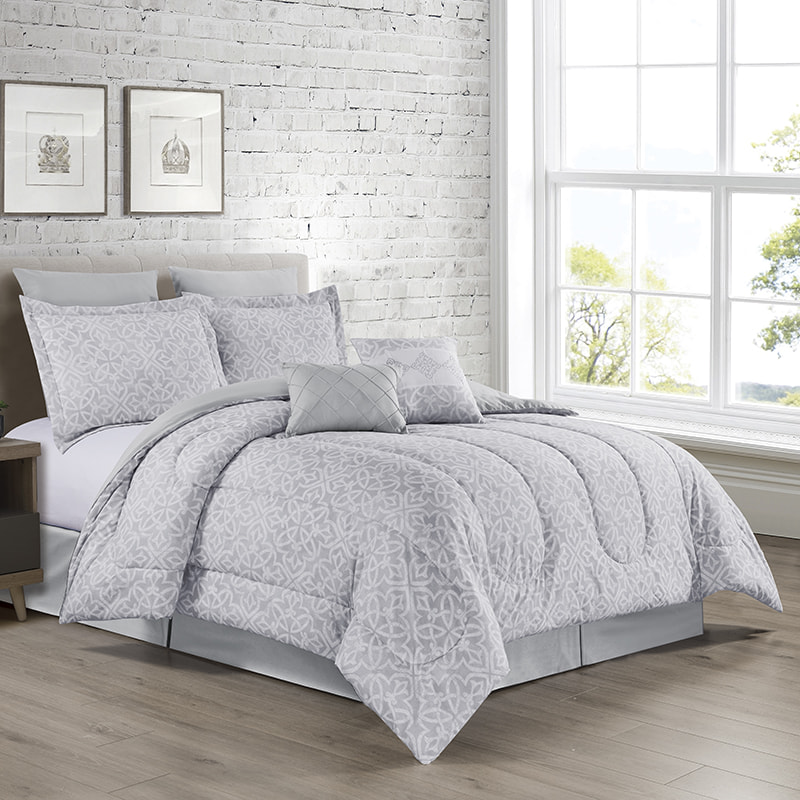
Sizing a Winter Comforter Correctly
Buying a winter comforter in the wrong size is a surprisingly common and frustrating mistake. A comforter that is too small leaves your feet or sides uncovered; one that is the right mattress size but does not account for mattress depth or the preference for overhang ends up looking and functioning poorly. Here are the standard comforter dimensions and how to match them to your situation:
| Comforter Size | Typical Dimensions | Mattress Match | Notes |
| Twin | 64" x 86" | Twin / Twin XL | Minimal overhang on standard twin |
| Full / Double | 76" x 86" | Full | Consider queen size for more drape |
| Queen | 88" x 92" | Queen | Standard choice; check brand dimensions |
| King | 102" x 92" | King | Fits standard king; may be snug on deep mattresses |
| California King | 104" x 96" | California King | Longer and slightly narrower than standard king |
Comforter dimensions are not standardized across the industry — different brands' queen comforters can vary by 6 inches or more in both dimensions. Always check the actual finished dimensions listed in the product specifications, not just the size label. If you use a thick mattress topper, have a particularly deep mattress (over 14 inches), or simply prefer generous overhang on all sides, consider sizing up one level — buying a king comforter for a queen bed is a practical choice for people who like a draped, hotel-style look and feel. For couples who fight over the comforter, the European practice of using two separate twin or full comforters on a king bed — each person with their own — is an increasingly popular solution that eliminates the tug-of-war entirely.
Choosing a Winter Comforter Based on How You Sleep
One of the most useful frameworks for narrowing down winter comforter choices is matching the product to your personal sleep temperature preferences. Body temperature regulation during sleep varies considerably between individuals, and a comforter that is perfect for one person can make another miserable.
- Hot sleepers: If you regularly wake up sweating or kick off covers in the middle of the night even in winter, look for a winter comforter with natural breathable fill — down or wool — at a moderate warmth level rather than maximum insulation. A baffle box construction down comforter with 600–650 fill power and a moderate fill weight in a cotton percale shell will keep you warm without trapping heat. Avoid heavy synthetic fills with microfiber shells, which tend to trap more moisture and heat.
- Cold sleepers: If you always feel cold and sleep with socks on even in a heated room, prioritize maximum fill weight and a higher fill power for a down comforter, or a heavy-weight synthetic fill rated for extra warmth. A thick baffle box winter comforter with 700+ fill power goose down or a premium down alternative rated for extra cold conditions will suit you well. Consider a comforter with a sateen shell, which has a slightly denser weave that retains warmth more effectively than percale.
- Mixed couples (one hot, one cold sleeper): This is one of the most common bedroom challenges. Options include a dual-zone comforter with different warmth levels on each side, two separate individual comforters as described above, or a medium-warmth comforter for the cold sleeper with an additional light blanket layer that the warm sleeper can kick aside. There is no single comforter that satisfies dramatically different sleep temperature needs equally well.
- Allergy sufferers: If you have dust mite allergies or are sensitive to down, a premium synthetic fill winter comforter is the safest choice. Look for products specifically labeled hypoallergenic with sealed baffle box construction that minimizes any possible allergen penetration. Wash the comforter every 2 to 3 months and use an allergen-proof duvet cover to further reduce exposure.
- Children: For children's winter comforters, prioritize machine washability and avoid very heavy fill weights that could restrict movement or cause overheating. Down alternative fills in child-safe warmth levels with easily washable cotton shells are the practical standard for kids' bedding.
How to Care for a Winter Comforter to Make It Last
A quality winter comforter is an investment that should last many years — but only if it is properly cared for. Incorrect washing or storage is the primary cause of premature fill clumping, shell damage, and reduced loft in both down and synthetic comforters.
Washing a Down Winter Comforter
Down winter comforters should be washed in a large-capacity front-loading washing machine — top loaders with agitators can damage the shell fabric and break down the down clusters. Use a mild, low-suds detergent formulated for down or a small amount of regular liquid detergent, and run a gentle cycle with warm water. Rinse twice to ensure no soap residue remains, as residue causes down to clump. Drying is the critical step: down must be dried completely — which can take 2 to 3 hours in a large commercial dryer on low heat — to prevent mildew growth inside the comforter. Adding two or three clean tennis balls or dryer balls to the dryer drum helps break up clumps and restore loft as the comforter dries. Check the comforter during drying and break up any remaining clumps by hand before the final drying cycle. A down comforter that is even slightly damp when stored will develop a musty odor and mold within days.
Washing a Synthetic Winter Comforter
Most down alternative winter comforters can be washed at home in a standard large-capacity machine using a gentle cycle and mild detergent. Check the care label — some oversized or heavy synthetic comforters should go to a commercial laundry to ensure they fit properly in the drum. Synthetic fill dries faster than down but should still be dried on low to medium heat with dryer balls to maintain loft and prevent the fill from bunching into dense sections.
Using a Duvet Cover to Extend Comforter Life
One of the most practical things you can do to extend the life of a winter comforter is to use it inside a duvet cover. The cover takes on the majority of sweat, body oils, and dirt contact — meaning the comforter itself needs to be washed far less frequently, which reduces the wear and tear that washing puts on both the fill and the shell. A duvet cover can be laundered weekly like regular bedding while the comforter inside is washed just two to four times per year. This approach also makes it easy to change the look of your bedding without replacing the comforter itself.
What to Expect at Different Winter Comforter Price Points
The winter comforter market spans a wide price range, and the differences in quality between tiers are real and measurable. Here is an honest breakdown of what you can expect at each price level for a queen-size winter comforter:
- Under $50: Basic synthetic fill, sewn-through construction, polyester shell. Adequate warmth for mild winters but fill compresses quickly — expect a 2 to 3 year useful life before noticeable reduction in loft. Fine as a starter option or guest room comforter where longevity is not the priority.
- $50 – $120: Better synthetic fills with improved loft stability, baffle box construction on some products, cotton-blend or microfiber shells. A meaningful improvement over budget options in comfort and durability. Down comforters in this range use lower fill power (400–550) with adequate fill weight for light to medium winter warmth.
- $120 – $250: Quality down alternative products with premium synthetic fills, full baffle box construction, and cotton shells. Genuine mid-range down comforters with 600–650 fill power and RDS certification begin at this price point. Solid choice for most buyers who want multi-year performance without premium pricing.
- $250 – $500: Premium down comforters with 700+ fill power goose down, baffle box construction, high thread count cotton shells, and full ethical sourcing certification. These products feel noticeably lighter and loftier than mid-range options and maintain their performance significantly longer with proper care.
- $500 and above: Luxury goose down comforters — typically filled with Hungarian or Siberian goose down at 800+ fill power — from brands such as Parachute, Boll & Branch, or European linen specialists. The fill is exceptionally light and lofty, the shell construction is impeccable, and these comforters genuinely last a decade or more with proper use and care. A sound long-term investment if warmth quality is a priority.
Signs It's Time to Replace Your Winter Comforter
Even a well-maintained winter comforter has a finite useful life. Knowing when a comforter has degraded past the point where care and washing can restore it helps you avoid sleeping under something that is no longer doing its job.
- Permanent flat spots or clumping: If sections of the comforter remain flat or clumped even after washing and drying with dryer balls, the fill has broken down and will no longer redistribute evenly. These cold spots mean the comforter is no longer providing uniform insulation.
- Persistent odor after washing: A musty or stale smell that does not clear after a thorough washing and complete drying cycle indicates mold or mildew growth inside the fill — often caused by inadequate drying after a previous wash. At this point, the comforter should be replaced rather than rewashed repeatedly.
- Shell fabric damage: Thinning fabric, significant pilling, tears, or seam failures that allow fill to escape are signs that the comforter has reached the end of its structural life. Small tears can sometimes be repaired, but widespread fabric deterioration cannot.
- Noticeably less warm than it used to be: If you are significantly colder under a winter comforter that used to keep you comfortable at the same room temperature, the fill has compressed and lost its insulating capacity. This is a natural process, particularly in synthetic fills and lower fill power down, and it signals that replacement will provide a meaningful improvement in sleep quality.

 +86-159 5050 0822
 peter@rainbowhomefashion.com
 No.199 Yimin Road, Dateng DIstrIct, Yancheng City. Jiangsu Province, China