


 English
 Español
 عربى

Ask a bedding buyer which item quietly keeps the range profitable, and the answer is rarely the boldest print on the shelf. More often it is the plain cotton comforter set in white, ivory or stone grey, the one that sells from spring into autumn and restocks without a discussion. After more than two decades in textile export, we still see solid color cotton programs sitting at the centre of most of the bedding ranges we quote.
What follows is a practical guide for importers, wholesalers and private label teams: what separates a good cotton solid color comforter set from an ordinary one, how set configurations differ between markets, and which details have a habit of turning into claims six months after delivery.
Content
- 1 Why Solid Color Cotton Keeps Selling
- 2 Fabric and Construction: What Buyers Ask About
- 3 Set Configurations for Different Markets
- 4 Building a Color Range That Travels
- 5 Care, Testing and the Details Behind Claims
- 6 Packaging, Private Label and Reorder Rhythm
- 7 Coordinating Items and Full-Bed Programs
- 8 A Short Checklist Before You Order
Why Solid Color Cotton Keeps Selling
Prints sell a season. Solids sell a decade. A floral or geometric design is tied to a mood, a color trend and often a single buying cycle, while a plain cotton comforter can sit in a catalog for years and still look current. That long life makes solid programs easier to plan: fewer SKUs, deeper production runs, and far less risk of leftover stock at the end of the season.
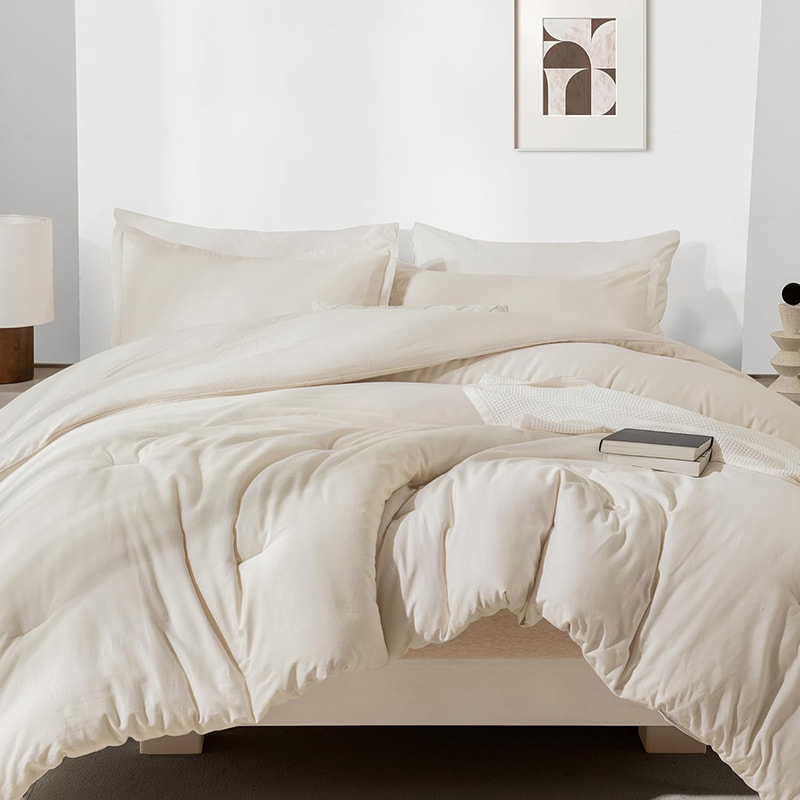
There is a practical side that retailers appreciate as well. Solid color photographs well under any lighting, mixes with printed sheets without clashing, and suits the neutral styling that dominates hotel, rental and short-stay accommodation. Buyers who serve those channels tend to reorder the same shades rather than rebuild the assortment every year. If you would like to see how the palette behaves in a real bedroom, our note on choosing a solid color comforter set for a bedroom walks through a few styling combinations.
Cotton adds the second half of the argument. It breathes, it softens with washing, and customers already trust it without reading a label. In a plain construction there is nowhere for a fabric flaw to hide, which is exactly why a solid color set is a fair test of a supplier's consistency.
Fabric and Construction: What Buyers Ask About
Two comforters can look identical online and feel completely different in the hand. When we send samples, we usually walk buyers through three areas: the shell, the quilting, and the color.
Shell fabric and weight
Most cotton solid color comforter sets use a plain weave cotton shell, commonly 40s yarn with a construction around 128x68 to 133x72 threads per inch. Denser shells feel crisper and hold a quilt pattern well; lighter shells drape more softly but need a tighter quilting design to avoid looking limp. Brushed or washed finishes are worth sampling if your customer expects a broken-in feel from the first night, although they do shift the shade slightly compared with a flat woven surface.
Quilting, filling and stitch density
Diamond, square and channel patterns cover most of the market, with box quilting giving the most structured look and channel quilting the softest drape. Stitch density matters more than the pattern name: too few stitches per inch and the filling migrates in the wash, too many and the shell puckers along the seams. Filling weight typically runs from about 150 gsm for summer or warm-climate markets up to 250 gsm for all-season comfort. For hospitality buyers we often recommend a firmer hand, because a diamond quilt that keeps its shape through repeated laundering saves replacement costs later.
 Hotel Style Diamond Quilt Cotton Comforter SetSolid cotton diamond-quilted comforter set for hotel or home use, supported by dye-lot control and colorfastness testing.View Product →
Shade consistency and dye performance
Solid color is unforgiving. A half-shade difference between two production lots is invisible in a swatch book and obvious on a shop floor when two comforters sit side by side. We work from lab dips and approved shade cards, keep dye lots together within an order, and test colorfastness to washing, rubbing and light. For white and ivory we also confirm that optical brighteners behave consistently, so a reorder does not arrive looking cooler or warmer than the first shipment.
| Specification | Common choice | Why it matters |
|---|---|---|
| Shell fabric | 100% cotton plain weave, 40s | Breathability and a familiar hand feel |
| Filling weight | 150 to 250 gsm | Balances warmth, price point and climate |
| Quilting pattern | Diamond, square or channel | Controls structure, drape and wash durability |
| Set makeup | 3, 4, 5, 7 or 9 pieces | Matches the retail price ladder in each market |
| Colorfastness | Grade 4 or better to washing | Fewer returns after the first home laundry |
Set Configurations for Different Markets
Set makeup changes more between regions than most new buyers expect. A program that sells well in one country can look over-packed or incomplete in another.
- Three-piece sets, one comforter plus two shams, suit single and twin beds, guest rooms and entry price points.
- Four-piece sets add a fitted or flat sheet and dominate mid-tier retail in many markets.
- Five-, seven- and nine-piece sets are common in North American retail, where the bed-in-a-bag format does much of the selling.
- Duvet-cover format with a separate insert is standard across much of Europe, where the cover rather than the comforter is the washable layer.
Small three-piece programs are also the easiest way to test a new shade before committing to a full container. A simple dotted quilt in soft cotton is a good example of a low-risk entry item, because it photographs clearly, packs compactly and sits comfortably at an opening price.
 Soft Cotton Solid Dotted Quilt Three Piece SetLow-risk three-piece dotted cotton quilt set for testing a new shade before committing to a full container.View Product →
Carton planning deserves a mention here too. Compressed packing improves container utilisation but changes how the comforter recovers on the shelf, so it is worth testing recovery time with your own packaging rather than assuming the loft will return overnight.
Building a Color Range That Travels
Most successful solid programs open with four to six neutrals, such as white, ivory, light grey, charcoal, sand and navy, then add two or three accent shades for the season. Neutrals carry the volume and protect the reorder, while accents give the range a reason to be photographed again. Regional preference still matters, and a walk through a local retail floor before finalising a palette is rarely wasted time.
One practical habit we recommend to every buyer: record each approved shade with a reference number and a physical swatch, not just a name. Color words mean different things in different markets, and a documented reference is what keeps the third reorder identical to the first.
Care, Testing and the Details Behind Claims
Most after-sales complaints on solid bedding trace back to shrinkage, crocking or careless care-label wording. Washing the shell before cutting reduces dimensional surprises, and a simple three-wash shrinkage test at sampling stage tells you more than a specification sheet. Rub-fastness matters on darker shades such as navy and charcoal, where a dry crock can mark pale sheets. Care instructions should follow the destination market's rules and mention the filling, because consumers rarely guess it correctly. On brushed or washed finishes, ask for a pilling check as well; a soft surface that pills after a month undoes the goodwill a plain color creates.
Packaging, Private Label and Reorder Rhythm
Packaging options
Solid programs live on repeat volume, so packaging should be designed for the second order as much as the first. Common choices include a plain PE bag, a PVC zipper bag with an insert card, a non-woven tote, or a compressed roll. Each one changes freight cost and presentation, and each one should be tested with the actual filling weight rather than a substitute.
Sampling and timing
A realistic schedule runs from lab dip approval to pre-production sample to bulk production, with the pre-production piece signed off before cutting begins. Capacity tightens between August and October ahead of peak retail shipping, and again around Chinese New Year, so confirming a slot early is usually cheaper than asking for a rush later.
Coordinating Items and Full-Bed Programs
Once a solid color story works, the natural next step is a full-bed offer: matching sheet sets, extra shams, and a bed skirt in the same base cloth. Coordinating pieces are simpler to develop than a new print, because the fabric is already approved and the dye lot is already on the line. Buyers who test a shade in a comforter often come back for sheets in the same tone, and the combined order improves both freight economics and shelf presence.
You can browse our cotton solid color comforter set range for the current constructions, or start with a coordinating sheet set in solid cotton to see how the shades sit together.
 Solid Color Pure Cotton Bed Sheet SetSolid cotton sheet set for coordinating shades with comforter programs, with customizable dimensions, print and style.View Product →
Yancheng Rainbow Textile Co., Ltd., which exports under the Rainbow Home Fashion name, has been manufacturing and supplying pure cotton sheets and comforters since 2005. Our product development is driven by buyer briefs rather than a fixed catalog, so a solid color program can usually be adjusted in palette, quilting pattern and set makeup before sampling.
A Short Checklist Before You Order
- Confirm shell construction and filling weight against your target retail price, not against a competitor's sample alone.
- Approve shades on a physical swatch with a reference number for every reorder.
- Test shrinkage, colorfastness and pilling at sampling, then keep the approved sample on file.
- Check that set sizes, care labels and packaging match the destination market's expectations.
- Agree packaging format and carton compression before bulk, not after.
- Book production capacity early if your shipping window falls between August and October.
Solid color cotton is not the most exciting part of a bedding range, but it is often the part that keeps a program stable across seasons. Get the shell, the shade and the set makeup right, and the reorders tend to look after themselves.

 +86-159 5050 0822
 peter@rainbowhomefashion.com
 No.199 Yimin Road, Dateng DIstrIct, Yancheng City. Jiangsu Province, China
