


 English
 Español
 عربى
عربى
A plain white duvet cover will always have a place in a hotel programme, but in home retail, print sells. Cotton printed duvet covers sit near the top of the enquiries we handle each week, not because they are complicated, but because they do two jobs at once: they protect the insert and they carry the whole look of the bed.
That double duty is also why printed cotton is harder to get right than it first appears. Fabric, print method, repeat size and finishing all interact, and a small decision made early can resurface a year later as a faded panel, a shrunken cover or a colour that no longer matches the sample. This guide walks through what matters when you specify, buy or resell a cotton printed duvet cover.
Content
Why Cotton Printed Duvet Covers Stay in Demand
Printed cotton occupies a useful middle ground in bedding. It is more decorative than a solid colour, cheaper to develop than a jacquard or an embroidery programme, and far easier to refresh each season. For a retail buyer, that means a new look can be introduced without touching the size specification, the packaging or the freight plan.
Cotton itself still sets the benchmark. Shoppers associate it with breathability, a soft hand and easy washing, and most will pay a modest premium for it over polyester microfibre. When a printed design is layered onto that familiar base, the product reads as comfortable and current at the same time.
There is a supply-side benefit too. A print programme uses screen or digital setup rather than loom changes, so several designs can run on the same base cloth. That keeps minimum order quantities workable and lead times predictable, which matters when the season is only six weeks away.
The Cotton Behind the Print
Two covers can look identical on a screen and behave completely differently in a customer's laundry. The difference almost always comes down to the base cloth.
Thread count, weight and weave
For duvet covers, a thread count between 200 and 400 covers most of the market. Percale, usually a plain weave in the 200 to 300 range, feels crisp and cool and gives prints a matte finish. Sateen, a 300 to 400 count weave with more float, has a soft sheen and a smoother hand; printed colours look richer on it, although creases show more readily.
Weight matters as much as count. Around 110 to 130 grams per square metre is a comfortable duvet cover weight: heavy enough to drape well, light enough to dry quickly. A lighter cloth feels cooler in summer but can look thin against a white insert.
Details that show up after the sale
- Closure: buttons, a concealed zip or a simple tuck flap. Zips cost more but cut returns from hurried shoppers.
- Corner ties: four internal ties keep the insert in place and are frequently praised in reviews.
- Seam finish: overlocked edges are standard, while flat-felled or French seams signal a higher grade.
- Border treatment: piping, a flanged edge or a plain hem changes perceived quality more than most buyers expect.
Rainbow Home Fashion makes printed cotton bedding in Yancheng and builds to a buyer's own specification, so the set below is a fair reference point when you compare base cloth and finishing between suppliers.
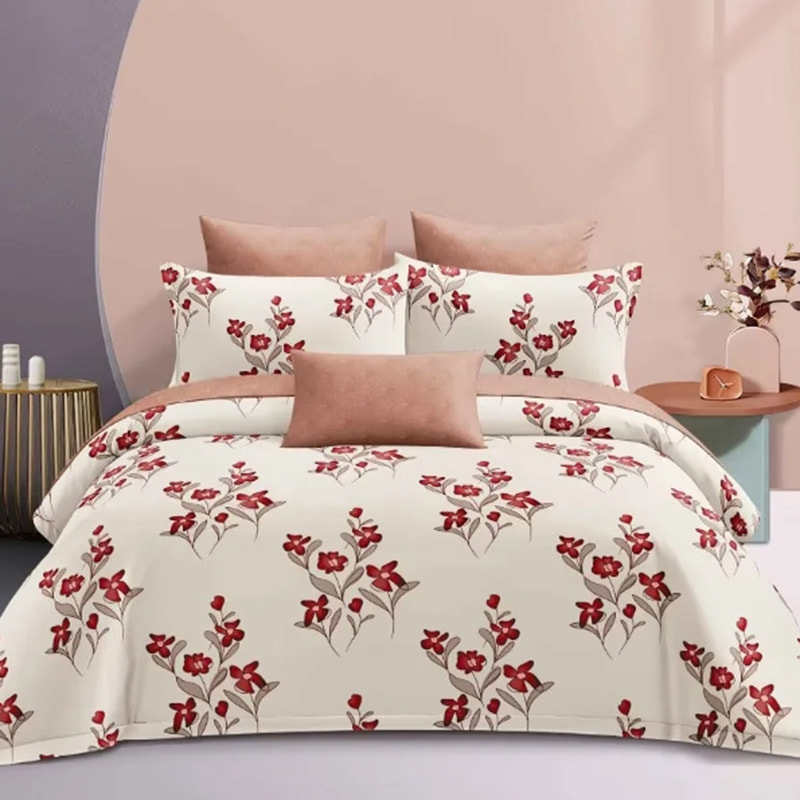
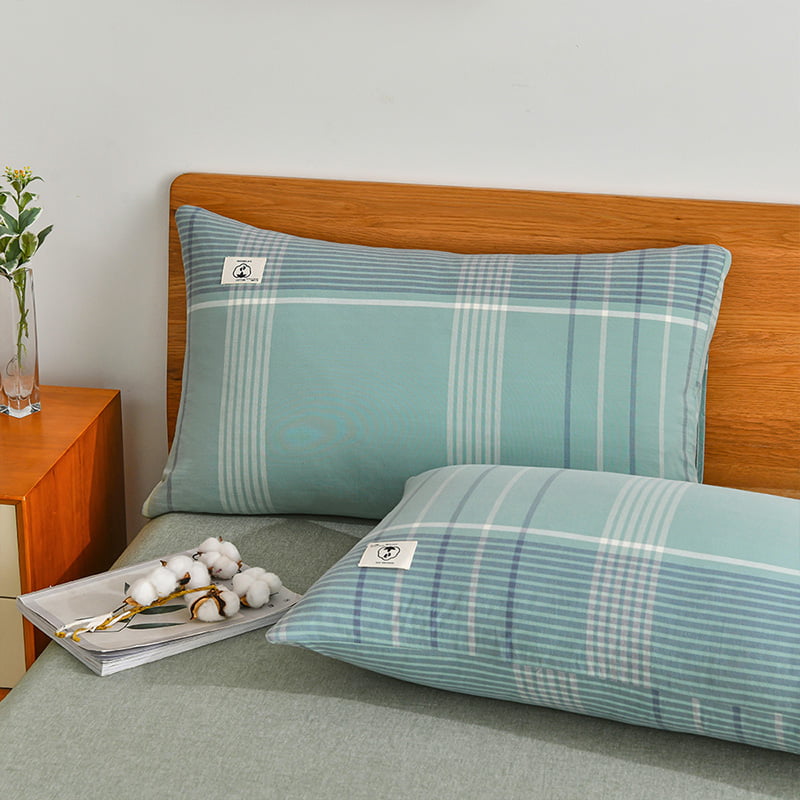 Rainbow Home Print Cotton Duvet Cover SetA customizable 100% cotton printed duvet cover set with floral front, plain reverse, and four-piece bedding make-up for buyer-specific orders.View Product →
How the Print Is Applied
The printing method decides how the cover feels, how it survives washing and how much it costs to develop. Four routes cover almost everything on the market.
| Method | Hand feel | Fastness | Best suited to |
|---|---|---|---|
| Reactive printing | Soft, colour sits in the fibre | Good to excellent | Pure cotton, mid to premium ranges |
| Pigment printing | Slightly stiffer surface | Moderate, watch rubbing | Blends, bold graphics, budget ranges |
| Rotary screen printing | Depends on paste and finish | Good | Large runs with limited colourways |
| Digital printing | Soft, fine detail | Good when pre-treated | Small runs, photographic artwork |
Reactive printing is the default for quality cotton. The dye forms a chemical bond with the cellulose fibre, so the colour sits inside the yarn rather than on top of it. Pigment printing is cheaper and works on almost any substrate, but the binder that holds the pigment can stiffen the cloth and may crock against dark garments or upholstery.
Digital printing has changed the economics of small programmes. With no screens to cut, a capsule collection of eight or ten designs at a few hundred pieces each becomes viable. The trade-off is a higher cost per metre at volume, which is why large seasonal ranges still run on rotary screens.
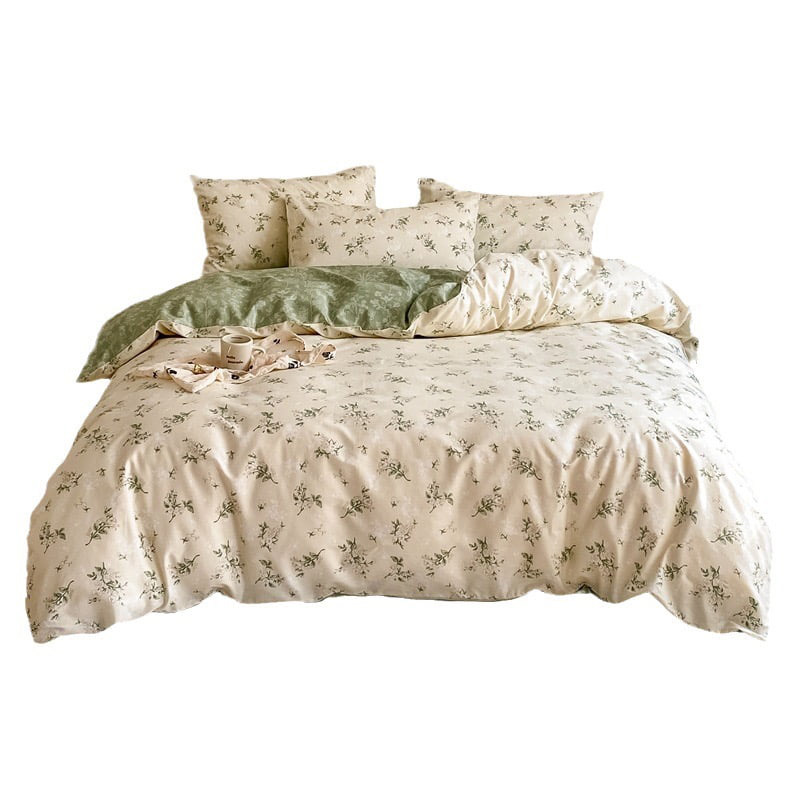 Rainbow Home Flower Patterned Duvet Cover SetA 100% cotton floral duvet cover set with delicate scattered flowers, corner straps, and customizable dimensions for small patterned bedding programmes.View Product →
What to Check Before You Commit
Before a bulk order is confirmed, run through the same short list we use in the sample room.
- Registration: do the colours sit inside their outlines, and does the repeat line up across the full width?
- Fastness: ask for washing and rubbing results, and pay closest attention to deep reds, navies and blacks.
- Shrinkage: request the figure after three home launderings, not a single laboratory wash.
- Hand feel: a pigment print on a soft base can feel noticeably stiffer than the greige cloth.
- Consistency: ask how colour is matched between lots, visually or with a spectrophotometer.
Sizes and Set Configurations
Duvet cover sizing is not universal, and a cover that fits one market will look loose in another. The table below shows the sizes most often requested by export buyers; treat them as a starting point and confirm against your own market before ordering.
| Size name | Typical cover size | Usual set make-up |
|---|---|---|
| Single or Twin | 140 x 200 cm | Cover plus one pillowcase |
| Double or Full | 200 x 200 cm | Cover plus two pillowcases |
| Queen | 220 x 240 cm | Cover plus two shams |
| King | 240 x 220 cm | Cover plus two shams |
| Super King | 260 x 240 cm | Cover plus two shams |
Set make-up matters as much as size. European buyers often take a two-piece set of cover plus one pillowcase, while North American and Middle Eastern buyers expect cover plus two shams. Mid-tier ranges frequently add a flat or fitted sheet to reach four or six pieces, and many importers extend the same print story into a matching comforter set.
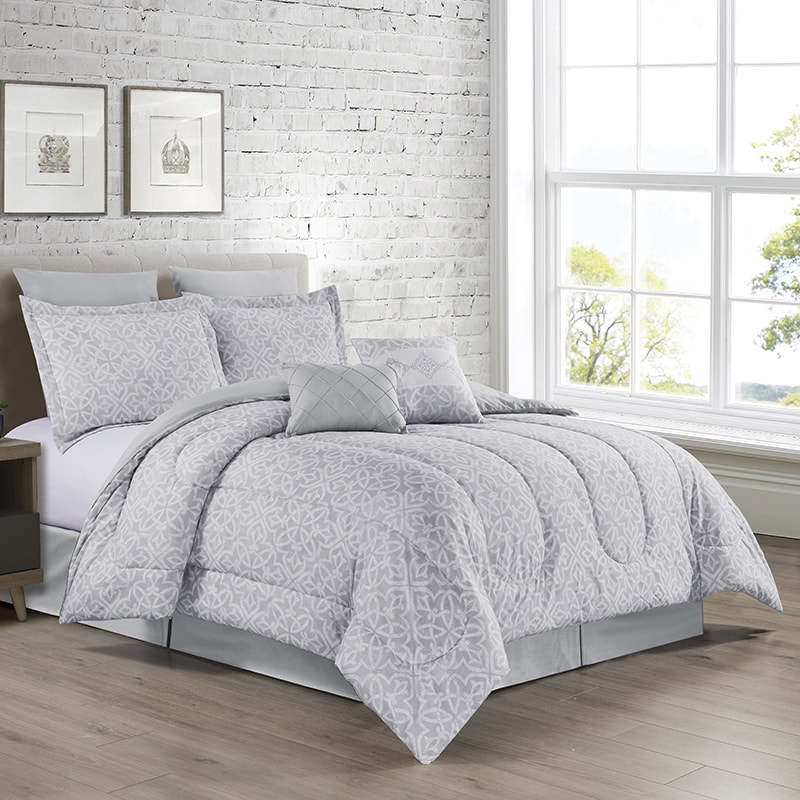
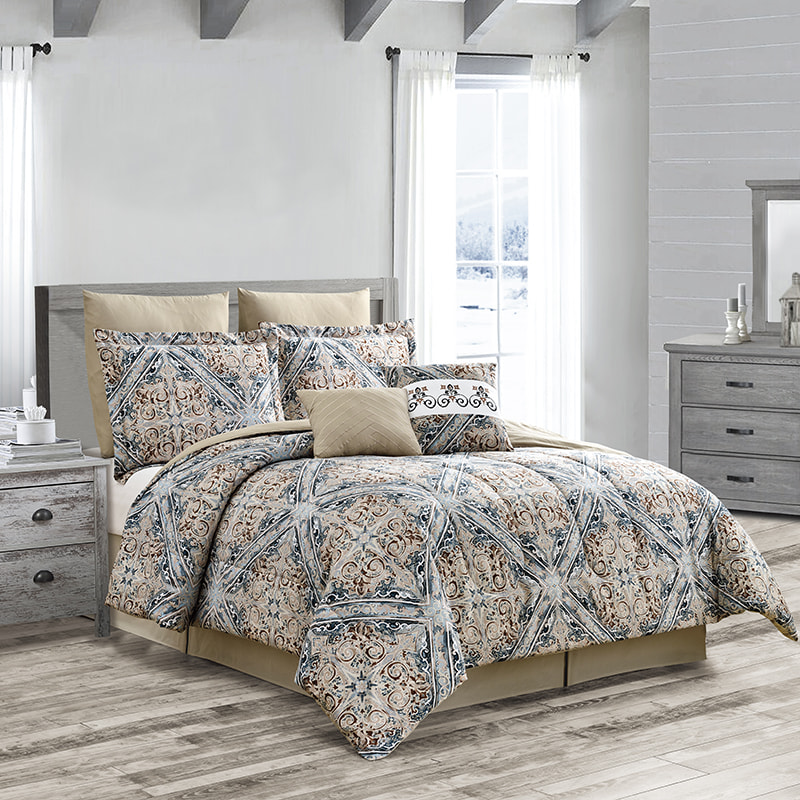
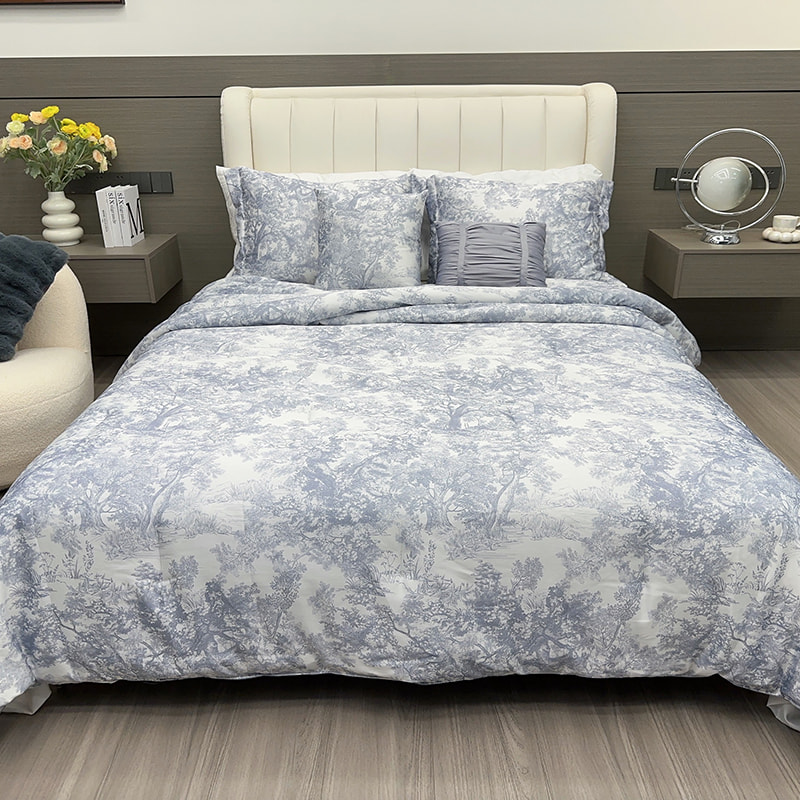
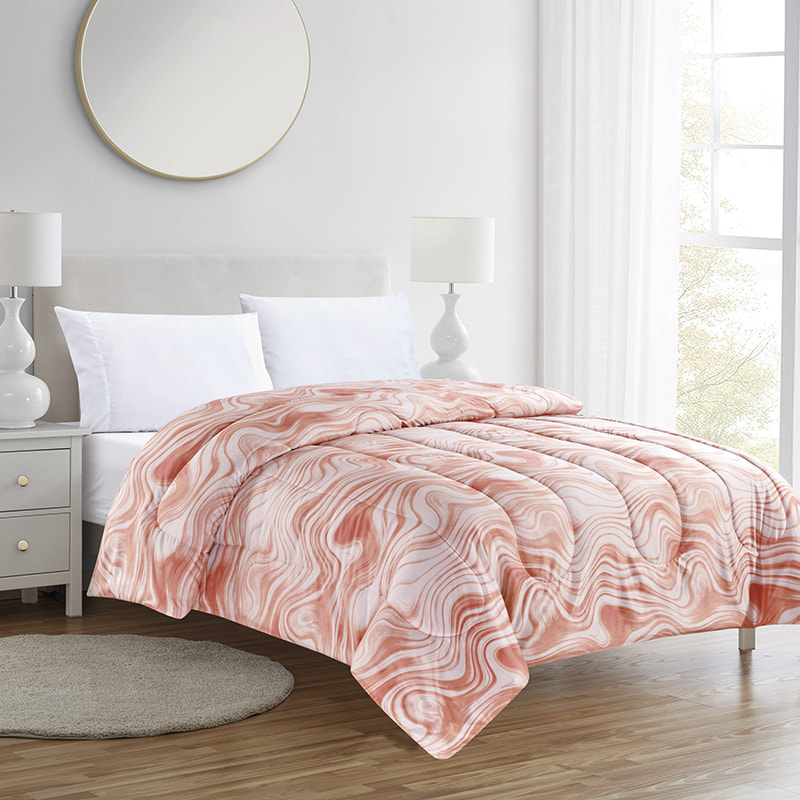 Rainbow Home Printed Pure Cotton Comforter SetA pure cotton printed comforter set with polyester filling, finger stitching, and many floral styles, useful for completing coordinated bedding ranges.View Product →
Care Advice That Reduces Returns
Most complaints about printed cotton are not manufacturing faults, they are laundering mistakes. A clear, honest care label prevents a good number of them.
- Wash at 40 degrees Celsius or below with a mild detergent, and turn the cover inside out first.
- Skip bleach and optical brighteners, which dull reactive prints and yellow pale grounds.
- Wash dark and light printed covers separately for the first three cycles.
- Tumble dry on low or line dry in shade; direct sun fades pigment prints faster than reactive ones.
If you sell online, repeat the same instructions in the product description. Buyers who know a cover should be washed inside out rarely send it back.
Sourcing a Cotton Printed Duvet Cover: A Practical Checklist
- Fix the specification in writing: fibre content, thread count, weight in grams per square metre, print method, closure type and packing.
- Ask for a strike-off or lab dip for every colourway before bulk, and approve it against a physical standard rather than a screen image.
- Confirm shrinkage after three washes and agree the tolerance you will accept.
- Agree minimum order quantity per design and per colourway, plus any surcharge for extra colours.
- Check sampling lead time as well as bulk lead time, and confirm what happens if a print fails fastness testing.
- Verify care labels, barcodes and polybag requirements for your destination market.
Our sampling and export service keeps this conversation short: we quote the same specification sheet back to the buyer, and we say early when a design will not hold properly on a given base cloth.
Common Questions from Buyers
Is reactive printing worth the extra cost?
For a pure cotton cover that will be washed often, yes. Reactive prints keep their softness and hold colour longer, and the difference is usually a small share of the landed cost. Pigment printing makes more sense on blends or on short-life fashion items.
Can we use our own artwork?
Yes. Send artwork in a layered file with the repeat marked, and state how many colours the design uses. Complex artwork is often cheaper to run digitally, while simpler designs with two or three colours are usually better on rotary screens.
How do we avoid shade differences between shipments?
Approve a physical standard, keep a retained sample from each lot, and agree a colour tolerance in advance. Deep shades such as navy and burgundy vary most, so build in a slightly wider tolerance or move those designs to reactive printing.
Rainbow Home Fashion, the export brand of Yancheng Rainbow Textile Co., Ltd., has supplied printed cotton bedding to overseas buyers since 2005. Our range covers printed duvet covers and matching printed cotton comforter sets, alongside sheet sets, quilts and sofa covers in cotton, linen, bamboo and microfibre.
If you are planning a printed range, send us your size chart, target price and artwork. We will come back with a base cloth recommendation, a print method and a sampling timeline, and we will tell you honestly when a design would work better on a different fabric.

 +86-159 5050 0822
 peter@rainbowhomefashion.com
 No.199 Yimin Road, Dateng DIstrIct, Yancheng City. Jiangsu Province, China