


 English
 Español
 عربى
عربى
A cotton printed comforter set looks like one of the simplest items in a home textiles catalogue: a printed shell, a soft fill, a few quilting lines, and a coordinating pillow sham or two. Then you start comparing options and the simplicity disappears. Two sets can carry the same description, sit in the same price band, and still behave completely differently after a year of washing. Those differences are the ones worth understanding before you place an order.
We have been manufacturing and exporting cotton bedding from Yancheng for more than twenty years, and most of what we know came from conversations with buyers after delivery rather than before it. This guide gathers that experience into something practical, whether you are furnishing a single guest room or filling a container.
Content
- 1 What Makes Up a Cotton Printed Comforter Set
- 2 Why Cotton Still Earns Its Place
- 3 Cotton or Microfiber: A Side-by-Side Look
- 4 How to Judge Print Quality Before You Commit
- 5 Matching Prints to Rooms and Retail Channels
- 6 Care Advice Worth Passing On
- 7 Sourcing Questions That Save Time Later
- 8 Working With a Manufacturer Rather Than a Catalogue
What Makes Up a Cotton Printed Comforter Set
Every comforter set comes down to three decisions: the shell, the filling, and the finishing. A shortcut in any one of them shows up later, usually after the first wash.
The printed shell
The shell is the part you actually touch. In a cotton printed comforter set, it is usually a plain-weave cotton somewhere between 60 and 130 gsm, depending on whether the set is built for summer lightness or winter weight. A higher thread count is not automatically better. What matters more is whether the yarn is combed, how evenly the fabric was singed and mercerised, and whether the print sits on the surface or penetrates into the fibre.
Filling and quilting
Filling can be polyester, cotton, or a blend. Polyester holds loft and dries quickly; cotton feels cooler and carries more weight in the hand. The quilting pattern, whether diamond, box, or channel, decides how the fill shifts over time. A tight box stitch keeps everything in place but gives a stiffer drape. There is no universally correct choice, only the trade-off that fits your market.
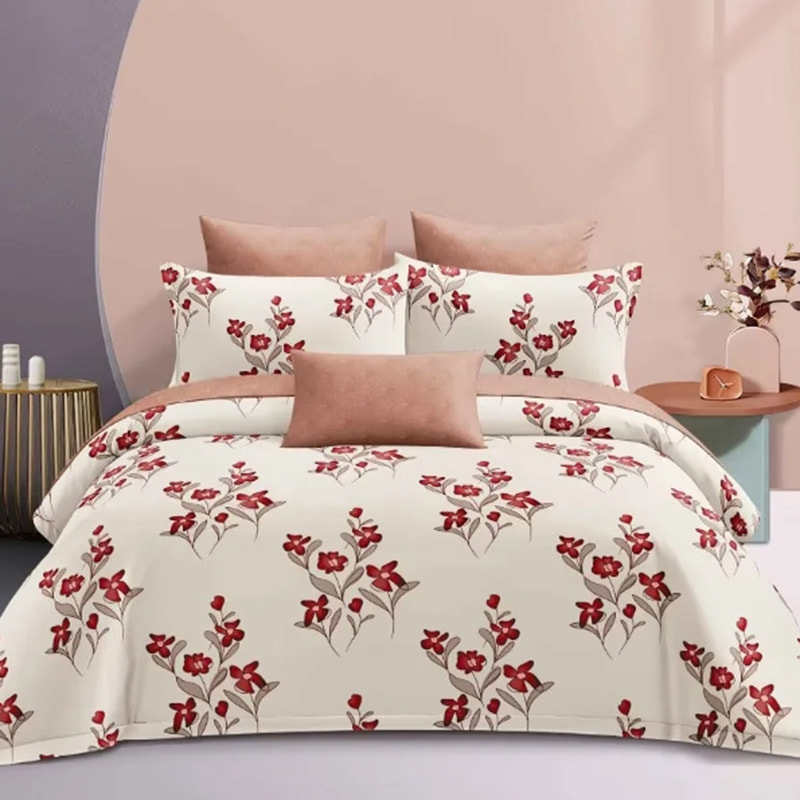
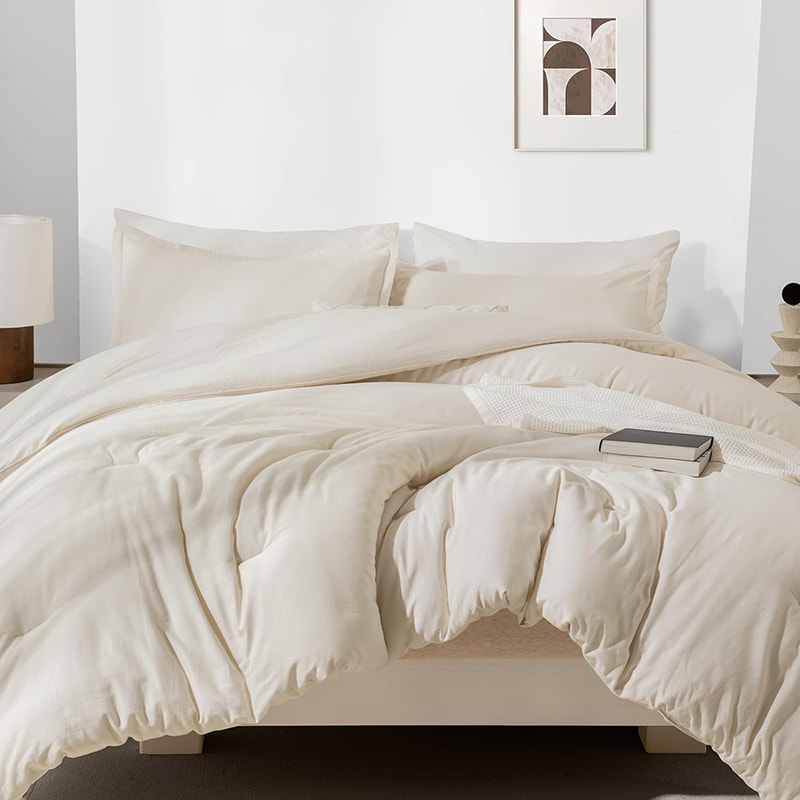
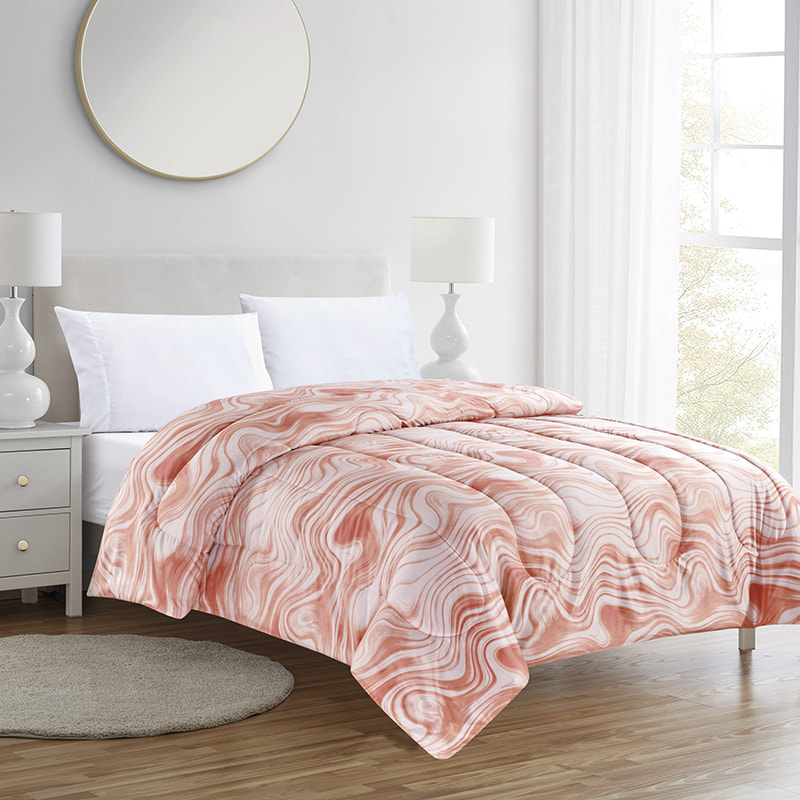 Rainbow Home Pure Cotton Printed Comforter in Various StylesA pure cotton printed comforter with soft polyester fill, available in many flower patterns and customizable sizes, prints, and styles.View Product →
Why Cotton Still Earns Its Place
Microfiber has real advantages and we produce plenty of it. Cotton, though, keeps coming back for a handful of consistent reasons:
- Breathability. Cotton moves heat and moisture in a way that dense synthetic shells simply do not, which matters for year-round use.
- Print character. Cotton takes reactive dyes deeply, so colours tend to look softer and more saturated rather than faintly plastic.
- Hand feel that improves. A good cotton shell gets softer with washing instead of developing a slick, pilled surface.
- Buyer recognition. Shoppers understand what cotton means without needing the label explained.
Pattern and styling shape the feel of a room as much as fabric does. Our notes on choosing the right cotton printed comforter set for your bedroom go deeper into colourways and layout.
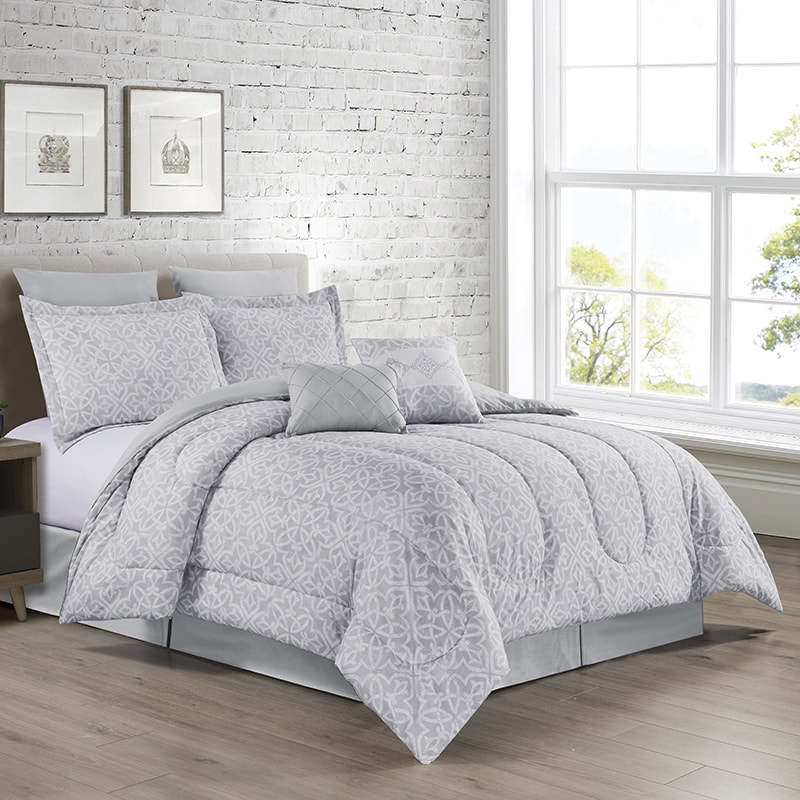
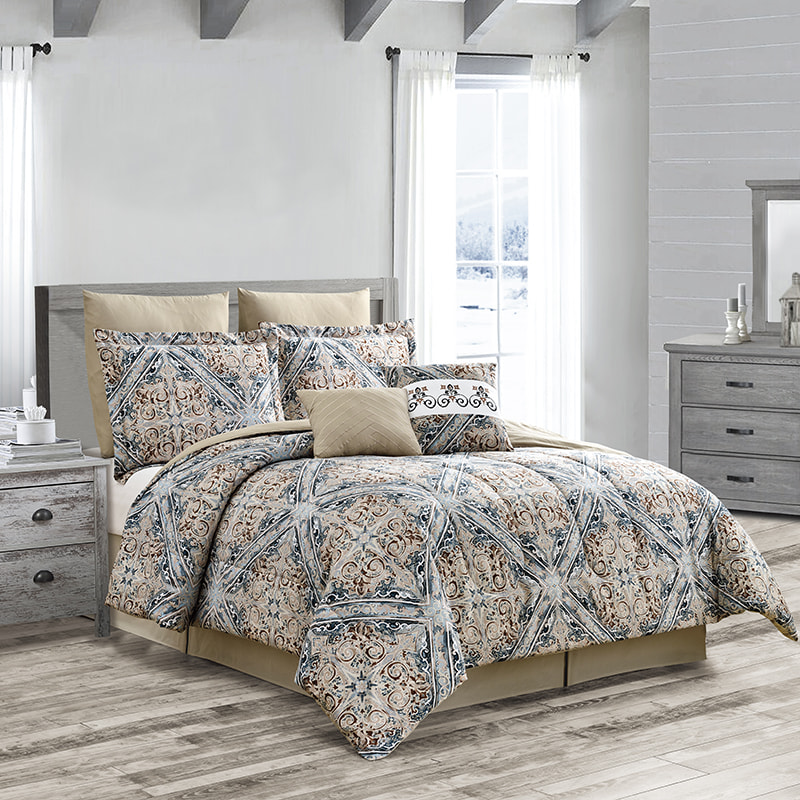
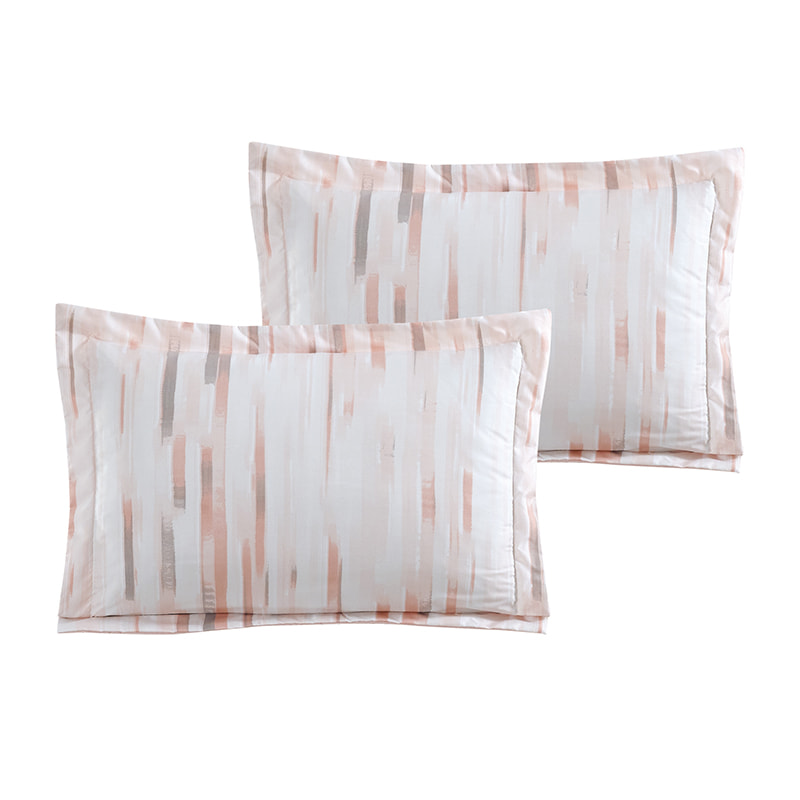 Soft Skin-Friendly 8-Piece Printed Pure Cotton Comforter SetAn eight-piece pure cotton printed bedding set with comforter, bed skirt, shams, and cushions, suited to buyers comparing shell options and complete room styling.View Product →
Cotton or Microfiber: A Side-by-Side Look
Buyers often ask which shell they should stock. The honest answer depends on price point, climate, and how the set will be used. This is what we typically see coming off the line at comparable quality levels.
| Aspect | Cotton Printed | Microfiber Printed |
|---|---|---|
| Hand feel | Dry and crisp, softens over time | Smooth and slightly slick from day one |
| Print clarity | Deep, softly saturated colour | Sharp lines, brighter top colour |
| Breathability | High, comfortable across seasons | Lower, warmer in summer |
| Weight for warmth | More grams needed for the same warmth | Lighter fill achieves similar loft |
| Washing behaviour | Gets softer, minimal pilling | Holds shape, can pill at friction points |
| Price positioning | Mid to premium tier | Entry to mid tier |
| Best suited to | Hospitality, gifting, quality-focused retail | Volume retail, promotional programmes |
How to Judge Print Quality Before You Commit
Print is where most of the visual value sits, and it is also where the cheapest shortcuts hide. Three things are worth checking carefully.
Print method
Reactive printing bonds dye to the cotton fibre, so the pattern stays soft to the touch and survives repeated washing. Pigment printing sits on top of the fabric. It costs less and can look sharp, but it often feels slightly stiff and fades faster on dark grounds. Both belong at different price points; the mistake is paying reactive money for pigment work.
Registration and repeat
Look closely at where two colours meet. On a well-printed comforter, the edges are clean and the repeat lines up across the full width. Blurred edges, speckling in dark areas, or a repeat that drifts toward the selvedge usually points to a rushed, less controlled run.
Colour consistency
Ask for lab dips and approve the bulk on fabric, not on a screen. Print batches vary slightly by nature, and a buyer who signs off from a monitor is taking a risk nobody needs to take.
Matching Prints to Rooms and Retail Channels
Pattern choice is the genuinely enjoyable part of the job. A few combinations that hold up well in practice:
- Small-scale florals and ditsy prints for guest rooms, rental apartments, and value-focused retail.
- Larger botanical or geometric repeats for boutique hotels and mid-tier home retail.
- Children's themes such as animals, vehicles, and soft pastels for kid and juvenile channels, where a lighter fill is usually welcome.
- Seasonal motifs for promotional periods, planned well ahead of the shipping window rather than around it.
One practical warning: a print that reads beautifully as a flat swatch can look busy once it is quilted across a 220 cm width. Always approve a printed and quilted sample, not just the fabric.
Care Advice Worth Passing On
Most complaints about printed bedding trace back to washing rather than manufacturing. A short list of habits prevents the majority of them:
- Wash in cold or lukewarm water on a gentle cycle with a mild detergent.
- Skip bleach and fabric softener; both dull reactive prints over time.
- Tumble dry low or line dry, and shake the set out first so the fill redistributes evenly.
- Wash the comforter on its own or with similar colours to reduce friction and pilling.
- Store folded in a dry, breathable bag rather than a vacuum-sealed one.
These small habits make far more difference to how a printed comforter looks in year three than the original price tag did.
Sourcing Questions That Save Time Later
When you compare suppliers, a short list of questions tends to separate the serious mills from the middlemen:
- Which cotton is used, and is it combed or carded?
- Reactive or pigment print?
- Filling composition and weight per square metre?
- Set configuration, three, four, or seven pieces?
- Shrinkage and colourfastness test results?
- Lead time for a repeat order, not just the first one?
It is also worth asking about environmental practice, not as a marketing exercise but because the answers shape cost and consistency over time. Our own position on materials, waste, and production choices is set out on our sustainability page.
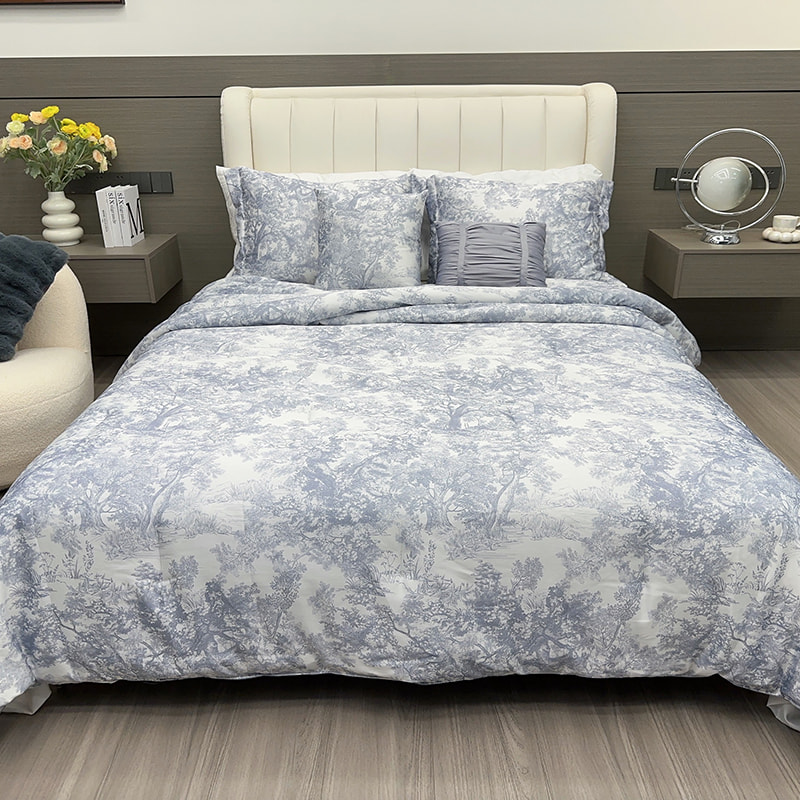
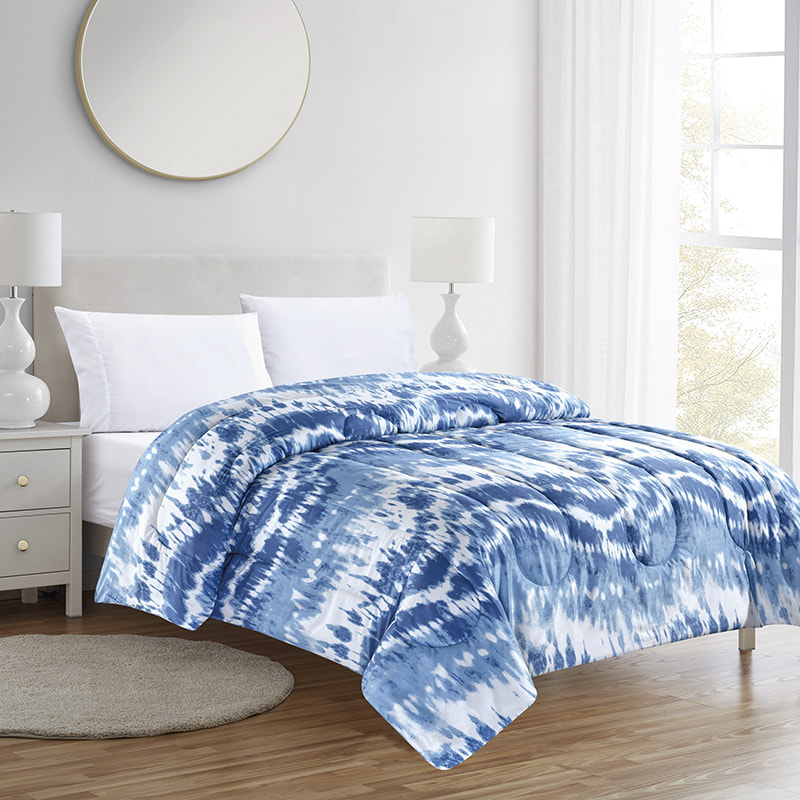 Custom Cotton Printed Comforter Set for Tailored Bedding ProgramsA custom cotton printed comforter set with naturally soft, breathable cotton, relevant for buyers needing print or configuration adjustments from a manufacturing partner.View Product →
Working With a Manufacturer Rather Than a Catalogue
If your print is close but not quite right, a manufacturing partner can usually adjust it: repositioning a repeat, shifting a colourway, changing the fill weight, or moving a three-piece configuration up to seven pieces. That flexibility is difficult to find when you are buying from stock alone.
Rainbow Home Fashion produces cotton printed comforter sets alongside solid colour, technical, plush, and quilted ranges, and we ship to importers, wholesalers, and retail brands across several markets. If you are at the early stage of an enquiry, send a reference image and a target price. That combination tells us more than a long specification list ever will.
Choosing a cotton printed comforter set is ultimately a balance of three things: how it feels in the hand, how it looks after twenty washes, and whether the price leaves room for both you and your customer to be happy. Get those three right and the rest of the product range tends to follow. If you would like a sample in front of you before deciding, that is exactly the conversation we prefer to have.

 +86-159 5050 0822
 peter@rainbowhomefashion.com
 No.199 Yimin Road, Dateng DIstrIct, Yancheng City. Jiangsu Province, China