


 English
 Español
 عربى
عربى
Content
- 1 What Makes Bamboo Sheet Sets Different from Regular Bedding?
- 2 Understanding Bamboo Fabric Types Used in Sheet Sets
- 3 Thread Count in Bamboo Sheets: What the Numbers Actually Mean
- 4 How to Compare Bamboo Sheet Sets: Key Specifications at a Glance
- 5
- 6 Who Benefits Most from Bamboo Bed Sheet Sets?
- 7 Washing and Caring for Your Bamboo Sheet Set
- 8 Bamboo Sheet Sets vs. Cotton, Linen, and Microfiber: A Direct Comparison
- 9 What to Expect When You First Use a Bamboo Sheet Set
What Makes Bamboo Sheet Sets Different from Regular Bedding?
Bamboo sheet sets have surged in popularity over the past decade, and for good reason — they offer a genuinely distinct sleeping experience compared to conventional cotton or polyester bedding. The key difference lies in the fiber itself. Bamboo-derived fibers, whether processed into viscose, lyocell, or a bamboo-cotton blend, produce a fabric with a uniquely smooth, cool hand feel that rivals high-thread-count Egyptian cotton at a significantly lower price point. The microscopic cross-section of bamboo fiber features micro-gaps that enhance moisture absorption and ventilation, making bamboo bed sheet sets inherently more breathable than most synthetic alternatives.
Beyond texture, bamboo sheets are naturally thermo-regulating, meaning they respond to body temperature by wicking moisture away during warm nights and retaining gentle warmth when temperatures drop. This makes a bamboo sheet set particularly well-suited for hot sleepers, people going through hormonal changes, and anyone living in a climate with significant overnight temperature swings. Additionally, bamboo fabric has a natural resistance to odor-causing bacteria, which keeps sheets fresher between washes compared to standard cotton sets.
Understanding Bamboo Fabric Types Used in Sheet Sets
Not all bamboo sheet sets are made from the same type of fabric, and the manufacturing process used to convert bamboo plant material into textile fiber significantly affects the final product's softness, durability, environmental impact, and care requirements. Before purchasing, it is essential to understand the three main fabric categories found in bamboo bedding.
Bamboo Viscose (Bamboo Rayon)
Bamboo viscose, also labeled as bamboo rayon, is by far the most common fabric type used in bamboo sheet sets. It is produced through a chemical process in which bamboo pulp is dissolved in a sodium hydroxide solution and extruded through fine spinnerets to create fiber strands. The resulting fabric is exceptionally soft — often compared to cashmere — and has excellent drape and sheen. However, the chemical-intensive production process raises environmental concerns, and bamboo viscose sheets are less durable when wet than lyocell alternatives. They require gentle washing to prevent fiber breakdown over time.
Bamboo Lyocell (Closed-Loop Process)
Bamboo lyocell is produced using a closed-loop solvent spinning process in which the chemicals used to dissolve bamboo pulp are captured and reused, drastically reducing water and chemical waste. This makes bamboo lyocell sheets the more environmentally responsible choice. The fabric is slightly less silky than viscose but significantly stronger, more resistant to pilling, and better at retaining its softness through repeated washing. Bamboo lyocell bed sheets tend to carry a higher price tag reflecting both the cleaner manufacturing process and the superior long-term durability.
Bamboo-Cotton Blend Sheets
Bamboo-cotton blend sheet sets combine bamboo viscose or lyocell fibers with cotton — typically in ratios of 60/40 or 70/30 bamboo to cotton. The addition of cotton adds structural strength, reduces shrinkage, and makes the fabric easier to care for in a standard home washer and dryer without the delicate handling required by pure bamboo viscose. The trade-off is a slight reduction in the silky softness and moisture-wicking performance that pure bamboo sheets deliver. Bamboo-cotton blend sheets represent a practical middle ground for buyers who want bamboo's benefits with more conventional durability.
Thread Count in Bamboo Sheets: What the Numbers Actually Mean
Thread count is one of the most misunderstood specifications in the bedding industry, and it is especially misleading when applied to bamboo sheet sets. Thread count refers to the number of horizontal (weft) and vertical (warp) threads woven into one square inch of fabric. For cotton sheets, higher thread counts historically correlated with finer, denser, and softer fabric — but this relationship breaks down entirely with bamboo textiles.
Bamboo fibers are naturally finer than cotton, meaning that a bamboo sheet set with a 300 thread count can feel softer and more luxurious than a cotton sheet with 600 thread count. Many manufacturers inflate thread counts for bamboo sheets by counting each individual ply of a multi-ply yarn as a separate thread — a practice that produces misleadingly high numbers without any corresponding improvement in quality. A genuine, high-quality bamboo bed sheet set typically falls in the 250 to 400 thread count range. Thread counts above 500 for bamboo sheets should be viewed skeptically, as they often indicate multi-ply counting manipulation rather than superior fabric quality.
A more reliable quality indicator for bamboo sheets is the weave type — sateen and twill weaves tend to produce the softest, most luxurious-feeling bamboo sheets, while percale weaves deliver a crisper, cooler feel with slightly less sheen. Focus on fabric weight (grams per square meter, or GSM), fiber certification, and weave construction rather than raw thread count when comparing bamboo sheet set options.
How to Compare Bamboo Sheet Sets: Key Specifications at a Glance
Shopping for the best bamboo sheet set requires evaluating several overlapping specifications. The table below summarizes the most important comparison points and what to look for in each category.
| Specification | What to Look For | Red Flags to Avoid |
| Fabric Type | 100% bamboo lyocell or viscose; certified blends | Vague "bamboo fabric" labeling with no process disclosed |
| Thread Count | 250–400 for pure bamboo | Claims above 500 for bamboo (likely multi-ply inflation) |
| Weave | Sateen (soft/silky), Twill (durable), Percale (crisp/cool) | No weave information provided |
| Certifications | OEKO-TEX Standard 100, USDA Organic, FSC | Self-declared "eco-friendly" without third-party verification |
| Pocket Depth | At least 14–16 inches for standard mattresses; 18+ for thick mattresses | Standard 12-inch depth for premium mattresses over 12 inches tall |
| Set Contents | Fitted sheet, flat sheet, 2 pillowcases (Queen/King) | Sets missing flat sheet or offering only one pillowcase |
| GSM (Fabric Weight) | 90–120 GSM for lightweight; 120–150 GSM for year-round | Below 80 GSM (too thin and prone to tearing) |
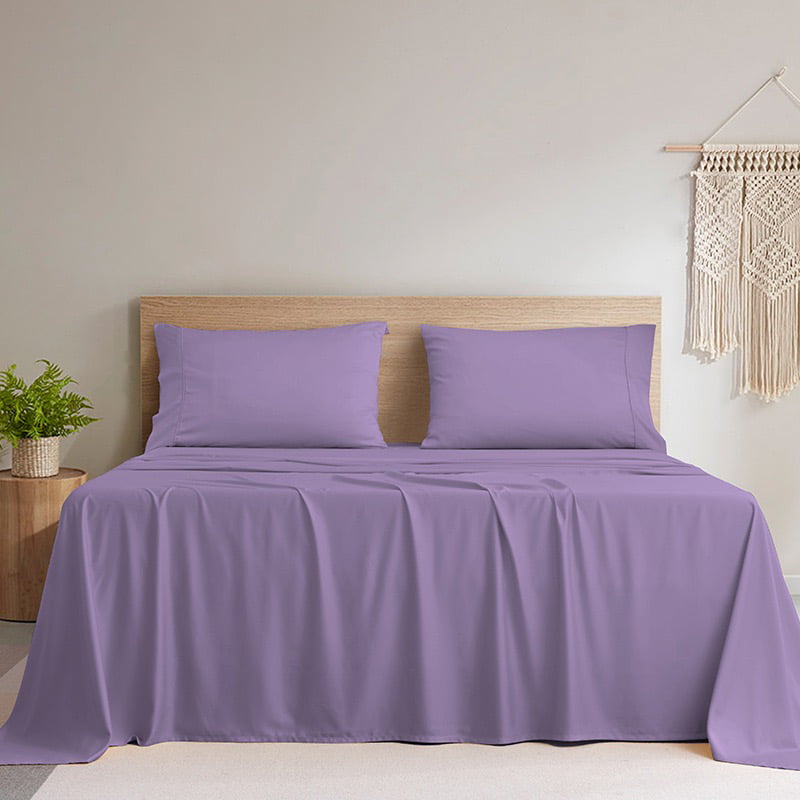
Who Benefits Most from Bamboo Bed Sheet Sets?
While bamboo sheet sets offer benefits for a broad range of sleepers, certain individuals experience particularly significant improvements in sleep quality when switching from conventional cotton or polyester bedding to bamboo.
- Hot Sleepers: Bamboo's moisture-wicking and thermo-regulating properties actively draw perspiration away from the body and promote airflow, reducing the discomfort of overheating that disrupts sleep cycles. Hot sleepers consistently rate bamboo sheets among the best cooling bedding options available.
- People with Night Sweats: Whether caused by menopause, medication side effects, or medical conditions, night sweats are significantly less disruptive in bamboo sheets that manage moisture more effectively than cotton, which can become heavy and clammy when saturated.
- Sensitive Skin and Allergy Sufferers: Bamboo fabric's naturally smooth fiber structure lacks the surface texture that irritates sensitive skin. Combined with its resistance to dust mites and mold — both of which thrive in moisture-retaining bedding — bamboo sheet sets are an excellent choice for eczema sufferers and allergy-prone sleepers.
- Environmentally Conscious Consumers: Bamboo is one of the fastest-growing plants on earth, requiring no pesticides, minimal water, and no replanting after harvest. Choosing a certified bamboo lyocell sheet set produced through a closed-loop process offers a meaningfully lower environmental footprint compared to conventional cotton, which is one of the most pesticide-intensive crops globally.
- Luxury Bedding Seekers on a Budget: High-thread-count Egyptian cotton sheets from premium brands can cost $300–$600 per set. A quality bamboo viscose or lyocell sheet set delivering comparable or superior softness typically retails between $60 and $180, making it an accessible luxury upgrade.
Washing and Caring for Your Bamboo Sheet Set
Proper care is essential to preserving the softness, structural integrity, and lifespan of bamboo bed sheets. Bamboo viscose in particular is sensitive to heat and agitation, and improper washing is the most common cause of premature pilling, shrinkage, and loss of that signature silky feel. Following a consistent care routine will keep your bamboo sheet set performing like new for years.
Washing Instructions
- Wash bamboo sheets in cold or warm water (maximum 86°F / 30°C) on a gentle or delicate cycle. Hot water weakens bamboo fibers and causes significant shrinkage, especially in the first few washes.
- Use a mild, pH-neutral liquid detergent. Avoid enzyme-based detergents, bleach, and fabric softeners — bleach degrades bamboo fibers rapidly, while fabric softeners coat the micro-gaps in the fabric that provide bamboo's natural moisture-wicking performance.
- Wash bamboo sheets separately or with similarly lightweight items. Washing with heavy items like jeans or towels creates friction that pills the delicate bamboo fabric surface.
- For best results, turn pillowcases and fitted sheets inside out before washing to reduce surface abrasion on the visible side of the fabric.
Drying Instructions
- Tumble dry on the lowest heat setting or, ideally, line dry in a shaded area. Direct sunlight can fade colors and degrade bamboo fiber over time.
- Remove sheets promptly from the dryer while still slightly damp and smooth them onto the bed or fold immediately to prevent deep wrinkles from setting.
- Avoid over-drying, which is the primary cause of shrinkage and static buildup in bamboo sheets. Bamboo lyocell sheets in particular benefit from being finished air-dry after a short machine-dry cycle.
Storage Tips
Store your bamboo sheet set in a cool, dry location with good air circulation. Avoid sealed plastic bags or vacuum storage containers for long-term storage, as bamboo fabric needs airflow to prevent moisture buildup that can encourage mildew. Many premium bamboo sheet sets come packaged in a breathable cotton or linen storage bag — these are ideal for off-season storage. Always ensure sheets are completely dry before folding and storing to prevent any odor or mold development.
Bamboo Sheet Sets vs. Cotton, Linen, and Microfiber: A Direct Comparison
Bamboo sheets compete in a crowded bedding market alongside traditional materials, each with distinct performance profiles. Understanding how bamboo compares to the alternatives helps confirm whether a bamboo sheet set is the right investment for your specific sleeping needs and lifestyle.
| Feature | Bamboo | Cotton (Percale/Sateen) | Linen | Microfiber |
| Softness | Excellent | Good–Excellent | Moderate (softens with washing) | Good |
| Breathability | Excellent | Good | Excellent | Poor |
| Moisture Wicking | Excellent | Good | Good | Poor |
| Durability | Good (lyocell) / Moderate (viscose) | Excellent | Excellent | Moderate |
| Hypoallergenic | Yes | Moderate | Yes | No |
| Eco-Friendliness | High (especially lyocell) | Moderate (organic cotton: high) | High | Low (synthetic) |
| Price Range | $60–$180 | $30–$600+ | $100–$300 | $20–$60 |
Linen and bamboo are the closest competitors for hot, sweaty, or allergy-sensitive sleepers. Linen edges out bamboo on pure durability and gets better with age, but starts rougher and costs more for premium sets. Bamboo wins decisively on initial softness and moisture management. Cotton remains the most durable and easiest-care option, while microfiber is the budget choice that sacrifices breathability — making it a poor fit for anyone who sleeps warm.
What to Expect When You First Use a Bamboo Sheet Set
New bamboo sheet sets often arrive with a slight stiffness or starchiness from packaging and finishing treatments applied during manufacturing. This is normal and resolves after the first one or two washes. Washing before first use is strongly recommended — not only to remove any finishing chemicals but also to pre-shrink the fabric so the fitted sheet maintains its dimensions accurately on your mattress.
Bamboo viscose sheets in particular undergo a noticeable softening transformation with the first few washes, becoming progressively silkier and more pliable as the fiber structure relaxes. Some users describe the improvement in feel between wash one and wash five as dramatic. Bamboo lyocell sheets start slightly less silky than viscose but maintain their texture more consistently across hundreds of wash cycles, making the long-term feel more predictable. Give your new bamboo bed sheet set at least three to four full wash-and-dry cycles before making a final judgment on comfort — the first-night feel is rarely representative of the sheets' true long-term performance.

 +86-159 5050 0822
 peter@rainbowhomefashion.com
 No.199 Yimin Road, Dateng DIstrIct, Yancheng City. Jiangsu Province, China