


 English
 Español
 عربى
عربى
Bamboo home textiles began as a specialty item on bedding catalogs and have since grown into a standard program line. Buyers who once ordered a single test container of bamboo sheet sets now ask for a complete bamboo story: comforters, duvet covers, quilts, sheet sets, and the pillow shams that tie them together. That shift did not happen by accident. It happened because bamboo-based bedding answers several problems at once for retailers, hotel purchasers, and online sellers, from hand feel and packing weight to the wording printed on a hangtag.
We are a home textile manufacturer and exporter based in Yancheng, and we have built bedding in cotton, microfiber, linen, and bamboo over many seasons. Along the way we have learned where bamboo performs beautifully and where a blend or a different fiber serves the buyer better. This guide covers what bamboo home textiles actually are, how the different fiber routes behave, which product categories carry the material well, and what to verify before committing to a program.
Content
- 1 What Actually Counts as Bamboo Home Textiles
- 2 Why Bamboo Bedding Keeps Winning Buyers Over
- 3 The Main Bamboo Bedding Categories
- 4 Blends, Weights, and Finishing Methods
- 5 A Practical Checklist Before You Place an Order
- 6 From Fiber to Finished Set
- 7 Caring for Bamboo Bedding So It Lasts
- 8 A Material Worth Building a Program Around
What Actually Counts as Bamboo Home Textiles
The term covers any bedding or household textile whose shell, filling, or both is made with bamboo-derived fiber. In practice that means sheet sets, duvet covers, comforters, quilts, blankets, and pillow shams. The fiber usually reaches the loom through one of three routes, and the route matters far more than the word "bamboo" printed on the packaging.
- Bamboo viscose, often sold as bamboo rayon. It is regenerated from bamboo cellulose and gives the soft, fluid drape most shoppers associate with the material.
- Lyocell bamboo. It uses a closed-loop solvent process that recovers most of the chemicals, which is why lyocell versions often carry a stronger environmental claim.
- Mechanically processed bamboo fiber. The stalks are crushed and combed rather than dissolved. It behaves closer to linen, and it is far less common in bedding because of cost and limited supply.
Most bedding on the market today uses bamboo viscose or lyocell. Both begin with the same plant, yet they finish with different shrinkage rates, different softness, and different price points. We keep a longer comparison of the differences between bamboo home textiles and traditional textile products on our site, and the short version is simple: bamboo is chosen for softness, drape, moisture movement, and temperature feel, while cotton is chosen for familiarity, abrasion resistance, and predictable washing. They are different answers rather than direct rivals.
Why Bamboo Bedding Keeps Winning Buyers Over
Whenever we send bamboo samples to a buyer, the reaction usually follows the same order. First the hand feel, then the weight, then the questions about care. The practical advantages that keep the category growing look like this:
- Breathability. The fiber structure lets air pass through, which keeps a bamboo comforter from trapping heat the way dense synthetic fills can.
- Moisture handling. Bamboo moves moisture away from the skin faster than standard cotton, a genuine benefit in humid markets and warm sleeping climates.
- Soft, fluid drape. Bamboo shells fall around the body instead of sitting on top of it, which is exactly what shoppers describe when they say bedding feels silky.
- Temperature feel. Many customers use bamboo bedding across more of the year than they use heavier cotton alternatives.
- Lower growing demand. Bamboo grows quickly and needs less irrigation than conventional cotton, which supports the story retailers want to tell.
That last point deserves care rather than exaggeration. The fiber crop may be low impact, but the conversion process determines the real footprint of the finished set. Buyers who understand that distinction ask better questions, and we are always glad to walk through our own sustainable approach and what it means at the mill level rather than the marketing level.
The Main Bamboo Bedding Categories
Bamboo works across nearly the whole bed, but each category has its own construction logic. A sheet set is judged on fit and wash performance, a duvet cover on closure quality and colorfastness, and a comforter or quilt on quilting density and fill stability. The table below summarizes how the main programs are typically built.
| Product Category | Common Construction | Set Configurations |
|---|---|---|
| Bamboo comforter set | Bamboo-rich shell with square or diamond quilting | 3, 4, or 7 pieces |
| Bamboo duvet cover | Solid or printed shell, button or zipper closure | 3 pieces with shams |
| Bamboo sheet set | Flat sheet, fitted sheet, pillowcases, elasticated corners | 4 pieces |
| Bamboo quilt | Ultrasonic bonding or soft-washed finish | 3 pieces |
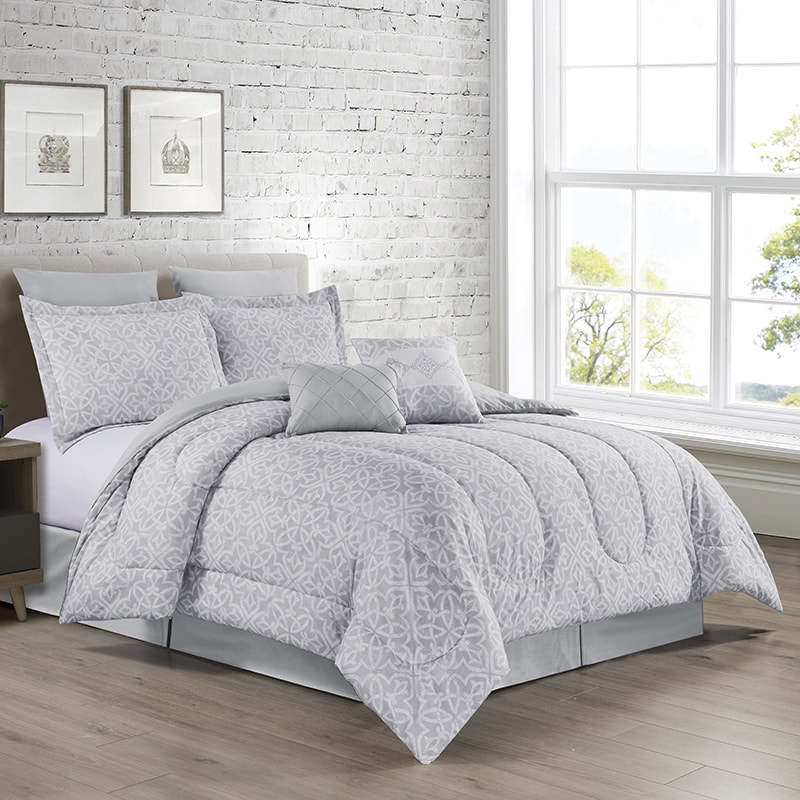
Among these, the comforter is usually the first item a buyer tests, because it shows off both the fabric and the quilting in a single unit. A well-made bamboo comforter keeps its loft after washing and holds a clean stitch line, which is why our bamboo fiber quilt with square stitching has become a frequent starting point for new bamboo programs.
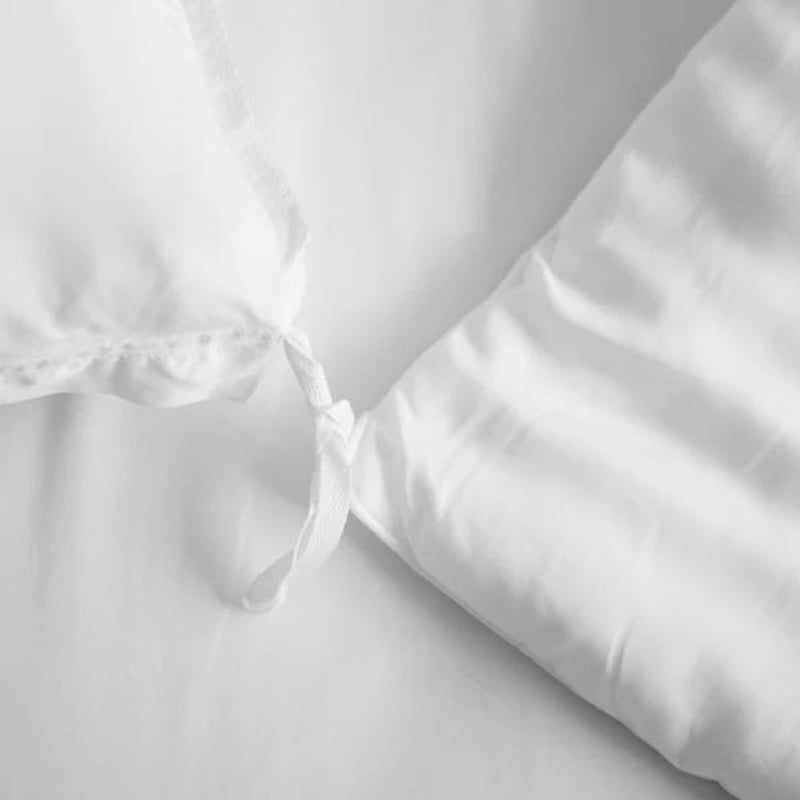 Bamboo Fiber Quilt with Square StitchingThis high-quality bamboo fiber single quilt brings you the ultimate comfortable experience and environmentally friendly healthy sleep. Whether it's fabric selection or...View Product →
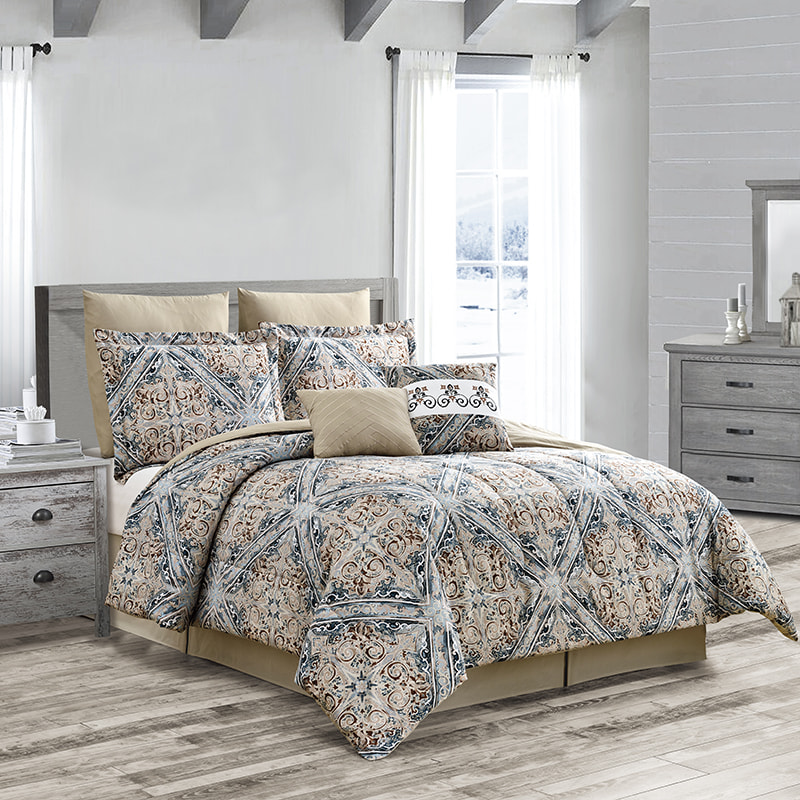
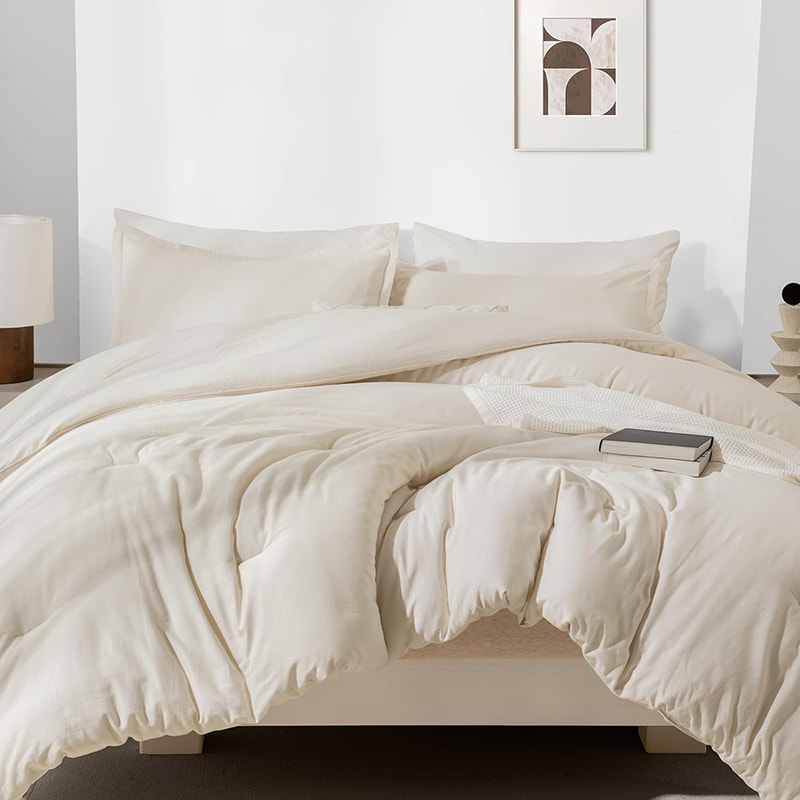
Duvet covers follow closely behind. A solid bamboo duvet cover and pillow sham set gives a retailer a clean base layer that photographs well and pairs with printed accessories, while allowing the buyer to build a full color story without extra tooling.
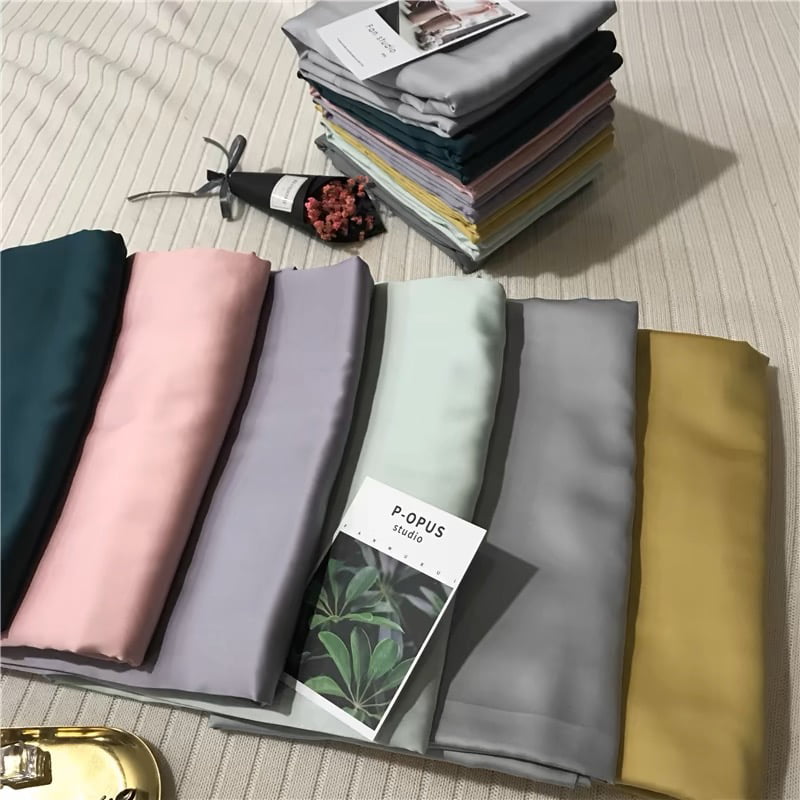 Solid Bamboo Duvet Cover and Pillow ShamThis pure bamboo fiber duvet cover kit brings comfort and environmental protection to your bedroom with its high-quality fabric, exquisite design, and diverse styles. ...View Product →
Blends, Weights, and Finishing Methods
Pure bamboo is not the only option, and it is not always the best one. Blending changes cost, durability, and shrinkage in ways a buyer can plan around.
- Bamboo and cotton blends soften the price point while keeping a natural feel and improving dimensional stability across repeated laundering.
- Bamboo and polyester blends, such as a 35 percent bamboo to 65 percent polyester ratio, add strength and wrinkle resistance, which suits volume retail and hospitality use.
- Pure bamboo constructions deliver the premium hand feel that supports a higher shelf price and a stronger material story.
Finishing matters just as much as fiber content. Square quilting keeps fill from shifting, ultrasonic bonding removes needle holes and creates a crisp decorative line, and soft-washed finishes give a relaxed, lived-in surface that many buyers now prefer to a crisp new look. When we quote a bamboo program, we quote the construction, the weight, and the finish together, because changing one of them changes how the finished set feels in a customer's hands.
A Practical Checklist Before You Place an Order
Bamboo is a fiber category where small specification gaps become expensive later. Before confirming a purchase order, we recommend walking through these points with your supplier.
- Confirm the exact fiber content and blend ratio in writing, not just in conversation.
- Ask whether the fiber is viscose or lyocell, and record it on the specification sheet.
- Request shrinkage and colorfastness test results for the specific fabric and dye lot.
- Check the quilting pattern and stitch density on a physical sample, not a photo.
- Verify labeling, care instructions, and packaging requirements for your destination market.
- Agree on a pre-production sample and keep it as the reference standard for the shipment.
Pure natural bamboo fiber bedding, for example, behaves differently from a blended set in the wash, and the care label has to reflect that honestly. Getting this right protects your return rate as much as your margins.
From Fiber to Finished Set
Because bamboo is softer and more slippery than cotton during cutting and sewing, it demands tighter process control on the production floor. Panels shift, stitching tension needs adjustment, and the fabric has to be relaxed before it is cut, or the finished fitted sheet will not hold its dimensions. Those are the details that decide whether a program repeats or fades away after one order.
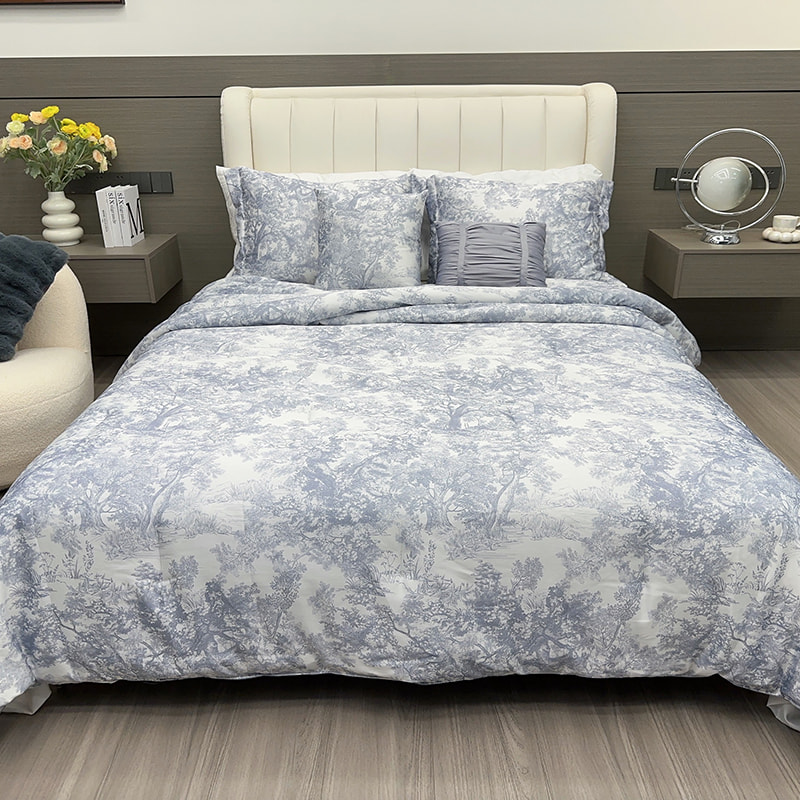
Sheet sets are where this discipline shows most clearly. A fitted sheet either grips the mattress through dozens of washes or it does not, and there is very little middle ground. Our pure natural bamboo fiber bed sheet set was built around that expectation, with the elastic and seam construction chosen for repeated laundering rather than for how it looks in the carton.
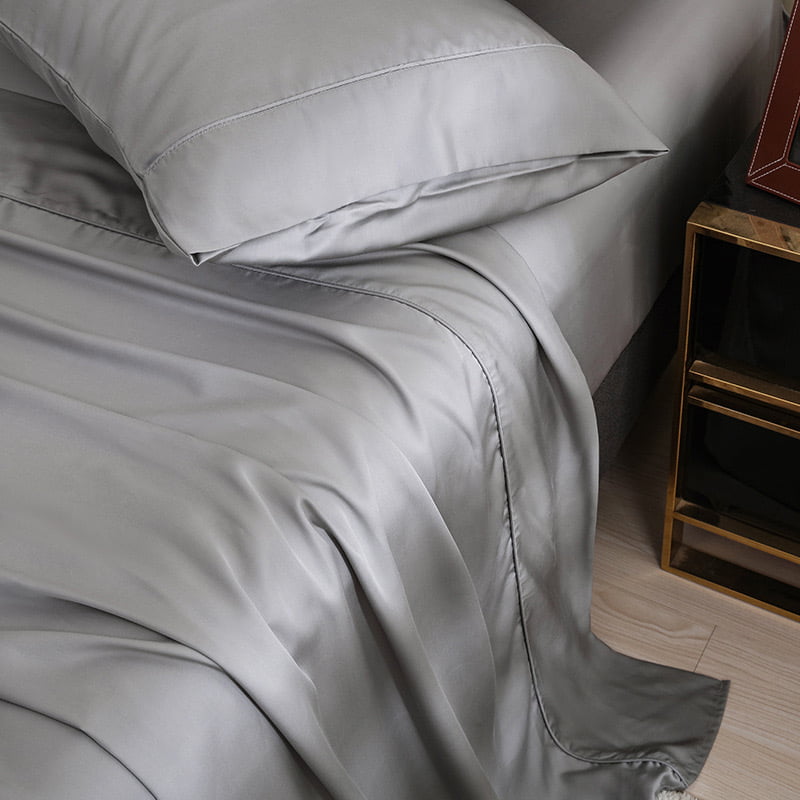 Pure Natural Bamboo Fiber Bed Sheet SetThe bamboo fiber bedsheet four-piece set is a high-quality bedding that combines environmental protection, comfort, and minimalist aesthetics. It uses natural bamboo f...View Product →
We handle bamboo bedding alongside cotton, linen, microfiber, and velvet programs, which means we can advise honestly on when bamboo is the right answer and when a different fiber will sell better in your market. That kind of guidance is worth more than a slightly lower unit price.
Caring for Bamboo Bedding So It Lasts
Bamboo textiles are easy to live with, provided a few habits are followed. Machine wash on a gentle cycle in cold or lukewarm water, use a mild detergent, and skip chlorine bleach and fabric softener, which coat the fiber and reduce breathability. Tumble dry on low, or line dry in the shade, and remove the set while it is still slightly damp to minimize wrinkling. Store clean, fully dry bedding in a breathable cotton bag rather than a sealed plastic one.
Sharing these instructions with end customers is a small step that pays off. Well-cared-for bamboo bedding keeps its drape and its softness far longer, and customers who are satisfied with year two are the ones who come back for year three.
A Material Worth Building a Program Around
Bamboo home textiles have earned their place in bedding assortments because they deliver something customers can feel immediately and something retailers can talk about credibly. The fiber choice, the blend ratio, the quilting, and the finishing all shape the final product, and they are all decisions a buyer can control with the right supplier.
If you are planning a bamboo sheet set, duvet cover, comforter, or quilt program, we would be glad to review your specification and suggest the construction that fits your market, your price point, and your customers' expectations.

 +86-159 5050 0822
 peter@rainbowhomefashion.com
 No.199 Yimin Road, Dateng DIstrIct, Yancheng City. Jiangsu Province, China