


 English
 Español
 عربى
عربى
Content
- 1 What a Bamboo Bed Comforter Actually Is
- 2 Fill Types: What's Actually Inside a Bamboo Comforter
- 3 Shell Fabric: Why It Matters More Than You'd Think
- 4 How Bamboo Comforters Compare to Down and Synthetic Options
- 5 Warmth Levels and Choosing the Right Weight
- 6 Who Benefits Most from a Bamboo Bed Comforter
- 7 Care Instructions and How to Keep It in Good Condition
- 8 What to Check Before Buying
What a Bamboo Bed Comforter Actually Is
A bamboo bed comforter is a bedding product that uses bamboo-derived materials in one or both of its two main components: the fill inside and the shell fabric that contains it. The term gets used loosely in the market, which creates genuine confusion for buyers. Some bamboo comforters use bamboo fiber as the actual fill material — the insulating layer inside the comforter that provides warmth. Others use a bamboo-derived fabric such as bamboo viscose or bamboo lyocell for the outer shell but fill the interior with polyester or another synthetic material. A smaller number use bamboo in both components. Understanding which type you are looking at is the most important distinction to make before any other comparison, because it determines both the performance characteristics and the price range of what you are buying.
Bamboo itself is a grass, not a wood, and the fiber derived from it is processed through either a mechanical or chemical route to produce a material suitable for textile use. The mechanical process produces a coarser fiber sometimes called bamboo linen; the chemical process — which dissolves the bamboo pulp and regenerates it as a fiber — produces the soft, smooth bamboo viscose or bamboo lyocell that most consumers associate with bamboo bedding. It is the chemically processed fiber that dominates the bamboo comforter market, both as fill and as shell fabric, because of its softness, moisture management properties, and temperature-regulating behavior.
Fill Types: What's Actually Inside a Bamboo Comforter
The fill is the component that determines most of a comforter's thermal performance, weight, and feel. Bamboo comforters use several different fill materials, and the differences between them are significant enough to affect which type suits your sleeping style and climate.
Bamboo Fiber Fill
Comforters filled with bamboo fiber use processed bamboo viscose or bamboo lyocell fibers as the insulating material. Bamboo fiber fill is naturally breathable and has a higher moisture-wicking capacity than standard polyester fill, which helps manage the microclimate under the comforter by drawing perspiration away from the body and allowing it to evaporate. This property makes bamboo fiber-filled comforters particularly well-suited for warm sleepers, people who experience night sweats, or anyone sleeping in a room without reliable air conditioning. Bamboo fiber fill tends to produce a lighter, more drapeable comforter than down or heavy synthetic fills, with a soft, slightly silky feel that many sleepers find more comfortable than the loftier but less conforming feel of down.
Bamboo and Polyester Blend Fill
Many mid-range bamboo comforters use a blended fill combining bamboo fiber with polyester, typically in ratios ranging from 30/70 to 70/30 bamboo-to-polyester. The polyester component adds loft, resilience, and durability to the fill — polyester fibers spring back after compression better than bamboo fiber alone, helping the comforter maintain its volume over time. The bamboo component contributes the moisture management and breathability properties. Blended fill comforters are generally less expensive than pure bamboo fill options and represent a practical compromise for buyers who want some of bamboo's performance benefits at a lower price point. The higher the bamboo percentage in the blend, the closer the performance to a pure bamboo fill product.
Down or Down Alternative with Bamboo Shell
Some products marketed as bamboo comforters use conventional down or down alternative polyester fill inside a bamboo viscose shell fabric. In these products, the bamboo contributes primarily to the feel of the outer surface against the skin and to the breathability of the shell, rather than to the insulating fill performance. This construction can produce an excellent comforter — the combination of a soft bamboo shell with the loft and insulation of quality down is genuinely comfortable — but buyers should understand that the insulating performance is determined by the fill, not the bamboo component. If you are buying for bamboo's thermal regulation or moisture-wicking properties specifically, a bamboo shell over a down fill delivers less of those benefits than a bamboo-filled product.
Shell Fabric: Why It Matters More Than You'd Think
The shell fabric is the woven or knitted outer layer that encases the fill and is the surface that contacts your skin directly — or your duvet cover if you use one. Even if you sleep with a duvet cover over your comforter, the shell fabric still affects how the comforter drapes, how it breathes, and how durable it remains over years of washing and use.
Bamboo viscose shells are the most common in this category. They feel noticeably softer than cotton at equivalent thread counts and have a subtle sheen that gives the comforter a slightly luxurious appearance. Bamboo viscose is more delicate than cotton under mechanical washing stress, which is why most bamboo shell comforters specify gentle wash cycles and low-heat or air drying. Thread count matters for bamboo shells just as it does for cotton — higher thread counts (above 300) produce a tighter weave that better contains fill material and provides a smoother hand feel, while lower thread counts are more prone to fill migration through the shell over time.
Bamboo lyocell shells are less common but technically superior to viscose in terms of manufacturing sustainability and fiber strength. Lyocell is produced through a closed-loop solvent process that recovers and recycles the majority of the chemicals used, making it a more environmentally responsible production method than standard viscose processing. Bamboo lyocell fabric is slightly crisper in hand than bamboo viscose and holds its shape better over repeated washing — a meaningful durability advantage for a product you will wash multiple times per year.
How Bamboo Comforters Compare to Down and Synthetic Options
Choosing between a bamboo fiber comforter, a down comforter, and a synthetic fill comforter involves trade-offs across several performance dimensions. The right choice depends on your sleep temperature, allergy profile, ethical preferences, and budget.
| Feature | Bamboo Fill | Down Fill | Synthetic Fill |
| Warmth-to-weight ratio | Moderate | Excellent | Good |
| Moisture wicking | Excellent | Poor when wet | Moderate |
| Breathability | Very good | Good | Moderate to poor |
| Allergy friendliness | Good | Poor for some | Very good |
| Durability | Good | Excellent | Moderate |
| Ease of washing at home | Good | Moderate | Very good |
| Ethical / vegan friendly | Yes | No | Yes |
| Typical price range | Mid to premium | Mid to very high | Budget to mid |
For hot sleepers, bamboo fill has a clear advantage over both down and standard polyester. Down is an excellent insulator but traps heat and manages moisture poorly — once it absorbs body moisture, its insulating properties degrade and it takes a long time to recover. Standard polyester fill is even less breathable. Bamboo fiber's ability to wick moisture and release heat makes it a more comfortable choice for anyone who tends to overheat during sleep, even if the absolute warmth level per unit weight is lower than premium down.
Warmth Levels and Choosing the Right Weight
Bamboo comforters are available in different warmth weights, typically classified as lightweight, all-season, and warm or winter weight. Choosing the right weight for your sleeping environment is one of the most practical decisions in the buying process and one that significantly affects how comfortable you will actually be using the product.
- Lightweight bamboo comforters (typically 200–300 gsm fill weight) are designed for warm climates, summer use, or air-conditioned rooms where the temperature stays consistently above 20°C. They provide a light layer of comfort without adding significant warmth — more like a heavy sheet than a traditional winter comforter. These are the most popular option for warm sleepers year-round.
- All-season bamboo comforters (typically 300–500 gsm fill weight) are the most versatile option for most buyers in temperate climates. They provide enough insulation for cool nights but remain breathable enough to avoid overheating in warmer conditions. If you can only buy one comforter, an all-season weight bamboo duvet is the most practical choice for rooms without temperature extremes.
- Warm or winter-weight bamboo comforters (500 gsm and above) are designed for cold climates, unheated rooms, or cold sleepers who need substantial insulation. At this fill weight, bamboo comforters compete directly with mid-loft down products on warmth but retain their breathability advantages — a meaningful benefit even in cold conditions if the sleeper generates significant body heat during the night.
Fill weight in grams per square meter (gsm) is the most reliable indicator of warmth across different brands, though it is not always published by budget manufacturers. Where gsm is not listed, look for warmth ratings on a numeric or descriptive scale — most reputable brands use a 1–5 tog system or a light/medium/warm classification. Be aware that warmth ratings from different brands are not always calibrated consistently, so reading verified customer reviews from people in similar climates to your own is a useful reality check before purchasing.
Who Benefits Most from a Bamboo Bed Comforter
Bamboo comforters are not the ideal choice for every sleeper, but they are a particularly good match for certain specific needs that other comforter types address less well. Understanding where bamboo genuinely outperforms alternatives helps in making a purchase decision based on real need rather than marketing.
- Hot sleepers and night sweaters get the most benefit from bamboo's moisture-wicking and breathability properties. If you regularly wake up feeling too warm, damp, or uncomfortable under a conventional comforter, a bamboo fiber comforter is likely to make a noticeable difference to sleep quality.
- People with dust mite or down allergies benefit from bamboo as a hypoallergenic alternative to down. Bamboo fiber does not provide the same environment for dust mite proliferation as natural animal fibers, and it does not trigger the feather-related allergies that affect some down comforter users. It is not completely allergen-free, but it is a substantially better option for allergy-prone sleepers than down.
- Sleepers who prefer a lightweight feel often find bamboo fill comforters more comfortable than heavier down or synthetic alternatives. The lighter weight reduces the sensation of being pinned down and can improve comfort for people who find heavy bedding uncomfortable or who move frequently during sleep.
- Environmentally conscious buyers looking for a vegan, animal-free bedding option will find bamboo comforters a better fit than down. Bamboo is one of the fastest-growing plants on earth, requires no pesticides or irrigation in natural growing conditions, and can be harvested without killing the plant. The chemical processing involved in producing bamboo viscose is a legitimate environmental concern, but bamboo lyocell production addresses this through cleaner closed-loop processing.
Care Instructions and How to Keep It in Good Condition
Bamboo comforters require slightly more care than basic polyester alternatives but are generally easier to maintain at home than down comforters, which often need professional cleaning or large-capacity machines. Following the right care routine makes a significant difference to how long the comforter retains its softness, fill loft, and performance properties.
- Wash on a gentle or delicate cycle at 30°C or below. Higher temperatures can cause bamboo viscose shell fabrics to shrink and weaken the fiber structure of bamboo fill material. Cold water washing is perfectly effective for routine cleaning and is the safest option for preserving the shell fabric.
- Use a mild, liquid detergent without bleach or optical brighteners. Powder detergents can leave residue in bamboo fill that is difficult to rinse completely, and bleach degrades bamboo fiber rapidly. A small amount of gentle liquid detergent is sufficient — avoid overloading detergent, which creates excess suds that are hard to rinse from a thick fill.
- Tumble dry on low heat or air dry flat. High tumble dryer heat causes bamboo viscose shell fabric to shrink and can cause bamboo fill fibers to clump or mat together. If tumble drying, use the lowest heat setting and add two or three clean tennis balls or dryer balls to the drum — these help break up fill clumps and restore loft as the comforter dries. Air drying flat on a clean surface or over a drying rack is the gentlest option.
- Use a duvet cover to reduce washing frequency. Washing a full comforter multiple times per week accelerates wear on both the shell and fill. A duvet cover protects the comforter from direct skin contact and can be washed frequently with normal laundry, extending the time between full comforter washes to once every one to three months under normal use conditions.
- Store clean and fully dry in a breathable bag. When storing a bamboo comforter seasonally, make sure it is completely dry before storage to prevent mildew. Store in a cotton or breathable fabric bag rather than a sealed plastic bag — bamboo fiber needs airflow during storage. Avoid compressing it under heavy items, which can permanently flatten the fill and reduce loft.
What to Check Before Buying
The bamboo bedding market includes a wide range of products at very different quality levels, and some products use bamboo branding more as a marketing tool than as an accurate description of what is inside. A few straightforward checks help filter out misleading products and identify the ones that will actually deliver what bamboo comforters are known for.
- Check the fill composition percentage. A product labeled as a bamboo comforter should clearly state what percentage of the fill is actually bamboo. If the listing only mentions bamboo in the shell fabric description and the fill is 100% polyester, the product is a polyester comforter with a bamboo shell — not a bamboo-filled comforter. Both can be good products, but they are different things.
- Look for OEKO-TEX or similar certification. OEKO-TEX Standard 100 certification confirms that the finished product has been tested for harmful substances and meets safety thresholds for skin contact use. This is a meaningful quality indicator for bamboo bedding, where the chemical processing involved in producing bamboo viscose can leave residues if manufacturing quality control is poor.
- Verify the fill weight or warmth rating. Any reputable bamboo comforter manufacturer should publish the fill weight in gsm or provide a warmth rating. Products that list only vague terms like "medium warmth" without supporting data are harder to evaluate and compare accurately.
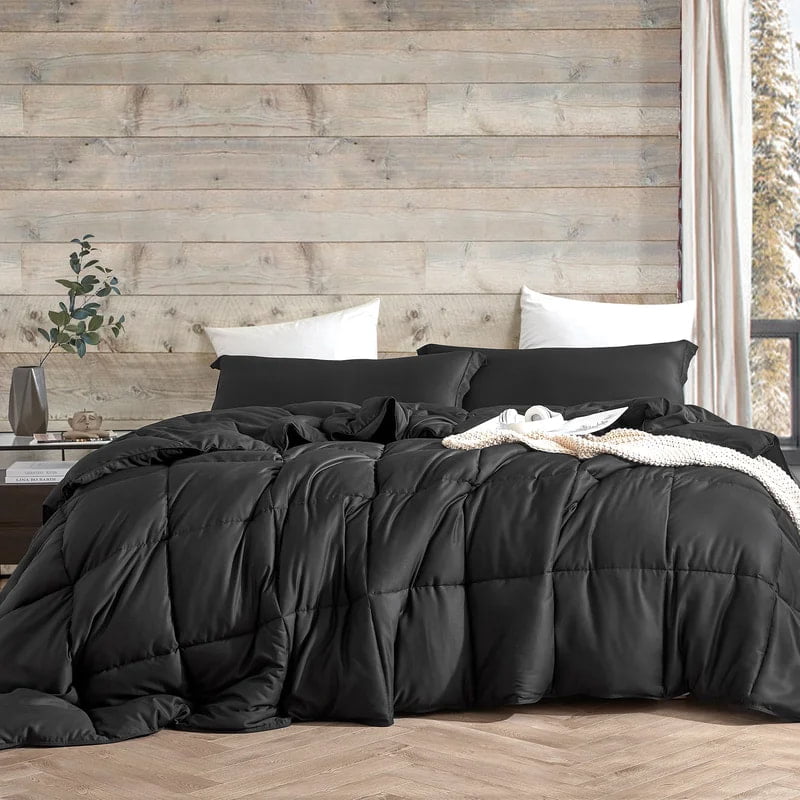
- Check the stitching pattern. Box stitch or baffle box construction holds fill in place and prevents it from migrating to the edges of the comforter over time. Simpler single-pass stitching is less effective at containing fill evenly. Look at product images closely — a well-constructed bamboo comforter will have a clearly defined, even stitching grid visible across its surface.
- Read verified reviews specifically from people in a similar climate or with similar sleeping habits. A bamboo comforter review from someone in a cold climate evaluating warmth tells you something different from a review from a warm sleeper in a humid climate evaluating breathability. Filter reviews for the specific performance dimension that matters most for your situation rather than relying on overall star ratings alone.

 +86-159 5050 0822
 peter@rainbowhomefashion.com
 No.199 Yimin Road, Dateng DIstrIct, Yancheng City. Jiangsu Province, China