


 English
 Español
 عربى
عربى
Waking up with damp sheets on a warm night is a problem many hot sleepers know too well. You raise the fan speed, switch to lighter pajamas, and still wake up with a sticky feeling. A bamboo bed comforter is one of the most common answers to this, and the decision usually comes down to the fabric blend and how it is constructed.
Content
Why Bamboo Fiber Deserves a Place in Your Comforter
If you are looking for a comforter that feels cool against your skin and wicks moisture rather than trapping it, bamboo is a strong candidate. The key is in the fiber's structure: it has micro-gaps and a porous surface that allow air to move and moisture to evaporate more easily than with tightly woven cotton or polyester. This is why a bamboo bed comforter often feels noticeably drier even when you sweat.
The practical impact shows up in how you sleep. When excess heat and humidity leave the bedding instead of staying next to your skin, your body can regulate its temperature more effectively. Many buyers also report that bamboo fabric feels soft and less clingy, which matters for people with sensitive skin.
Not everyone will experience the same cooling effect. If your room is already air-conditioned, the difference may be subtle. But in humid conditions, the bamboo fiber's ability to release moisture becomes more obvious. Sleepers who produce more heat during the night often notice the biggest benefit.
From a sourcing perspective, bamboo grows quickly and requires less water than some conventional textile crops. Choosing bedding made from responsibly processed bamboo can support more sustainable manufacturing practices in the textile supply chain.
A bamboo comforter also works differently from a down or synthetic fill. The shell fabric does much of the temperature regulation work, while the fill provides loft. If the outer fabric is a bamboo blend, the benefit is felt every time you touch the comforter.
Fiber Content: Which Bamboo Blend Should You Choose?
The first decision is not the color or the print, but the fiber ratio. Pure bamboo fabric gives the strongest cooling sensation and a smooth drape, but pure bamboo can be more delicate and more prone to wrinkling. Adding cotton or polyester changes the balance between softness, breathability, and durability.
Here is a more structured comparison to guide your purchase.
| Blend | Cooling Feel | Durability | Price Range | Best Use |
|---|---|---|---|---|
| 100% bamboo | Highest | Moderate | Higher | Hot sleepers who want maximum breathability |
| Bamboo + cotton | High | High | Medium-high | Balanced comfort and layering |
| Bamboo + polyester | Medium-high | Very high | Medium | Everyday use with easy care |
| Bamboo + other synthetics | Variable | High | Medium | Cost-conscious buyers |
A bamboo and cotton blend is a good option if you want the natural hand feel but also expect the fabric to hold up after many washes. Cotton adds strength, so the comforter is less likely to develop wear spots on the surface.
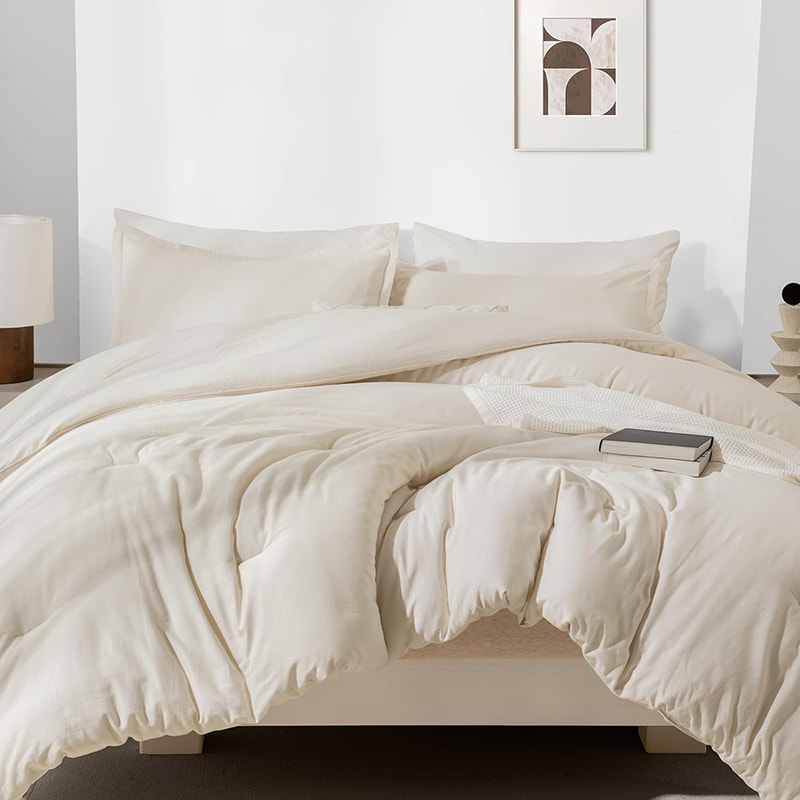
If your priority is a natural feel and you are willing to care for the fabric gently, a square-stitched bamboo comforter made from high bamboo content can be a great fit. It provides a soft surface without the bulk of a heavy down-type fill.
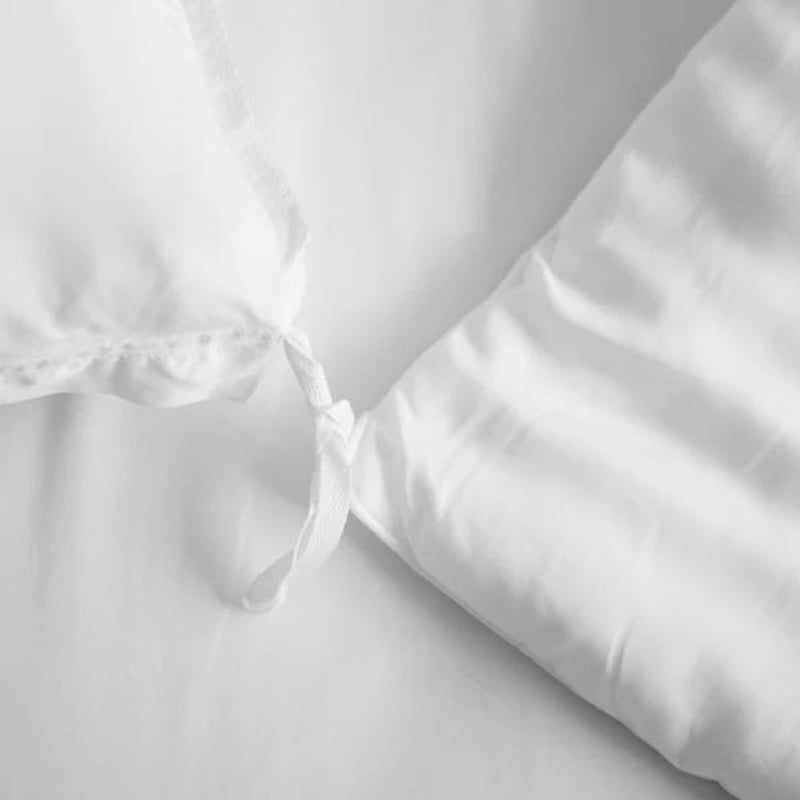 Bamboo Fiber Quilt with Soybean and Polyester Fill for Year-Round ComfortThis quilt combines a breathable bamboo shell with a soybean-polyester fill, offering softness and temperature regulation. Its link-buckle design keeps the duvet cover securely attached, making it a practical choice for sensitive sleepers.View Product →
Understanding the Duvet Cover Option for Bamboo Blends
If you prefer to keep the comforter inside a removable cover, a duvet cover set can give you the cooling benefits of bamboo while protecting the duvet from dust and oil. A 35% bamboo and 65% polyester duvet cover set is a popular choice because the bamboo fibers lower the surface temperature, while the polyester adds wrinkle resistance and shape retention. This makes it easier to wash and dry on a normal household cycle.
When the shell is a blend, the fabric feels smooth to the touch, but the surface does not cling as much as some pure bamboo fabric. It also tends to fade less after repeated laundering, which matters if you choose a solid color.
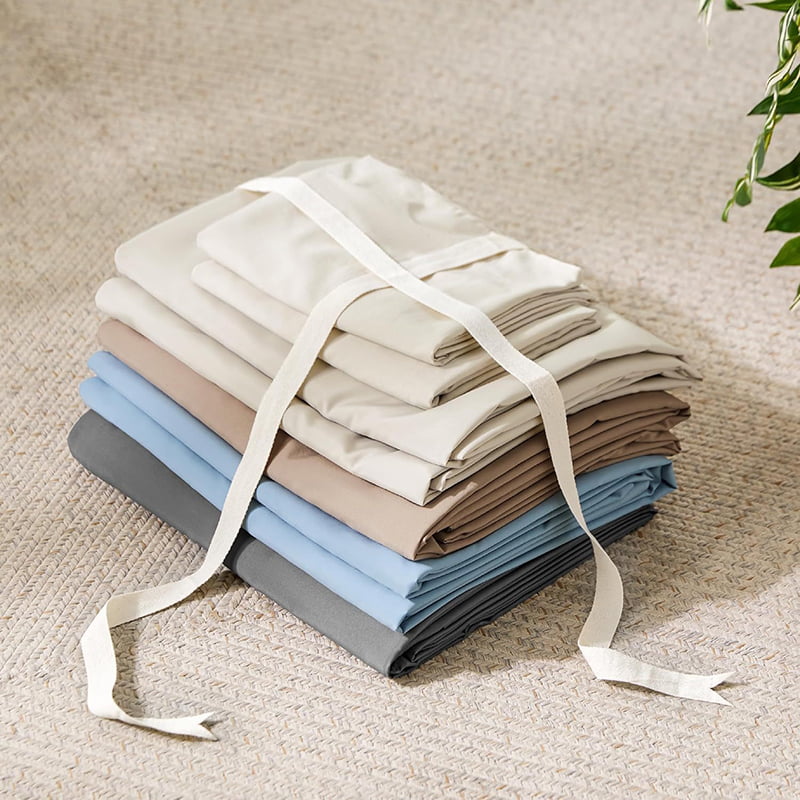 Blended Bamboo and Polyester Duvet Cover Set with Corner TiesThis bamboo-polyester blend cover set balances cooling comfort with durability. It features eight corner ties and a zipper closure, simplifying care and ensuring the duvet stays in place for a comfortable night's sleep.View Product →
What to Check Before You Add a Bamboo Comforter to Your Cart
Before you buy, there are several specifications that deserve a closer look.
- Bamboo fiber percentage: Check whether the shell fabric is 100% bamboo or blended with another fiber. The claimed benefit depends on the ratio.
- Fill weight and loft: A comforter with a heavier fill will be warmer, while a lighter fill is better for summer. The fill is just as important as the shell fabric.
- Stitching and quilting: Look for even stitching, because poor quilting can cause the fill to shift and create bunched areas.
- Care label requirements: Bamboo blends usually prefer gentle washing with cool water and low-heat drying. Confirm that you can follow the recommended routine.
Some products label the outer fabric as bamboo while the filling is standard polyester. Check both the shell and the fill composition before you assume the whole comforter is made from bamboo fiber.
Many buyers start with a general search for what to know before you buy a bamboo bed comforter to get a quick education on the material, but the final choice should always be based on the product label, not the marketing copy.
Care and Maintenance for Long-Lasting Bamboo Bedding
A bamboo comforter can hold its softness and cooling properties for years if you treat it correctly. Use cold or warm water (no hotter than 40°C / 104°F), skip bleach and fabric softeners, and tumble dry on low. Remove the bedding promptly after the cycle so wrinkles have less time to set in.
You can also extend the cooling effect by pairing your comforter with a matching bamboo sheet set. A pure natural bamboo fiber bed sheet set will help keep the area around your skin cooler through the night, so the comforter has less work to do.
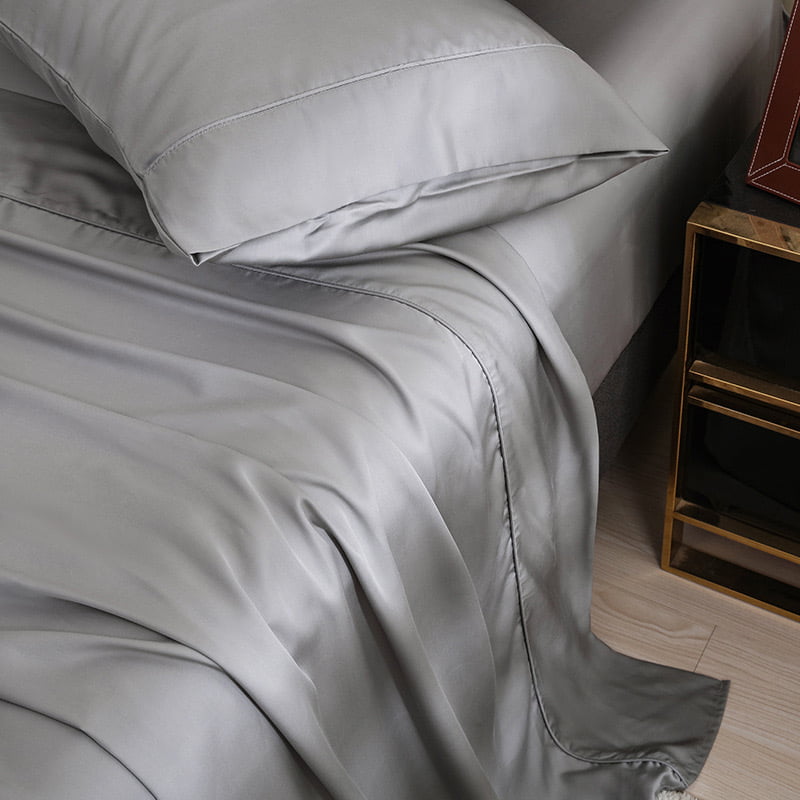 Solid Color Bamboo Fiber Bed Sheet Set for Breathable SleepMade from pure bamboo fiber, this sheet set offers a silky feel and natural moisture-wicking properties. Its plain color design fits various decors, while antibacterial qualities help keep the sleeping environment fresh.View Product →
The Bottom Line
Bamboo bed comforters are a good fit for hot sleepers, people with sensitive skin, and anyone who values a fabric that breathes. The most important factors to weigh are the bamboo content, the construction quality, and the care routine. If you choose a 100% bamboo fabric, expect a cooler feel and a softer touch but be ready to handle it gently. If you prefer durability and convenience, a bamboo-polyester blend offers more practical day-to-day usability.
As a textile manufacturer, we have seen how these materials behave in production and in real use. The right comforter is the one that matches your sleeping habits, your room climate, and the amount of time you are willing to spend on laundry. Take the time to check the fiber ratio and the fill weight, and you will have a much better chance of waking up dry and comfortable.

 +86-159 5050 0822
 peter@rainbowhomefashion.com
 No.199 Yimin Road, Dateng DIstrIct, Yancheng City. Jiangsu Province, China