


 English
 Español
 عربى
عربى
Content
What Makes a Seersucker Comforter Set Different
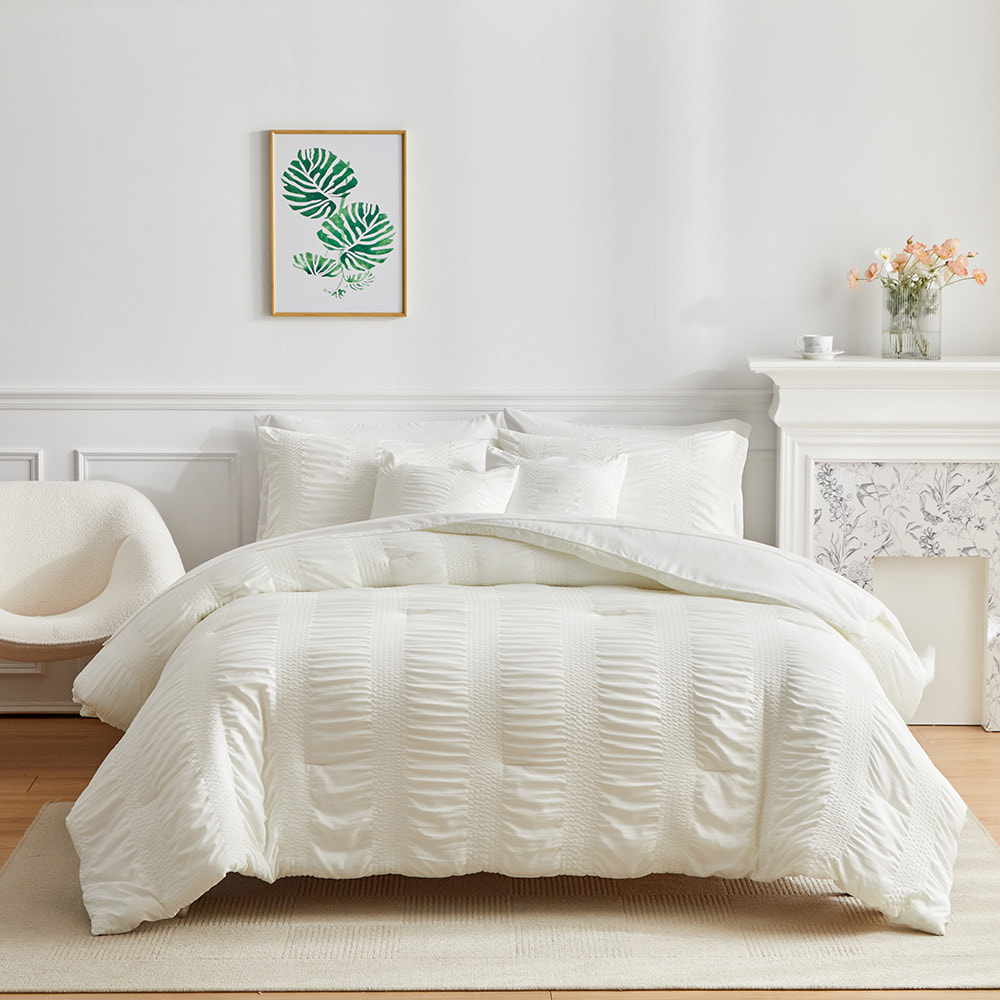
A seersucker comforter set is built around a distinctive puckered fabric weave that creates a textured, slightly bumpy surface rather than the smooth finish found on most standard bedding. This puckering happens during the weaving process, when alternating tight and loose threads cause the fabric to gather unevenly along the surface, leaving small ridges and valleys throughout the material. The result isn't just a visual texture; it also means the fabric naturally sits away from the skin in spots, allowing more airflow than a flat weave would, which is exactly why seersucker has been a warm-weather bedding favorite for generations.
A typical seersucker comforter set includes the comforter itself along with coordinating pieces like shams, pillowcases, and sometimes a bed skirt, all made from the same lightweight, breathable fabric. Most sets are crafted from 100% cotton, which adds to the breathability and gives the bedding a soft, broken-in feel even when it's brand new. Because the texture comes from the weave itself rather than a printed pattern, seersucker comforter sets tend to hold their look wash after wash without fading or flattening the way some printed designs do over time.
Why So Many People Choose Seersucker for Hot Sleepers
If you tend to overheat at night or live somewhere with long, humid summers, a seersucker comforter set solves a problem that heavier bedding simply can't. The puckered texture creates tiny air pockets between the fabric and the skin, which helps body heat escape rather than getting trapped against a flat surface the way it would with satin or heavier cotton blends. This makes seersucker a popular choice for guest rooms, kids' bedrooms, and primary bedrooms in warmer climates where year-round comfort matters more than heavy layering.
Who Tends to Benefit Most
- Hot sleepers who wake up overheated with heavier comforters
- People living in warm, humid climates with long summer seasons
- Households wanting a lightweight, low-maintenance bedding option for daily use
- Anyone furnishing a coastal, farmhouse, or classic American-style bedroom
- Families looking for durable, machine-washable bedding for kids' rooms
Comparing Seersucker to Other Common Comforter Fabrics
Understanding how seersucker stacks up against other popular comforter materials makes it easier to decide whether it's the right fit for your bedroom. Compared to flannel or microfiber, seersucker is noticeably lighter and more breathable, making it far better suited to warm weather than cold-climate use. Against quilted cotton, seersucker tends to be thinner and less insulating, but it wins out on airflow and tends to wrinkle less noticeably since the texture itself disguises minor creases.
Side-by-Side Fabric Comparison
| Fabric Type | Breathability | Best Season |
| Seersucker | High | Spring and summer |
| Quilted cotton | Moderate | Year-round |
| Microfiber | Low | Fall and winter |
| Flannel | Very low | Winter |
What to Look for When Choosing a Set
Not all seersucker comforter sets are made the same way, and a few details separate the long-lasting options from the ones that lose their texture and color quickly. Checking the fabric content matters most, since a set labeled 100% cotton will generally feel softer and breathe better over time than a cotton-polyester blend, even though blends can sometimes resist wrinkling slightly better. It's also worth checking the thread count and weave tightness where listed, since a higher-quality weave tends to hold its signature puckered texture through repeated washing, while a cheaper weave can flatten out after just a handful of wash cycles.
Quick Buying Checklist
- Confirm the fabric content, with 100% cotton generally offering the best breathability
- Check what's included in the set, such as shams, pillowcases, or a bed skirt
- Verify the size matches your mattress, since seersucker sets run in standard twin through king sizing
- Look for pre-shrunk fabric to avoid noticeable shrinkage after the first wash
- Read care label details to confirm machine-washable construction for easy upkeep
How to Care for a Seersucker Comforter Set So It Lasts
One of the practical advantages of seersucker is that it's generally low-maintenance compared to delicate bedding fabrics, but a few care habits go a long way toward preserving its texture and color over the years. Washing in cool or warm water rather than hot helps prevent excessive shrinkage and keeps the puckered weave from flattening prematurely. Tumble drying on a low heat setting, or air drying when possible, also protects the fabric's texture better than high heat, which can wear down the fibers responsible for that signature crinkled look.
Avoiding fabric softener is another small but meaningful tip, since softeners can coat cotton fibers in a way that gradually reduces breathability, which defeats one of the main reasons people choose seersucker in the first place. Washing the comforter set separately from heavier items like towels or jeans also reduces friction damage during the wash cycle, helping the fabric keep its shape and texture for longer.
Styling Ideas for a Seersucker Bedroom Look
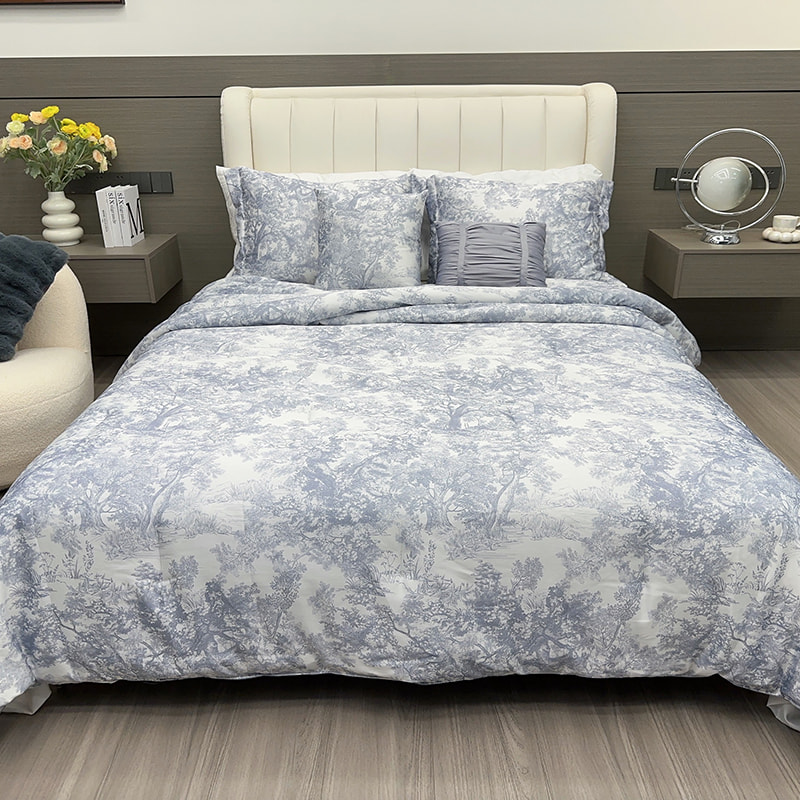
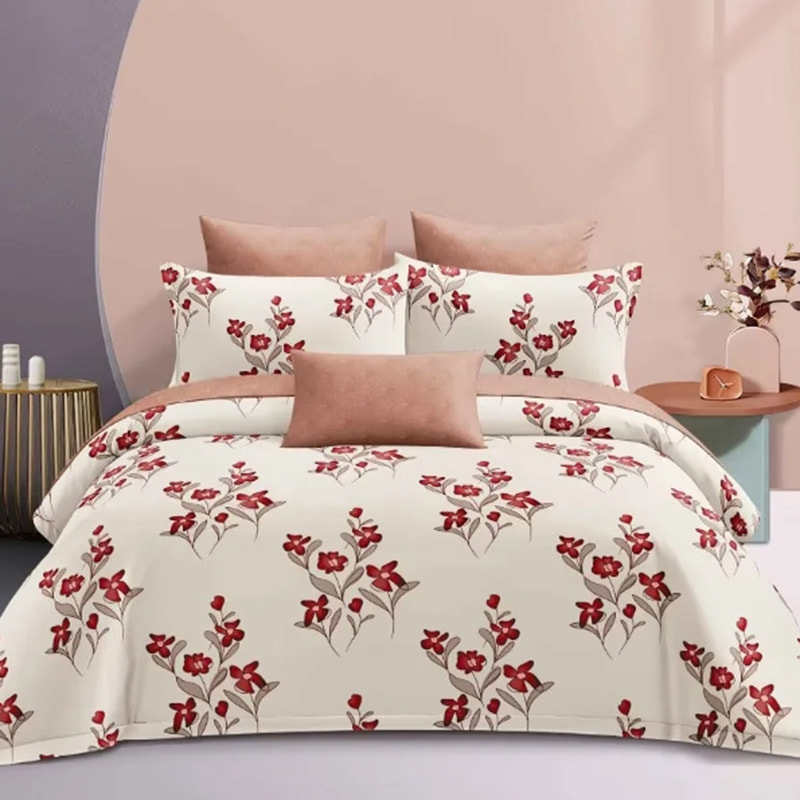
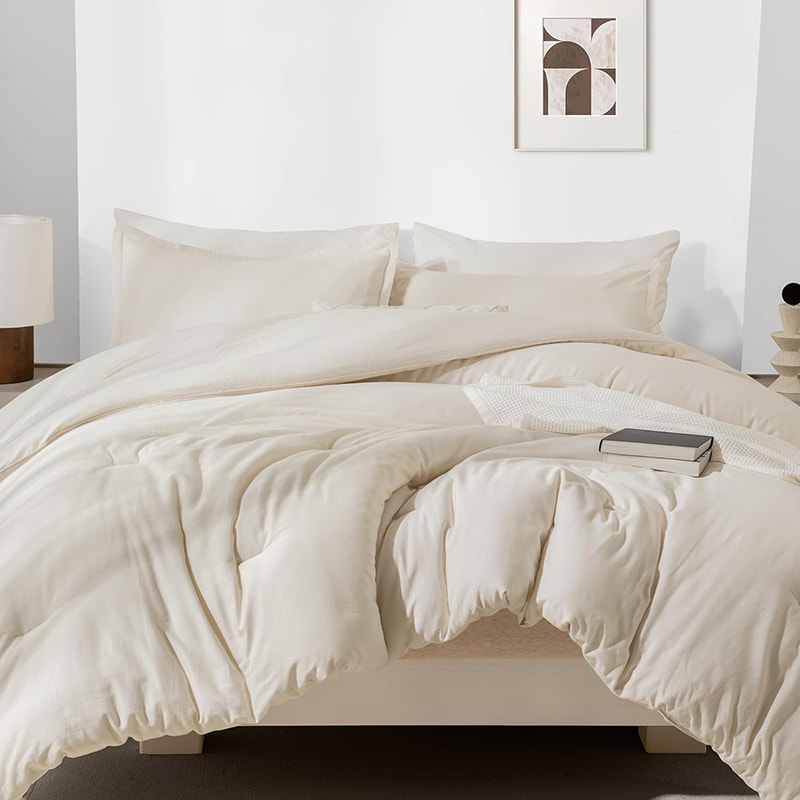
Seersucker comforter sets have long been associated with classic American and coastal-inspired bedroom styles, and the fabric's natural texture pairs well with a relaxed, lived-in aesthetic rather than a highly polished, formal look. Striped seersucker in blue and white remains the most iconic option, often paired with simple white or natural wood furniture to keep the room feeling airy and casual. Solid-colored seersucker in soft pastels or neutrals works well for those who want the breathable benefits of the fabric without the bolder stripe pattern, and pairs easily with patterned throw pillows or a textured throw blanket layered at the foot of the bed for added visual interest without sacrificing breathability.

 +86-159 5050 0822
 peter@rainbowhomefashion.com
 No.199 Yimin Road, Dateng DIstrIct, Yancheng City. Jiangsu Province, China