


 English
 Español
 عربى
عربى
Content
- 1 What Makes a Linen Bedding Set Different from Other Bedding?
- 2 What's Typically Included in a Linen Bedding Set
- 3 How to Choose the Best Linen Bedding Set: Key Factors to Evaluate
- 4 Linen Bedding vs. Cotton Bedding: Which Is Right for You?
- 5 How to Wash and Care for Your Linen Bedding Set
- 6 Best Linen Bedding Colors and Styles for Different Bedroom Aesthetics
- 7 Common Mistakes to Avoid When Buying a Linen Bedding Set
What Makes a Linen Bedding Set Different from Other Bedding?
A linen bedding set is made from fabric woven from the fibers of the flax plant — one of the oldest textile materials in human history, with documented use going back over 30,000 years. What sets linen bed linen apart from cotton, microfiber, or bamboo alternatives isn't just origin, it's a unique combination of physical properties that no synthetic or even other natural fiber quite replicates. Linen is hollow at the fiber level, which gives it exceptional breathability and moisture-wicking capability. It absorbs up to 20% of its own weight in moisture before it starts to feel damp, and then releases that moisture quickly — which is why sleeping on linen feels cool and dry even on warm nights.
The texture of linen bedding is distinctly different from cotton. It starts slightly coarser and more textured, with a characteristic lived-in look that many people find aesthetically appealing. This is not a defect — it's a property of the long flax fibers and the way they're woven. With every wash, linen fabric softens progressively while retaining its strength, which means a quality linen duvet cover set or sheet set actually improves with use over the first few months and continues to do so for years. Unlike cotton percale, which tends to pill and weaken over time, linen becomes softer, more supple, and more durable simultaneously — a combination that's genuinely rare in bedding materials.
Linen is also naturally hypoallergenic and resistant to bacteria, mold, and dust mites — making it an excellent choice for people with allergies, sensitive skin, or respiratory conditions. Its pH-neutral surface is gentle on skin, and it contains no synthetic treatments or chemical finishes in its pure form, unlike many "wrinkle-free" cotton products that use formaldehyde-based treatments to achieve their smooth appearance.
What's Typically Included in a Linen Bedding Set
Linen bed sets vary in what they include depending on the brand and the price point, so it's worth knowing what to look for before you buy. The composition of a set determines its value and whether you'll need to purchase additional pieces separately.
Standard Sheet Sets
A standard linen sheet set typically includes a flat sheet, a fitted sheet, and one or two pillowcases depending on the bed size. Twin sets usually come with one pillowcase; full, queen, and king sets come with two. The fitted sheet should have deep pockets — at least 14 to 16 inches — to accommodate thicker modern mattresses, and the elastic should wrap fully around all four corners rather than just the ends, which prevents the sheet from slipping off during sleep.
Duvet Cover Sets
A linen duvet cover set typically includes the duvet cover and matching pillowcases — it does not include a duvet insert, which must be purchased separately. Some sets also include a flat sheet, making them a more complete bedding bundle. Check closure type when buying a linen duvet cover: button closures are the most traditional and secure, while zipper closures are more convenient for daily making and removal. Ties at the interior corners help keep the duvet insert from bunching inside the cover.
Complete Linen Bedding Bundles
Some brands sell complete linen bedding sets that combine a duvet cover, flat sheet, fitted sheet, and multiple pillowcases in a single purchase. These offer the best value per piece and ensure a fully coordinated look. They're the most practical option for someone outfitting a bed from scratch with linen for the first time.
| Set Type | Typical Pieces Included | Best For | Avg. Price Range |
| Sheet Set | Flat sheet, fitted sheet, 1–2 pillowcases | Those who already have a duvet cover | $120–$300 |
| Duvet Cover Set | Duvet cover, 1–2 pillowcases | Refreshing existing bedding | $100–$280 |
| Complete Bundle | Duvet cover, flat sheet, fitted sheet, 2–4 pillowcases | Outfitting a bed from scratch | $250–$600+ |
How to Choose the Best Linen Bedding Set: Key Factors to Evaluate
Not all linen bed sets are made equal. The quality of the flax, the weave density, the finishing process, and the country of origin all influence how a set performs and how long it lasts. Here's what to look for when comparing options:
Flax Origin and Certification
The highest quality linen in the world comes from the flax-growing regions of Western Europe — particularly Belgium, France, and the Netherlands. European flax (often labeled as "French linen" or "Belgian linen") is grown in ideal climate conditions and harvested in a way that produces long, strong fibers with a fine texture. Chinese linen is also widely produced and can be good quality, but is more variable. Look for OEKO-TEX Standard 100 certification, which guarantees the fabric has been tested for harmful substances and is safe for skin contact. European Flax certification (a label specific to flax grown in Western Europe) is another strong quality indicator.
Weight (GSM)
Linen bedding weight is measured in grams per square meter (GSM). Lighter linen (around 130–160 GSM) is airier, cooler, and more suited to warm climates or summer use. Medium-weight linen (170–200 GSM) is the most versatile and popular choice for year-round bedding. Heavier linen (210 GSM and above) feels more substantial and is better for cooler climates or people who prefer a denser fabric. Weight alone doesn't determine quality — a well-woven 170 GSM linen will outperform a poorly made 200 GSM product — but it does affect the feel and thermal properties of the set.
Stonewashing and Pre-Washing
Raw linen is initially stiff and rough. High-quality linen bedding sets are stonewashed or enzyme-washed during production to pre-soften the fabric before it reaches the customer. This pre-softening process means the set feels noticeably softer straight out of the packaging and continues to improve with home washing, rather than spending several months feeling scratchy before softening up. If a product listing doesn't mention stonewashing or pre-washing, the set is likely unwashed, which means it will be stiffer initially.
Thread Count vs. Weave Quality
Thread count — the metric obsessively marketed for cotton bedding — is largely irrelevant for linen. Linen fibers are thicker than cotton fibers, so linen naturally has a lower thread count than cotton, but this doesn't indicate inferior quality. A well-made linen bedding set at 80–120 threads per inch will be far superior to a poorly made cotton set at 600 threads per inch. For linen, focus on fiber quality, weave evenness, and GSM weight rather than thread count numbers.
Color and Dye Quality
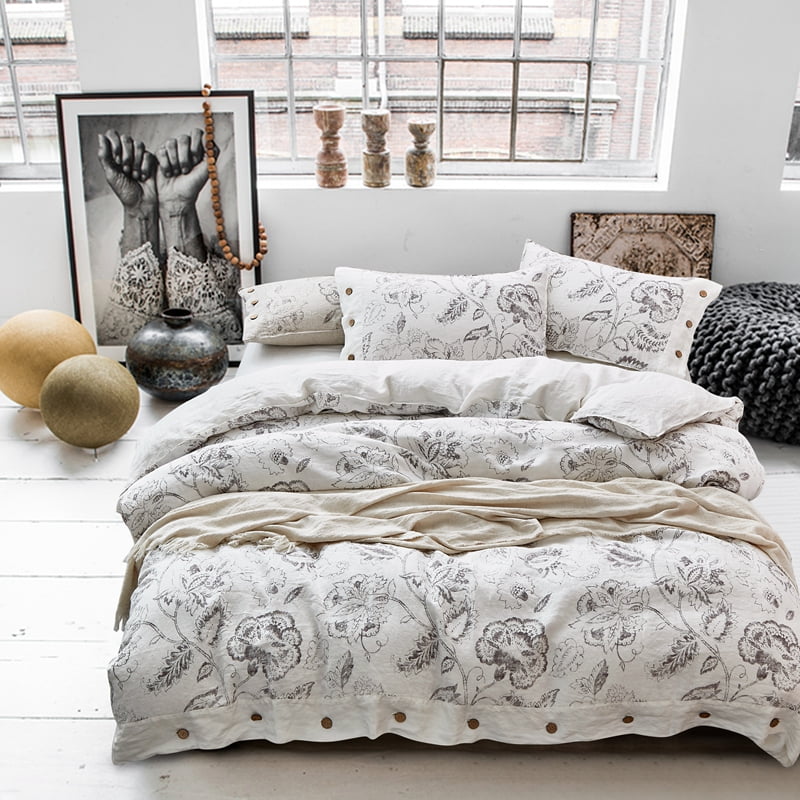
Natural undyed linen comes in a range of off-white to beige tones. Dyed linen sets should use reactive or plant-based dyes that penetrate the fiber deeply rather than coating the surface, which ensures color stays true after repeated washing. Low-quality dyes fade quickly or bleed onto other laundry. Reading customer reviews about color fastness after multiple washes is one of the best ways to assess dye quality before buying.
Linen Bedding vs. Cotton Bedding: Which Is Right for You?
The linen versus cotton debate comes down to your personal sleeping habits, climate, and priorities. Both are natural fibers, but they behave quite differently in use. Here's an honest comparison to help you decide:
- Temperature regulation: Linen outperforms cotton significantly for hot sleepers. Its hollow fiber structure allows air to circulate freely, and its superior moisture-wicking keeps sweat away from the skin. Percale cotton is also breathable but doesn't match linen's performance in warm conditions. Sateen cotton, while soft, traps heat and is a poor choice for anyone who sleeps warm.
- Softness on first use: Cotton wins here, particularly sateen or long-staple cotton like Egyptian or Pima. Linen starts rougher and requires several washes to reach its full softness potential. If instant softness is your priority, cotton may be more immediately satisfying.
- Longevity: Linen lasts significantly longer than cotton. Quality linen bedding can last 20 to 30 years with proper care, while even high-quality cotton bedding typically shows significant wear within 5 to 10 years. Over a lifetime, linen is the more economical choice despite its higher upfront cost.
- Wrinkle resistance: Neither linen nor cotton is naturally wrinkle-resistant — both wrinkle easily. Linen wrinkles more visibly, though many people consider this part of its relaxed, casual aesthetic. If crisp, smooth bedding is important to you, ironing or steaming linen while slightly damp produces a smooth finish.
- Environmental impact: Flax requires significantly less water than cotton to grow and typically needs fewer pesticides. Linen production has a lower environmental footprint than conventional cotton, making linen the more sustainable choice for eco-conscious buyers.
- Price: Quality linen bedding sets are generally more expensive than comparable cotton sets at the same tier. However, when cost-per-year is considered over the full lifespan, linen often comes out equivalent or cheaper than replacing cotton sets every few years.
How to Wash and Care for Your Linen Bedding Set
Linen is more durable than cotton and becomes more beautiful with proper washing — but it does respond poorly to a few specific conditions. Following the right care routine ensures your linen bed linen set lasts for decades and continues to soften beautifully over time.
Washing Temperature and Cycle
Wash linen bedding in cool or lukewarm water — ideally 30°C to 40°C (86°F to 104°F). Hot water causes linen to shrink and weaken the fibers over time. Use a gentle or delicate cycle with a low spin speed to minimize mechanical stress on the fabric. Avoid washing linen with heavy items like jeans or towels that can abrade the fabric surface during the wash cycle.
Detergent Choice
Use a mild, pH-neutral liquid detergent without bleach, enzymes, or optical brighteners. Bleach weakens linen fibers and causes yellowing over time rather than whitening. Fabric softener should also be avoided — it coats the linen fibers with a waxy residue that reduces breathability and actually makes the fabric less soft in the long run by interfering with the natural fiber softening process.
Drying Linen Bedding
Air drying is the best option for linen — hang sheets and duvet covers outdoors or over a drying rack in a well-ventilated space. Line drying in sunlight also has a natural mild bleaching effect that keeps white and natural linen bright without chemical treatment. If you use a tumble dryer, use a low heat setting and remove the linen while it's still slightly damp to prevent over-drying, which makes linen stiff and brittle. Shake the items out before hanging or folding to reduce wrinkles.
Ironing and Storing
Iron linen while it's still slightly damp using a medium-hot iron setting (or the linen setting if your iron has one). Ironing dry linen is much harder and less effective. For storage, fold linen bedding loosely and store in a cool, dry, well-ventilated location — avoid plastic storage bags, which trap moisture and can cause mildew. A cotton storage bag or a linen closet shelf with good air circulation is ideal.
Best Linen Bedding Colors and Styles for Different Bedroom Aesthetics
One of linen's great strengths as a bedding material is its visual versatility. The natural texture and slight irregularity of the weave gives linen bedding sets a distinctive look that works equally well in minimal, rustic, coastal, and classic bedroom styles. Choosing the right color palette enhances the overall aesthetic of your bedroom significantly.
Natural and Neutral Tones
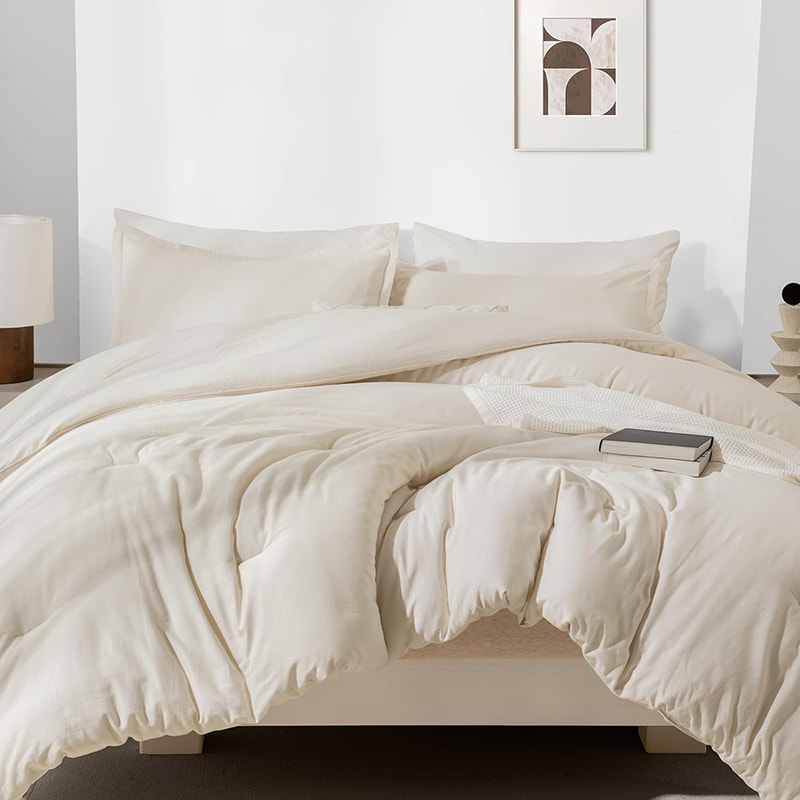
Undyed natural linen — ranging from creamy off-white to warm oat and greige tones — is the most versatile color choice and suits virtually any bedroom style. These tones pair well with wood furniture, rattan accents, and earthy decor, and they look particularly beautiful in Scandinavian, Japanese minimalist, or relaxed coastal bedroom styles. Natural linen also shows the texture of the weave most clearly, which is part of its visual appeal.
Soft and Muted Colors
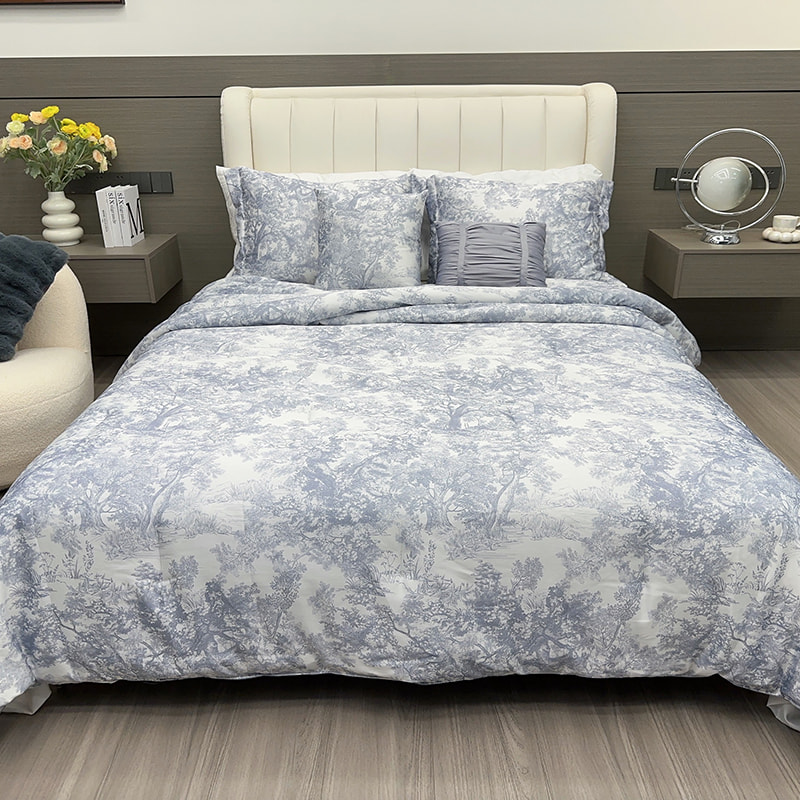
Dusty sage, blush pink, slate blue, soft terracotta, and muted grey are among the most popular dyed linen bedding colors. These tones photograph beautifully and have a characteristically soft, slightly faded quality when made in linen — more nuanced and relaxed than the same colors would look in cotton. They work well in Bohemian, Provençal, or contemporary bedroom settings and layer nicely with throw pillows and blankets in complementary tones.
Deep and Jewel Tones
Deep navy, forest green, charcoal, and burgundy linen bedding sets make a bold statement while retaining linen's relaxed texture. These colors work well in more dramatic bedroom interiors — Art Deco inspired spaces, moody maximalist rooms, or bedrooms with dark wood furniture and warm lighting. Because linen's texture softens deep colors slightly, they feel rich without being overpowering.
Common Mistakes to Avoid When Buying a Linen Bedding Set
First-time linen bedding buyers often make a few avoidable mistakes that lead to disappointment. Knowing what to watch out for saves money and frustration:
- Buying based on thread count: As mentioned earlier, thread count is a cotton metric and has no meaningful relevance to linen quality. A high thread count linen claim is often a marketing tactic applied to low-quality blended fabric — pure linen simply doesn't have a high thread count, and that's fine.
- Choosing linen-cotton blends thinking they're the same: Many budget "linen" bedding sets are actually linen-cotton blends — typically 30–55% linen and the rest cotton or polyester. These blends are softer initially but don't offer the same breathability, longevity, or softening-over-time properties as 100% pure linen. Always check the fiber content label carefully.
- Expecting cotton-like softness immediately: Linen will feel different from cotton on first use. If you open your new linen sheet set expecting the silky smoothness of sateen cotton, you'll be disappointed. Give it three to five washes before judging — the transformation is real but takes time.
- Not checking fitted sheet pocket depth: Many linen fitted sheets have shallow pockets (10–12 inches) that don't fit modern thick mattresses. Always check the listed pocket depth and compare it to your mattress height before buying, especially if you have a pillow-top or memory foam mattress.
- Washing in hot water: Hot water is the single biggest enemy of linen bedding longevity. It causes shrinkage, weakens fibers, and can cause color fading in dyed sets. Always wash in cool or lukewarm water, regardless of what the packaging might suggest.
- Using fabric softener: It feels counterintuitive, but fabric softener actually makes linen less soft over time by coating the fibers and preventing the natural softening process. Skip it entirely — linen doesn't need it and performs better without it.

 +86-159 5050 0822
 peter@rainbowhomefashion.com
 No.199 Yimin Road, Dateng DIstrIct, Yancheng City. Jiangsu Province, China