


 English
 Español
 عربى

An embroidery quilt earns its place on a bed for two reasons at once: it is warm and practical, and it carries a decorative surface that plain bedding simply cannot match. In more than twenty years of exporting home textiles from Yancheng, we have watched embroidered quilts move from a small gift-shop category into a steady line for department stores, online sellers and hotel suppliers. Buyers return to them because the stitching gives a quilt a visible quality that photographs well and holds up through repeated washing.
This guide walks through what an embroidery quilt really is, how to judge its construction, which styles travel best across markets, and how to care for the finished piece so your customers keep coming back for more.
Content
What Makes an Embroidery Quilt Different
Two techniques share the same surface, and mixing them up is the most common source of disappointment. Quilting is structural: a layer of wadding is sealed between a face fabric and a backing with running stitches, so the filling stays where it belongs. Embroidery is decorative: coloured thread is built up on top of the face fabric to create motifs, borders, scallops or an all-over pattern. A true embroidery quilt has both — the quilting holds the piece together, and the embroidery gives it character.
On the embroidery side, the stitch families you will meet most often are satin stitch, which gives a smooth, slightly raised motif and a soft sheen; chain stitch, which traces outlines with a hand-worked look; and appliqué with an embroidered edge, where a cut shape is stitched down and outlined in thread. Denser embroidery reads as more luxurious but adds weight, so a well-made quilt balances coverage against drape.
On the quilting side, look at the pattern spacing. Diamond and square grids are the classics and hold wadding evenly; channel quilting gives a cleaner, more modern line; and a sparse, wide-spaced stitch is softer and lighter but can shift with heavy use. Run your hand across the surface — a good quilt feels flat and settled, without lumps or bare patches where the filling has crept.
Fabric, Thread and Fill: What to Check Before You Commit
Most of the complaints we hear about embroidered quilts trace back to a mismatch between the face fabric, the thread and the filling. The table below sums up what we look at first when a buyer sends a reference sample.
| Element | Common options | What it means in use |
|---|---|---|
| Face fabric | Cotton, washed microfiber, linen blend | Cotton breathes and takes thread cleanly; microfiber is softer on price and drapes lightly |
| Embroidery thread | Rayon, polyester, cotton-wrapped | Rayon gives sheen, polyester holds colour through washing, cotton reads matte and traditional |
| Quilting pattern | Diamond, square, channel, scallop | Tighter grids keep wadding stable; wider spacing feels lighter and softer |
| Fill | Polyester wadding, cotton wadding, blends | Polyester is light and resilient; cotton is heavier and suits a classic, cooler feel |
| Edge finish | Ruffle, piped, plain bound, scalloped | Ruffles soften a room; bound edges are easier to press and stack for retail |
| Set size | Three-piece, four-piece, five-piece upward | Determines retail price point and whether the quilt works as a standalone or a coordinated set |
One practical note from the sampling room: embroidery looks different under warm store lighting than it does under daylight. Ask for a photo of the sample in natural light before approving a thread colour, especially on ivory and pale grey grounds where a half-shade of difference shows.
Three Styles That Travel Well Across Markets
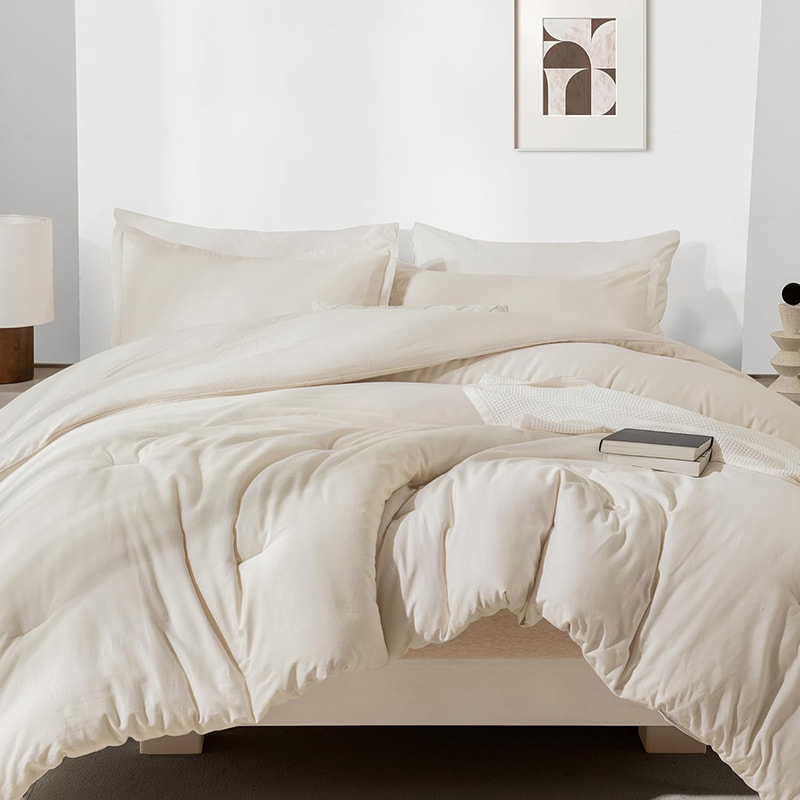
Style preferences vary by region, but a few silhouettes repeat season after season because they suit both traditional and modern interiors. A clean three-piece set is the safest starting point for a new range, with a quilted face, matched shams and a soft, breathable hand feel.
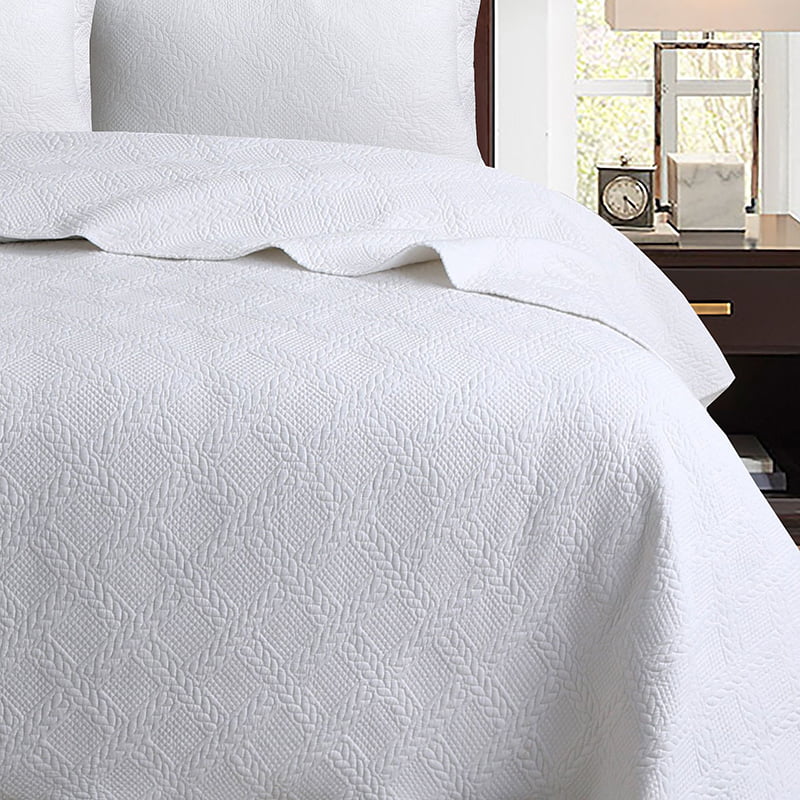 3-Piece Embroidered Cotton Quilt SetA three-piece quilt and pillowcase set with cotton fabric, polyester fill and customizable embroidery, suited to buyers seeking a clean quilted starting point.View Product →
Where the market leans romantic or cottage-inspired, a ruffle edge does a lot of work for very little extra cost. It photographs beautifully on a made bed and reads as a considered detail rather than decoration for its own sake.
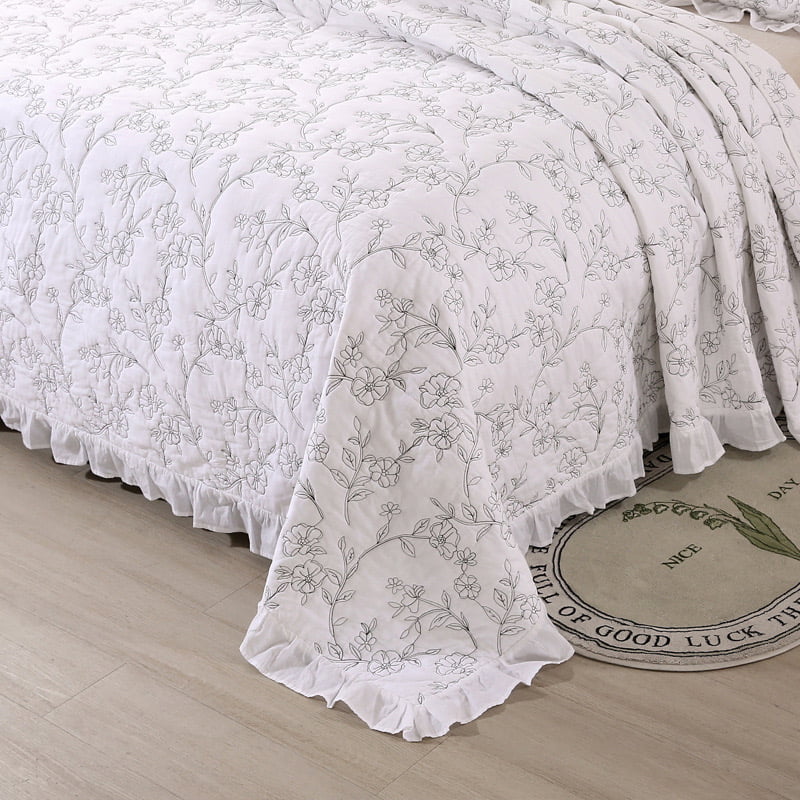 Ruffle Edge Cotton Quilt SetThree-piece cotton quilt set with floral stitching and ruffled edges, adding a romantic, cottage-inspired detail to beds while remaining customizable for buyers.View Product →
Botanical motifs remain the most reliable pattern family we ship. A lotus-inspired quilted set sits comfortably in guest rooms, holiday lets and boutique hotels, because the motif is decorative without being tied to one season or one culture.
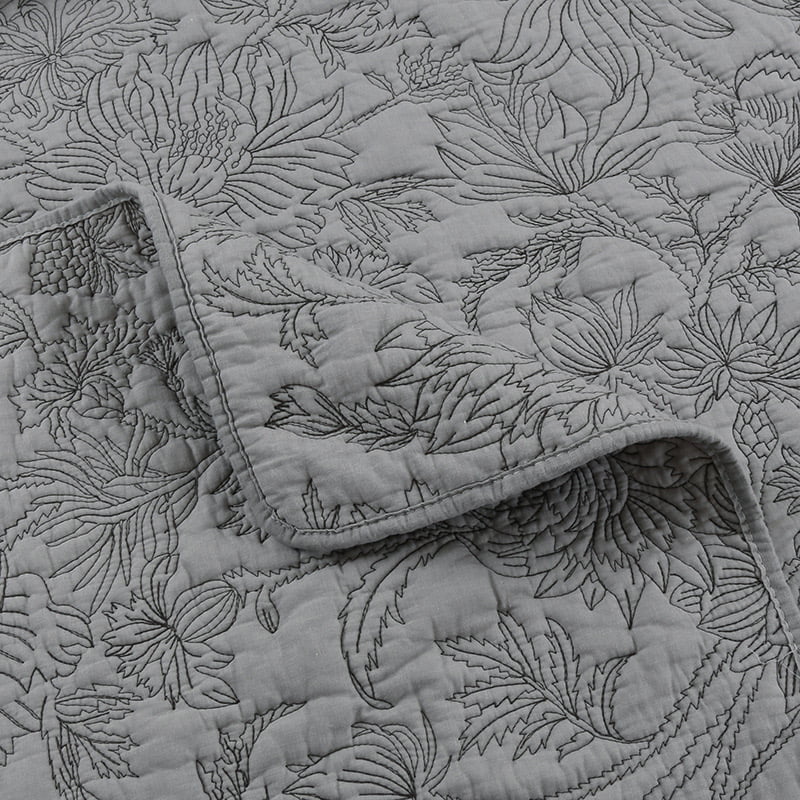 Lotus Patterned Hexagonal Patchwork Quilt SetThree-piece cotton quilted set with hexagonal patchwork striped blocks and lotus-inspired motif, suited to guest rooms, holiday lets and boutique hotels.View Product →
Patchwork and striped treatments are worth considering alongside these — they bridge the gap between the handmade quilt look and a commercially reproducible product, and they appeal to buyers who want texture without a strong motif.
Sizing, Sets and the Details Buyers Ask About
Size runs are the quiet make-or-break of a quilt programme. Twin and full sizes dominate North American programmes, while single, double and king sizes carry European and Middle Eastern orders. Confirm the drop you want over the mattress before sampling, because a quilt sized for a deep mattress will look short on a shallow one, and the difference is rarely recoverable at the packaging stage.
Set configuration matters just as much. A three-piece set is easy to merchandise and ships economically; five- and seven-piece configurations support higher price points but need clearer photography so shoppers understand what arrives in the box. If you are still mapping out a range, our embroidery quilt collection shows how these combinations sit together across materials and price tiers.
For buyers placing a first order, ask three questions before the bulk run: what thread is being used and at what density, whether the wadding is stitched at the edges as well as the field, and how the quilt is packed — rolled, flat-folded with a belly band, or vacuum-compressed. The answers tell you more about consistency than any catalogue photo.
Care Advice Worth Passing On to Your Customers
Embroidery is durable thread, not fragile thread, but it rewards a little attention. Passing on clear care guidance reduces returns and gives your product a longer life in the customer's home.
- Machine wash cold on a gentle cycle, and turn the quilt inside out to protect raised motifs.
- Skip chlorine bleach and fabric softener; both dull rayon sheen and flatten embroidery.
- Tumble low or line dry flat, and smooth the quilt while it is still slightly damp so the quilting lines set straight.
- Store folded with acid-free tissue rather than in a sealed plastic bag, which traps moisture.
For a more detailed walkthrough you can share with end customers, this short piece on how to store a quilt properly covers folding, seasonal rotation and protection from light and pests.
An embroidery quilt sits at a useful intersection: it is decorative enough to sell on appearance and practical enough to justify its price in daily use. Judge the thread, the quilting spacing and the fill together rather than in isolation, and the product will perform in the market the way it performs on the bed. If you would like to talk through a sample or a size run, our team is always glad to help.

 +86-159 5050 0822
 peter@rainbowhomefashion.com
 No.199 Yimin Road, Dateng DIstrIct, Yancheng City. Jiangsu Province, China
