


 English
 Español
 عربى

A duvet cover is one of those quiet purchases that changes how a bed feels every night. It protects the duvet inside, softens the whole bed, and sets the visual tone of the room. After more than two decades in textile export, we have learned that the best cover is rarely the most complicated one. It is the one whose fabric suits the sleeper, whose measurements suit the insert, and whose construction survives real laundry routines.
This guide walks through the choices that matter, from fabric and finish to sizing, care, and sourcing. Whether you are refreshing a guest room or building a product range, the same practical questions apply.
Content
- 1 What a Duvet Cover Really Does
- 2 Fabric Is the First Decision, Not the Last
- 3 Construction Details That Show Up After the First Wash
- 4 Match the Cover to the Room, Season, and Sleeper
- 5 Sizing and Fit: The Quiet Reason Covers Fail
- 6 Care Habits That Keep a Duvet Cover Looking New
- 7 A Practical Sourcing Checklist for Duvet Cover Buyers
What a Duvet Cover Really Does
A duvet cover is a removable fabric shell for a duvet insert. It works like a pillowcase for the bed: you wash the cover, not the whole duvet, which keeps the insert cleaner and extends its life. The cover also lets you change color, texture, and warmth without replacing the insert. That is why a simple cover can update a bedroom faster than almost any other textile purchase.
It is different from a comforter. A comforter usually has its fill quilted or sewn inside and is used as the top layer on its own. A duvet cover is empty until you add an insert, so fit and closure matter more. If the cover is too small, the insert bunches. If the closure is weak, the insert escapes. If the fabric feels stiff, the whole bed feels stiff.
Fabric Is the First Decision, Not the Last
Fabric affects feel, breathability, care time, and how the cover holds up after washing. Cotton remains the most familiar choice because it is breathable, washes well, and softens with use. Linen brings a relaxed texture and a cool hand, though it wrinkles naturally and should be washed gently. Microfiber is smooth, lightweight, and often easier on budget, which makes it useful for rentals, kids' rooms, and high-turnover programs. Bamboo fiber and blends feel silky and cool, but they need a gentle cycle and sensible drying.
Do not judge a cover by thread count alone. Weave, yarn quality, dye method, and finishing all change the result. A well-made cotton cover with a clear finish can feel better than a high-count cover with poor construction. For printed designs, check pattern alignment and colorfastness. For solid colors, check shade consistency across production batches, especially if you are matching shams and sheets.
| Fabric | What It Feels Like | Care Notes | Good Fit For |
|---|---|---|---|
| Cotton | Breathable, crisp at first, softens with washing | Machine wash warm, tumble low | Year-round family beds and hotel-style rooms |
| Linen | Relaxed texture, cool hand, natural drape | Gentle wash, expect natural wrinkling | Warm sleepers and casual layered looks |
| Microfiber | Smooth, lightweight, often budget-friendly | Easy wash, quick dry, lower heat | Rentals, kids' rooms, and frequent laundry |
| Bamboo fiber and blends | Silky, cool, fluid drape | Gentle cycle, mild detergent, low dry | Hot sleepers and soft modern bedrooms |
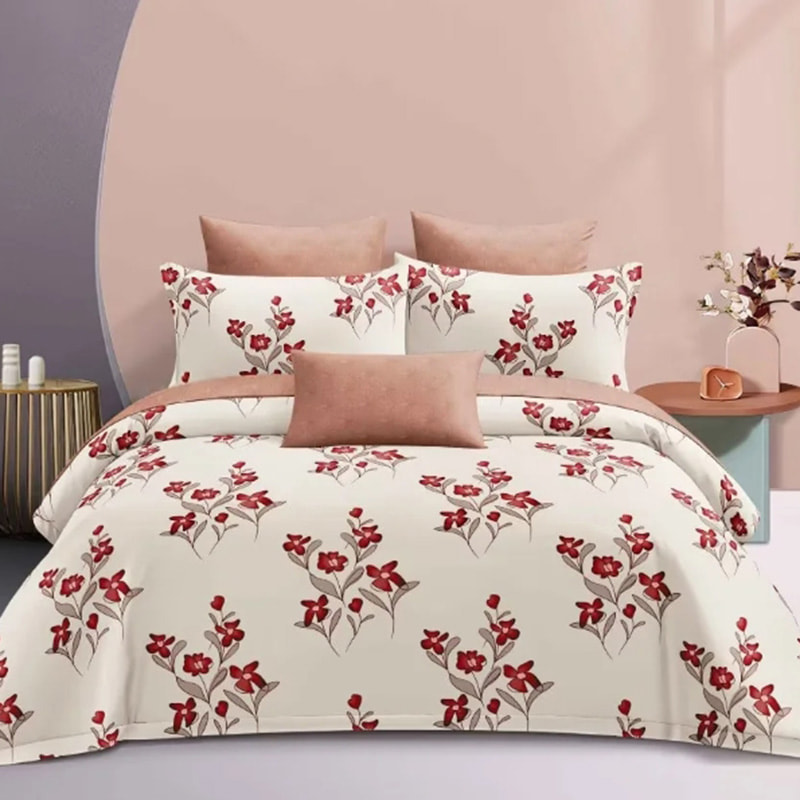
 Printed Cotton Duvet Cover Set by Rainbow HomeA 100% cotton four-piece set with floral, geometric, or abstract print and solid reverse; check print alignment and wash performance before ordering.View Product →
When you compare samples, wash them before you decide. A fabric that feels lovely on the table may shrink, pill, or lose its finish after the first home wash. A simple pre-wash test tells you more than a catalog photo ever will.
Construction Details That Show Up After the First Wash
The details that sell a duvet cover are often visual: color, print, texture, and trim. The details that keep it in use are structural. Look at the seams, the closure, the corner ties, and the allowance for shrinkage. A cover with narrow seams and no reinforcement can pull apart at the corners. A hidden button placket looks neat, but it needs strong stitching and correctly sized buttonholes. Zippers should run smoothly and sit flat without catching the insert.
Corner ties are small, but they make a real difference. They hold the insert in place and stop the cover from turning into an empty sack overnight. If the cover has no ties, check whether the insert has loops and whether the cover has matching attachment points. For jacquard and textured fabrics, inspect the reverse side. A beautiful face can hide loose threads or a rough back that feels unpleasant against the skin.
 Double-Layer Yarn Jacquard Duvet Cover Set100% cotton color-woven jacquard set with plain reverse, corner straps, and bow closure; check reverse finish and secure attachment.View Product →
Print quality also belongs here. Good printing should look clean at the edges and consistent across the repeat. Poor printing can crack, fade, or look blurred after washing. If the design is central to the product, ask for a wash test and compare the before and after shade.
Match the Cover to the Room, Season, and Sleeper
A duvet cover has to work with the room, not just the bed. In a calm bedroom, a solid color or a subtle woven texture often does more than a busy print. In a children's room or a holiday rental, a printed cover can add personality without changing the furniture. For winter, a plush or brushed fabric feels generous and warm. For summer, linen, bamboo blends, or a lightweight cotton cover feel cooler and easier to layer.
Think about the sleeper, too. Hot sleepers usually do better with breathable natural fibers and lighter colors. People who wash bedding often may prefer microfiber or a well-finished cotton that dries quickly. Guest rooms need covers that look neat with minimal styling, so solid colors, simple textures, and easy-care blends are practical. The goal is not to follow a trend blindly. It is to choose a cover that still looks right after a month of ordinary use.
Sizing and Fit: The Quiet Reason Covers Fail
Most duvet cover complaints come back to fit. Measure the insert first, including its loft. A thin insert and a thick insert of the same nominal size can behave very differently inside the same cover. Check the finished cover dimensions, not just the label. Then allow for shrinkage, especially with natural fibers. A cover that fits perfectly before washing may become tight after the first few cycles.
- Measure the insert length, width, and loft before choosing a cover size.
- Confirm the finished cover dimensions after washing, not only in greige state.
- Check closure type, corner ties, and whether the opening is wide enough for easy filling.
- Match pillow shams to the bed size, and confirm whether the shams have flanges or plain edges.
If you are sourcing for a market with standard bed sizes, keep a size chart with clear tolerances. Small differences are normal in textile production, but the customer should not have to wrestle the insert into the cover every morning.
Care Habits That Keep a Duvet Cover Looking New
Good care starts with reading the label, but a few habits help almost every cover. Close the closure before washing, turn the cover inside out, and use a mild detergent. Avoid overloading the machine, because a crowded drum can crease the fabric and strain the seams. Tumble dry on low or line dry when possible. High heat is hard on cotton, linen, microfiber, and bamboo blends alike.
Wash stains promptly and skip harsh bleach unless the care label allows it. For printed covers, wash with similar colors at first to reduce any risk of transfer. If you want a more detailed routine, our practical wash guide covers temperature, drying, and stain handling in more detail. A cover that is washed sensibly will keep its hand feel and color far longer than one that is treated roughly.
A Practical Sourcing Checklist for Duvet Cover Buyers
For importers, retailers, and hospitality buyers, the sourcing conversation should go beyond price per piece. Ask for fabric composition, yarn or weight details, construction method, closure type, and finished dimensions. Confirm colorfastness, shrinkage, pilling resistance, and packaging details. If the product is printed, ask for a strike-off or lab dip before bulk. If it is solid, ask for shade approval under proper lighting. These steps prevent expensive surprises later.
- Confirm the exact fabric composition and any blend percentages.
- Review seam construction, corner ties, and closure durability.
- Check wash shrinkage and colorfastness before bulk production.
- Agree on size tolerances, packing method, and carton marks.
- Request pre-production and production samples when the order justifies it.
 Striped Pure Linen Duvet Cover Set100% linen four-piece set with classic stripes and breathable, moisture-absorbing fabric; confirm care instructions, composition, and finished dimensions before sourcing.View Product →
Natural textures such as linen are a useful reference point when judging hand feel and drape, but they also show why clear care instructions matter. The more unusual the fabric, the more important the label and the buyer's guidance become.
A duvet cover is simple in principle and detailed in practice. Start with the sleeper and the bed, choose a fabric that fits the routine, check the construction, and confirm the measurements. That approach works for a single bedroom refresh and for a full product range. If you would like to know more about how we work with home textile buyers, you can read our company story or send us your questions directly.




 +86-159 5050 0822
 peter@rainbowhomefashion.com
 No.199 Yimin Road, Dateng DIstrIct, Yancheng City. Jiangsu Province, China
