


 English
 Español
 عربى
عربى
If you've ever woken up overheated, tangled in sweaty sheets, or simply unsatisfied with the feel of your bedding, switching to a bamboo bedding set might be one of the easiest upgrades you can make to your sleep routine. Prized for its exceptional softness, natural temperature regulation, and moisture-wicking properties, bamboo fabric has moved from a niche eco-conscious choice to a mainstream bedding staple. This article explains what makes bamboo bedding different from traditional cotton, what to look for when shopping for a set, and how to keep it performing well wash after wash.
Content
What Makes Bamboo Bedding Different from Cotton
Most bamboo bedding sets on the market are made from bamboo viscose or bamboo rayon, a fabric produced by breaking down bamboo pulp into a soft, silky fiber that's then spun into thread and woven into fabric. This process results in a material with a noticeably smoother, silkier hand-feel compared to standard cotton, along with a slight natural sheen that gives bamboo sheets their distinctive drape and softness.
Beyond texture, bamboo fabric has a naturally porous fiber structure, which allows it to absorb and wick moisture away from the body more effectively than many traditional cotton weaves. This same structure also contributes to better airflow through the fabric, helping regulate temperature throughout the night rather than trapping heat against the skin, which is one of the most frequently cited reasons people switch to a bamboo bedding set in the first place.
Key Benefits of Choosing a Bamboo Bedding Set
Beyond its soft feel, bamboo bedding offers a combination of practical benefits that make it appealing to a wide range of sleepers, particularly those who run warm at night or deal with sensitive skin.
- Natural temperature regulation that helps keep sleepers cool in warm weather and comfortably insulated in cooler conditions
- Superior moisture-wicking properties that pull sweat away from the skin during the night
- Naturally hypoallergenic qualities that make bamboo bedding a good option for people with sensitive skin or allergies
- Softness that often rivals or exceeds high-thread-count cotton, without requiring an equally high price point
- Durability that holds up well over repeated washing when cared for properly
- A more sustainable growing profile compared to cotton, since bamboo generally requires less water and fewer pesticides to cultivate
Understanding Different Types of Bamboo Fabric
Not all bamboo bedding sets are made using the same manufacturing process, and understanding the differences can help you set realistic expectations for feel, breathability, and price.
Bamboo Viscose or Rayon
This is the most common type of bamboo bedding fabric, produced through a chemical process that breaks down bamboo pulp into a soft, spinnable fiber. It offers the silky, drapey feel most people associate with bamboo sheets, along with strong moisture-wicking performance, though the manufacturing process does involve chemical processing that some eco-conscious buyers may want to research further.
Bamboo Lyocell
Bamboo lyocell is produced using a closed-loop manufacturing process that recycles the solvents used to break down bamboo fibers, generally resulting in a more environmentally friendly production method compared to standard viscose. Lyocell bamboo fabric tends to be slightly more durable and often carries a marginally higher price point.
Bamboo-Cotton Blends
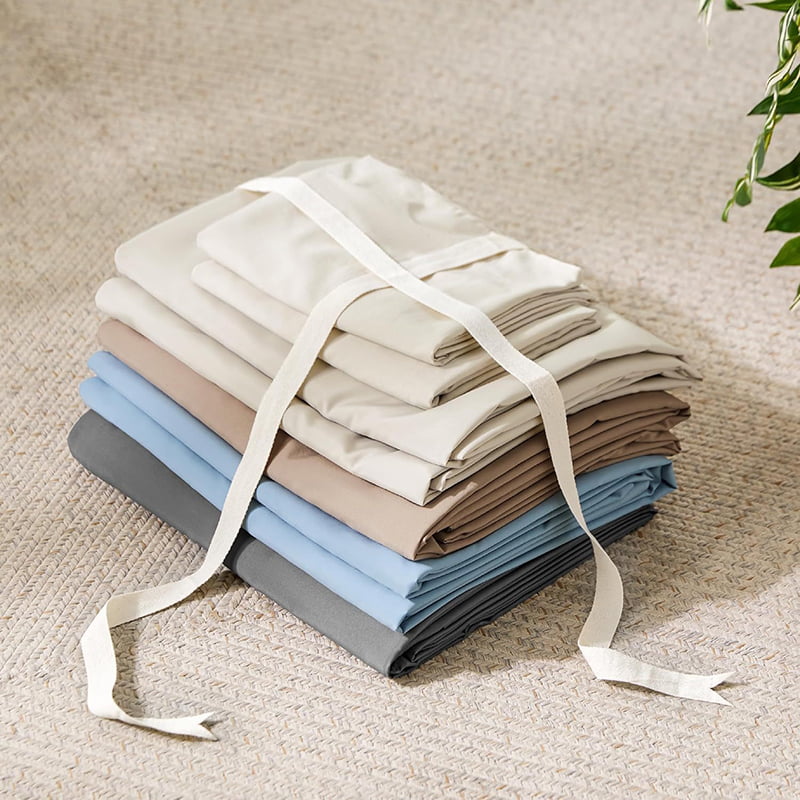
Some bedding sets combine bamboo fibers with cotton to balance the softness and cooling properties of bamboo with the familiar durability and slightly crisper feel of cotton, often at a lower price point than 100 percent bamboo sets.
What to Look for When Buying a Bamboo Bedding Set
With so many bamboo bedding sets available at a wide range of price points, knowing what details actually matter can help you avoid low-quality products that don't deliver on bamboo's typical benefits.
| Feature | What to Check |
| Fabric Composition | Look for 100% bamboo viscose or lyocell rather than vague "bamboo blend" labeling |
| Weave Type | Sateen weave offers a silkier feel; twill weave is more durable and less prone to wrinkling |
| Thread Count Claims | Bamboo fibers are naturally finer, so thread count numbers aren't directly comparable to cotton |
| Certifications | OEKO-TEX or similar certifications indicate the fabric was tested for harmful substances |
| Fitted Sheet Depth | Confirm pocket depth matches your mattress thickness, especially for pillow-top or memory foam beds |
How to Wash and Care for Bamboo Bedding
Proper care plays a significant role in how long a bamboo bedding set retains its softness and performance. Washing in cold or lukewarm water with a mild, bleach-free detergent helps preserve the integrity of the fibers, since hot water and harsh chemicals can gradually weaken bamboo fabric and dull its natural sheen over time.
Washing Recommendations
Use a gentle cycle and avoid overloading the washing machine, as bamboo fabric can be more prone to friction damage when packed too tightly with other items. Skipping fabric softener is also generally recommended, since bamboo fibers are already naturally soft and softener residue can reduce the fabric's breathability over time.
Drying Best Practices
Tumble drying on low heat or air drying is generally preferred over high-heat drying, which can cause bamboo fibers to become brittle or shrink slightly over repeated washes. Removing the bedding promptly once dry and giving it a light shake before folding also helps minimize wrinkles without needing to iron.
Who Benefits Most from Switching to Bamboo Bedding
While bamboo bedding sets work well for most sleepers, certain groups tend to notice the biggest improvement after making the switch. Hot sleepers who frequently wake up overheated or sweaty often find bamboo's breathability and moisture-wicking properties make a noticeable difference compared to standard cotton sheets. People with sensitive skin, eczema, or allergies may also benefit from bamboo's naturally hypoallergenic and antimicrobial-leaning properties, which can reduce irritation compared to synthetic bedding materials.
Additionally, anyone living in a warmer climate or without reliable air conditioning may find that bamboo bedding helps maintain a more comfortable sleep temperature throughout the night, reducing the need to kick off blankets or wake up due to overheating. Even sleepers without a specific temperature or skin sensitivity concern often appreciate bamboo bedding simply for its soft, luxurious feel at a more accessible price point than comparable high-end cotton alternatives.

 +86-159 5050 0822
 peter@rainbowhomefashion.com
 No.199 Yimin Road, Dateng DIstrIct, Yancheng City. Jiangsu Province, China