


 English
 Español
 عربى
عربى
Content
What Is a Duvet Cover and Why You Need One
A duvet cover is a removable fabric casing that wraps around a duvet insert, functioning much like a large pillowcase for your comforter. Instead of laundering the bulky insert itself, you simply remove the cover, wash it, and put it back on, which saves both time and wear on the insert. This is one of the main reasons duvet covers have become the standard bedding choice in many households, especially compared to sewn-in comforters that need to be washed as a whole unit.
Beyond convenience, a duvet cover also lets you change up your bedroom's look without buying an entirely new comforter. Since the insert stays the same, swapping covers is an easy, affordable way to refresh your space seasonally or match new decor.
Duvet Cover vs. Comforter: What's the Difference?
People often confuse duvet covers with comforters, but they serve different roles in your bedding setup. A comforter is typically a single, all-in-one piece that's already finished and doesn't require an additional cover, though many people still choose to add one for protection. A duvet, on the other hand, is essentially an insert, usually filled with down or synthetic fill, that's designed specifically to be used inside a removable duvet cover.
| Feature | Duvet + Cover | Comforter |
| Washing | Remove and wash cover only | Wash entire piece, often at a laundromat |
| Style Flexibility | Easy to swap covers for new looks | Fixed design, harder to change |
| Insert Protection | Cover shields insert from stains and wear | No separate layer of protection |
For most people who want long-term flexibility and easier cleaning, pairing a duvet insert with a good cover tends to be the more practical long-term choice.
Choosing the Right Duvet Cover Material
The fabric you choose affects how your bedding feels night to night, so it's worth understanding the common options before buying.
Cotton
Cotton is breathable, durable, and easy to care for, making it a reliable year-round choice. Percale weaves feel crisp and cool, while sateen weaves have a slightly silkier, smoother finish.
Linen
Linen duvet covers are highly breathable and great for warmer climates or hot sleepers, though they tend to wrinkle more easily and carry a relaxed, textured look that some people love and others prefer to avoid.
Microfiber
Microfiber is a budget-friendly, wrinkle-resistant option that holds up well to frequent washing, though it doesn't breathe quite as well as natural fibers like cotton or linen.
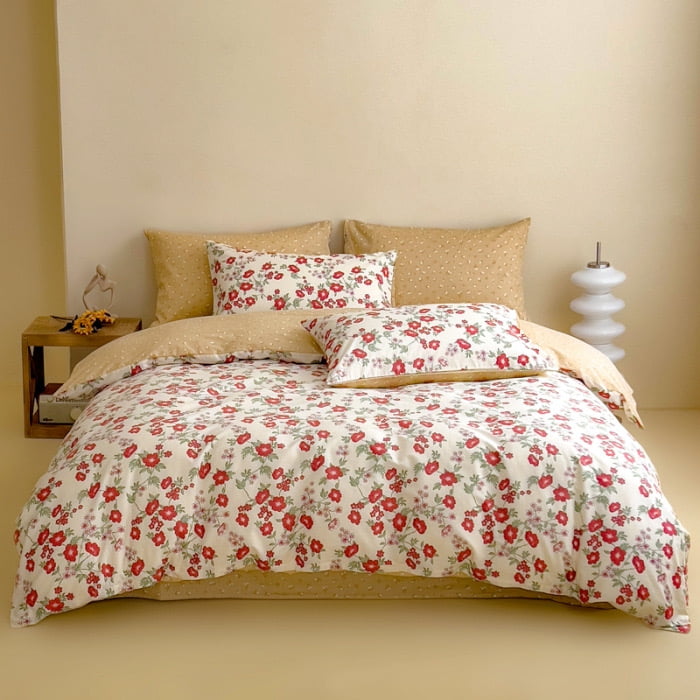
Getting the Sizing Right
Duvet covers are sized to match standard bedding dimensions, but it's still worth double-checking measurements before buying, since sizing can vary slightly between brands.
- Twin: fits most single beds and typically pairs with a twin-size insert
- Full/Queen: a common combined size that works for both bed types
- King: designed for larger beds, offering more overhang on the sides
- Oversized options: worth considering if you like extra drape or use a thicker insert
If you're between sizes or prefer a fuller look on the bed, sizing up slightly usually creates a more relaxed, layered appearance without looking stretched or tight.
How to Put On a Duvet Cover Without the Struggle
Putting a duvet cover on can feel like wrestling a pillowcase onto a mattress, but a few simple techniques make it much easier.
- Turn the cover inside out and lay it flat on the bed
- Place the duvet insert on top, aligning the corners
- Grab the matching corners of both the cover and insert together and tie or clip them if your cover has interior ties
- Roll the cover down over the insert, similar to rolling up a sleeping bag
- Flip the whole roll right-side out and shake it into place
This "burrito roll" method is widely recommended because it prevents the insert from bunching up inside the cover, which is the most common frustration people run into.
Caring for Your Duvet Cover Long-Term
Proper care keeps a duvet cover looking and feeling fresh for years. Most cotton and microfiber covers can be machine washed on a gentle or normal cycle with mild detergent, though it's worth checking the care label since linen and specialty fabrics sometimes require cooler water or air drying to avoid shrinkage.
Washing your duvet cover every one to two weeks, similar to sheets, helps maintain hygiene, while the insert itself typically only needs washing every few months since it stays protected inside the cover.





 +86-159 5050 0822
 peter@rainbowhomefashion.com
 No.199 Yimin Road, Dateng DIstrIct, Yancheng City. Jiangsu Province, China